
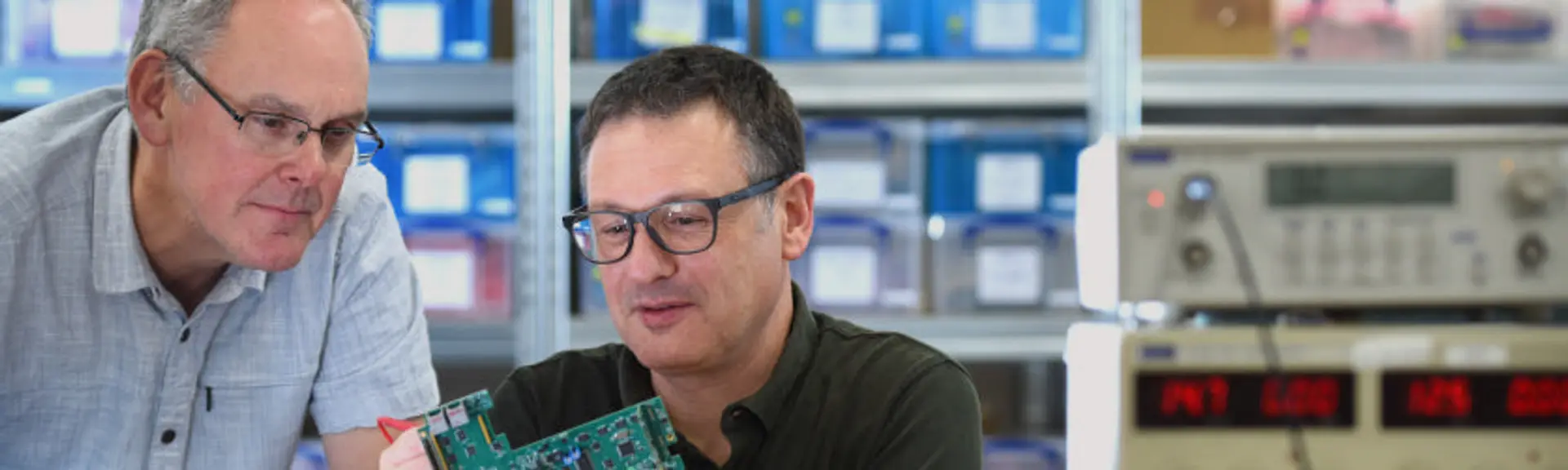
Evidence that stands up to inspection
Continuous, time-stamped, tamper-evident environmental records for MHRA data integrity, EU GMP Annex 11 and GxP audits. Eltek supplies the evidence and the controls your compliance depends on; you own the validation and the process.
Trusted in GxP laboratories, pharmaceutical cold chain and university biobanks across the UK.
Transparency
Does an environmental monitoring system make my facility compliant?
Compliance depends on your validation, procedures and controls as much as on the technology, so it helps to be precise about where the line falls between what we supply and what stays yours.
What we supply
Secure, computer-generated, time-stamped, tamper-evident records with full audit trails, role-based access and scheduled reporting, backed by UKAS-traceable calibration. We supply the calibration certificates, temperature-mapping reports and audit-trailed records that support your IQ, OQ and PQ documentation, the controls and the evidence that support your compliance.
What stays yours
Validation of the system in its intended use, your procedures, and the controls around them. Qualifying the system in your facility (IQ, OQ and PQ) as owner of the validation, using the supporting documentation we supply; writing and maintaining your SOPs, managing change control, and training staff on the system.
Proof under scrutiny
How does continuous environmental monitoring support GxP compliance and an MHRA or GMP inspection?
An inspection tests whether you can defend your data, not whether you own a particular device. Continuous environmental monitoring supports that in four ways an inspector recognises:
A secure, time-stamped audit trail. Every reading is recorded automatically, with the date and time of entries and actions, so records cannot be quietly changed. This is the control 21 CFR Part 11 and EU GMP Annex 11 are written around.
Complete, contemporaneous temperature records. Automated logging removes gaps and transcription errors, supporting the ALCOA+ principles (attributable, legible, contemporaneous, original, accurate, complete, consistent, enduring and available) that underpin data integrity.
Alarm escalation that reduces excursions. Alerts warn staff before a fridge, freezer or store drifts out of range, so fewer excursions turn into deviations, investigations and lost stock.
Mapping and calibration evidence. EU GDP expects a temperature-mapping exercise before use and equipment calibrated at defined intervals; monitoring records provide the ongoing evidence that the mapped conditions still hold.
Distributor readiness
What do MHRA GDP inspectors look for in temperature-monitoring records?
GDP inspections of pharmaceutical wholesale sites focus on a documented evidence trail, not a physical walk-round. Can you show that storage areas were mapped before use? That conditions are being monitored continuously? That excursions were investigated, with their outcomes documented? That equipment is calibrated? And that your Responsible Person can account for each? Each question is answered by an audit-ready record your monitoring system must supply.
Was this storage area temperature-mapped before product was placed in it, and has mapping been repeated after any significant change to the layout, racking, HVAC or load pattern?
A completed temperature-mapping report, carried out before the area came into use, recording sensor placement, the duration of the study, and the hot and cold spots identified. A change-control record showing that re-mapping was triggered by any significant modification. EU GDP 2013/C 343/01, retained in UK law, requires an initial temperature-mapping exercise before use, repeated per risk assessment or on significant modification. See the temperature-mapping guide — what a study proves, where sensors go, and the documentation it produces.
Are storage conditions being monitored continuously, and does the record cover the full storage period — including nights, weekends and bank holidays?
Continuous, timestamped temperature logs covering every hour of the storage period, with no gaps from out-of-hours periods or manual-logging schedules. A system that records without manual intervention, so the data exists whether or not anyone is present in the building.
Can you produce the monitoring records for a specific date range — or for the period a particular consignment was held — promptly and without reconstructing them from raw data files?
A searchable, timestamped record archive, accessible by date range, sensor or alarm event, retrievable on demand without processing raw exports. EU GDP 2013/C 343/01 requires records to be retained and readily available for competent-authority review. See how mapping evidence connects to your audit trail.
When a temperature breach occurred, was it acknowledged promptly, and is there a contemporaneous record of when it happened, when it was acknowledged, and by whom?
An alarm log — timestamped by the system — showing when the breach was triggered, when it was acknowledged, and the named individual who acknowledged it. See below for the post-excursion procedure your quality management system should define.
Are the sensors you rely on for GDP monitoring calibrated, and when were they last calibrated?
A current calibration certificate for each sensor, with a defined calibration interval and a system that flags sensors due for recalibration before the interval expires. EU GDP 2013/C 343/01 requires monitoring equipment to be calibrated at defined intervals.
Does the Responsible Person have oversight of the monitoring system, and can they account for any excursion during the period under review?
Documented monitoring and alarm-handling procedures, authorised under the Responsible Person's sign-off. Alert notifications going to named individuals — including the RP or a named delegate — so that no breach passes unacknowledged and the RP can demonstrate oversight of the system's operation. Under EU GDP 2013/C 343/01 (Chapter 2) the Responsible Person is accountable for ensuring the quality management system is implemented and maintained; under the Human Medicines Regulations 2012 (Regulation 45), the responsible person must ensure the conditions of the wholesale dealer's authorisation are being complied with. MHRA inspectorate guidance makes clear that demonstrating supervision of routine temperature monitoring and awareness of excursions is part of that oversight obligation in practice.
What this does not do
No monitoring system makes a facility compliant on its own. Configuration depends on system implementation and customer processes. Eltek supports and supplies the evidence for compliance; validation, procedures and audit-trail review remain the organisation’s responsibility.
Trusted records
MHRA data integrity and the ALCOA+ principles
The MHRA's "GXP" Data Integrity Guidance and Definitions (March 2018) sets out the Agency's expectation that the data you use to make GxP decisions is complete, consistent and accurate across its whole lifecycle. For environmental monitoring, that turns on how a reading is captured, kept and produced for review, not on the sensor alone.
The principles are commonly summarised as ALCOA+. Continuous monitoring supports each of them by design: readings are captured as they happen, attributed to a source, held unchanged, and available for inspection. Eltek supplies the controls and the evidence; the validated, procedurally-controlled process around them remains yours.
Attributable — tied to a source sensor and time, with role-based access.
Legible — stored in a permanent, readable form for your full retention period.
Contemporaneous — captured continuously as it happens, never transcribed later.
Original — the primary record, never a re-keyed copy.
Accurate — UKAS-traceable calibration, so a reading means what it says.
Complete — no gaps — door-open and out-of-hours events included.
Consistent — one time-stamp sequence, read in the order it happened.
Enduring — held securely for your full retention period, protected from change.
Available — retrievable on demand for review, reporting and inspection.
Software assurance
GAMP 5 and EU GMP Annex 11
GAMP 5, ISPE's risk-based approach to compliant GxP computerised systems, is the framework most UK quality teams use to plan validation. Commercial software configured to your alarm thresholds, users and reports without altering its code is generally Category 4, validated for how your organisation uses it — where monitoring software such as Darca Command typically sits. Eltek supplies the calibration certificates, mapping reports and audit-trailed records that support your validation; qualifying the system remains the organisation's responsibility.
EU GMP Annex 11 (Computerised Systems), part of EudraLex Volume 4 and retained by the MHRA after Brexit, governs computerised systems used in GMP environments, covering risk management, validation, data and audit trails. On audit trails it states that "consideration should be given, based on a risk assessment, to building into the system the creation of a record of all GMP-relevant changes and deletions (a system generated 'audit trail')." Eltek's Darca Command records continuous, time-stamped temperature and humidity data with exactly this kind of secure audit trail.
If you export to the US
21 CFR Part 11 is a US FDA regulation. It applies to a UK organisation only where it has US market exposure, for example products destined for the US market or data supporting an FDA submission; for UK GMP the primary frameworks are EU GMP Annex 11 and the MHRA's data-integrity guidance. Where Part 11 does apply, section 11.10(e) requires the "use of secure, computer-generated, time-stamped audit trails to independently record the date and time of operator entries and actions that create, modify, or delete electronic records," and adds that "record changes shall not obscure previously recorded information." Configuration depends on system implementation and customer processes; Eltek supplies the evidence, the organisation owns validation.
Standards and guidance
The frameworks we build around
We build our monitoring around the frameworks quality teams are actually inspected against — UK and EU as standard, and 21 CFR Part 11 too where you have US market exposure.
MHRA "GXP" Data Integrity Guidance (2018)
The Agency's expectations for data integrity across GxP activities in the UK.
EU GMP Annex 11: Computerised Systems
Retained by the MHRA; the control framework for computerised monitoring systems.
GAMP 5 (ISPE)
The risk-based approach to validating compliant GxP computerised systems.
21 CFR Part 11 (US FDA)
Where you have US market exposure, Darca Command's secure, time-stamped audit trails support the electronic-record controls Part 11 expects.
EU GMP Annex 15: Qualification and Validation
The IQ, OQ and PQ framework for equipment and facilities.
EU GDP Guidelines 2013/C 343/01
Retained in UK law; requires storage to be temperature-mapped before use and monitored with calibrated equipment.
ICH Q1A(R2)
Stability testing conditions, adopted by the MHRA and EMA, for stability-chamber monitoring.
WHO TRS 961, Annex 9
Model guidance for the storage and transport of time- and temperature-sensitive pharmaceutical products.
UKAS-traceable calibration
Calibration traceable to national standards, so a reading is defensible under scrutiny.
Beyond compliance
Evidence for your ESG and net-zero reporting too
Life sciences carries a heavy carbon footprint and faces real, mounting pressure to shrink its environmental impact and support global decarbonisation goals. The same continuous, timestamped record that evidences your compliance is also a genuine performance history for the equipment producing it, which stakeholders and investors increasingly expect an organisation to be able to show.
Verifiable, auditable data is what a green-building or net-zero commitment needs to be more than a statement of intent. If your team wants to talk through what your monitoring data can support for sustainability and ESG reporting specifically, that's a conversation worth having early, before you finalise how you plan to evidence it.
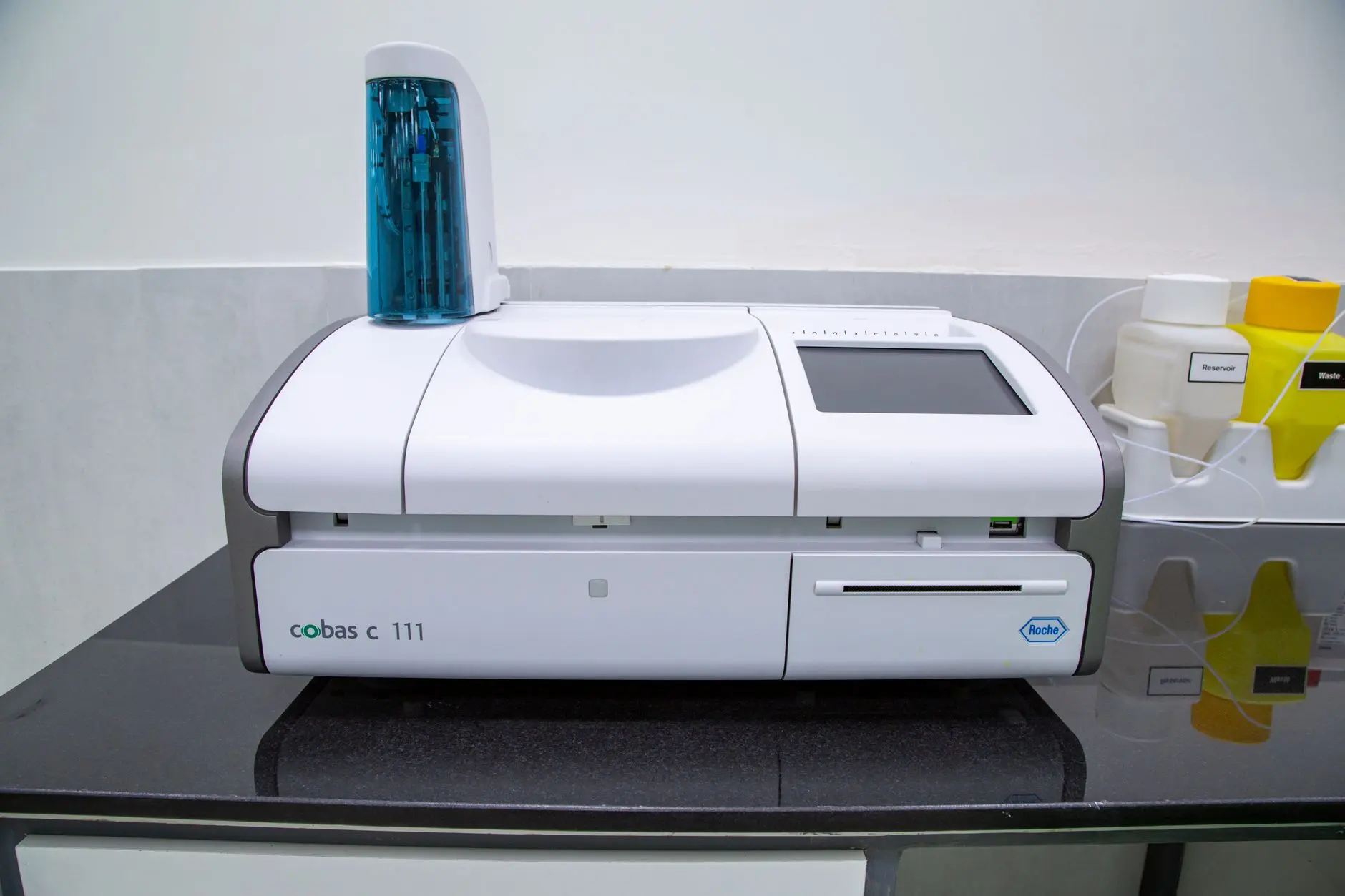
Product family
The Darca Suite
One complete platform for monitoring laboratories, biobanks, clinics and regulated environments.
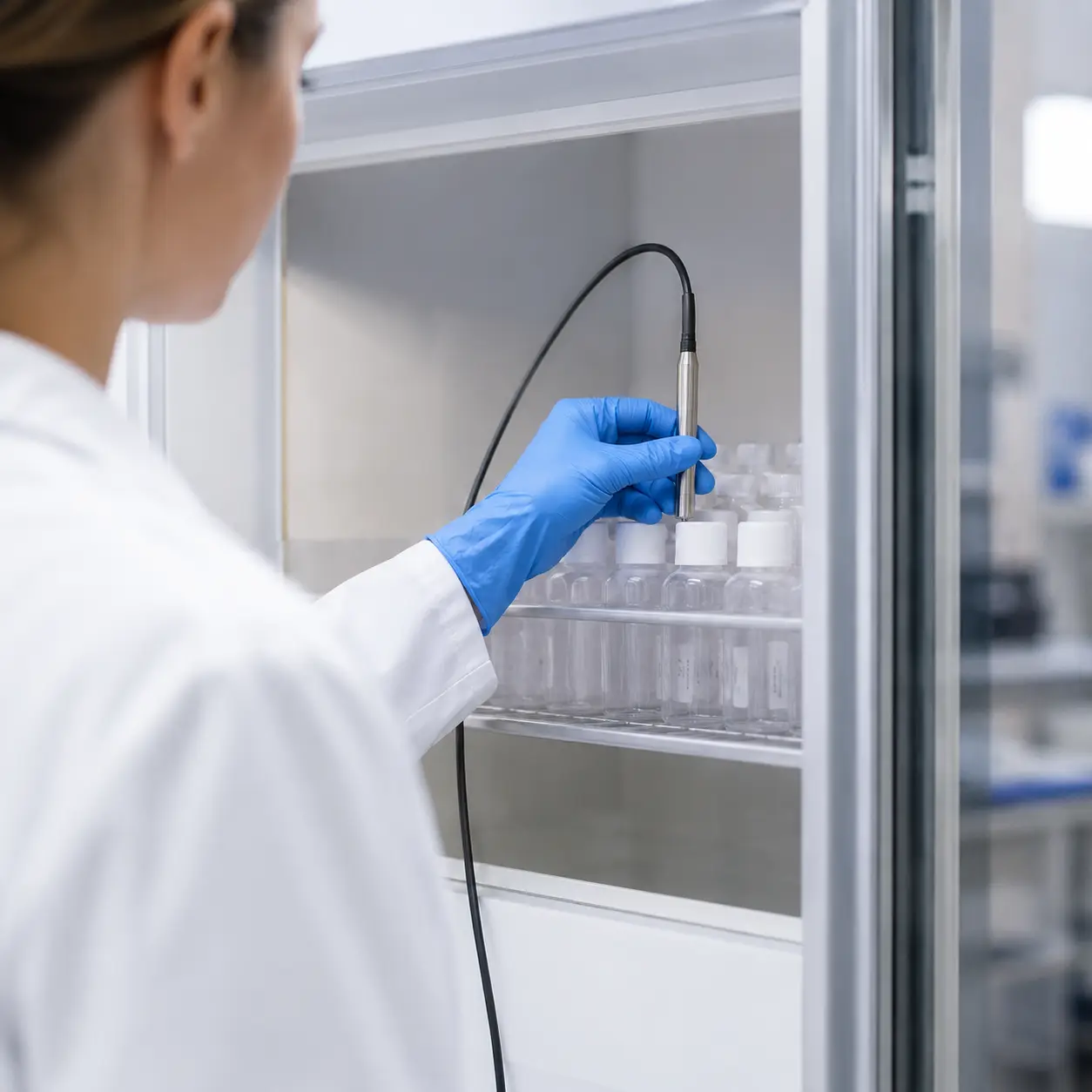
Darca Collect
Wireless GenII transmitters and high-accuracy wired probes matched to ULT freezers, cold rooms, incubators, IVF equipment and stability chambers.
Explore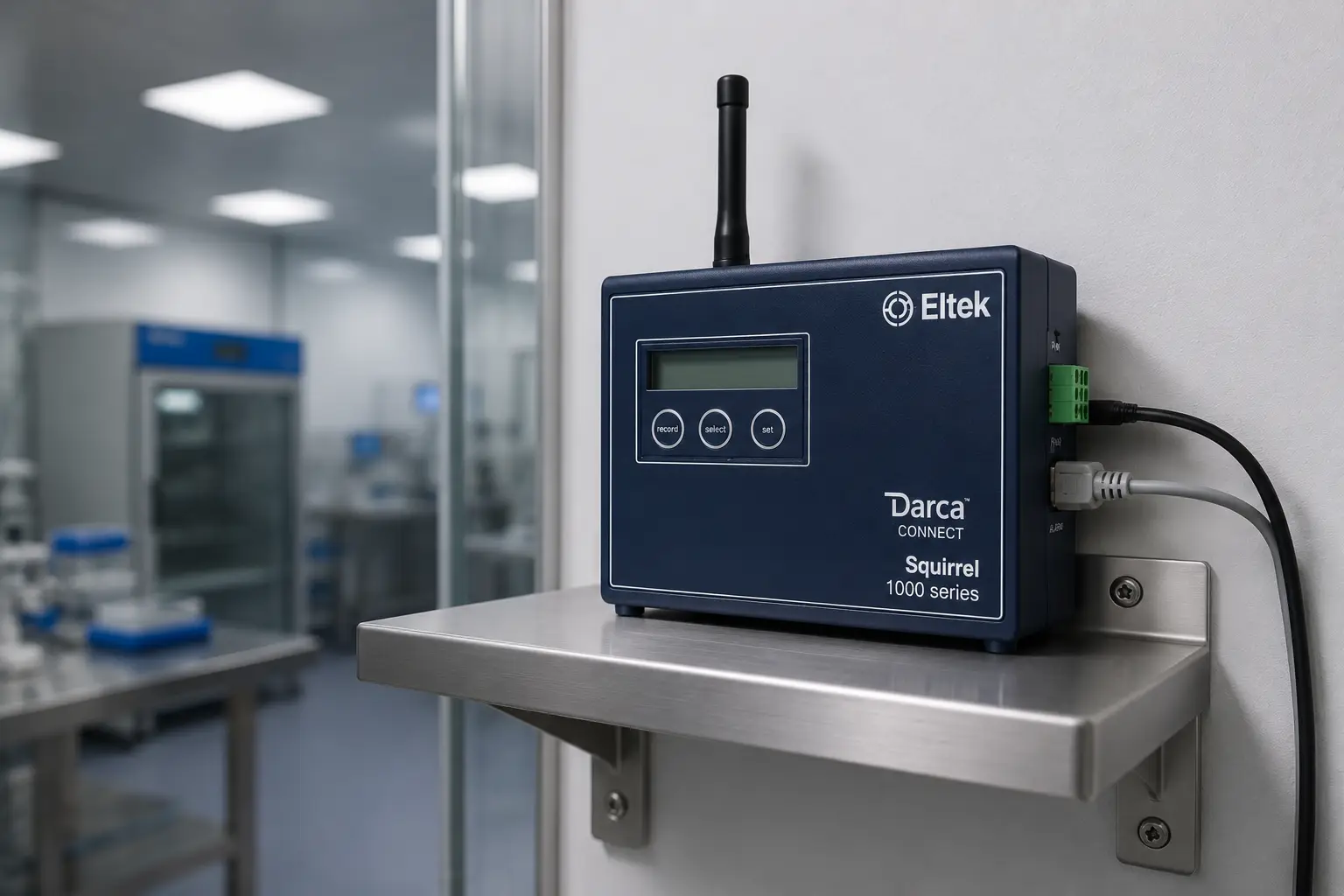
Darca Connect
The SRV450 hub gathers the network and SMS450 alarms escalate an out-of-tolerance excursion to the right person instantly, so samples are protected.
Explore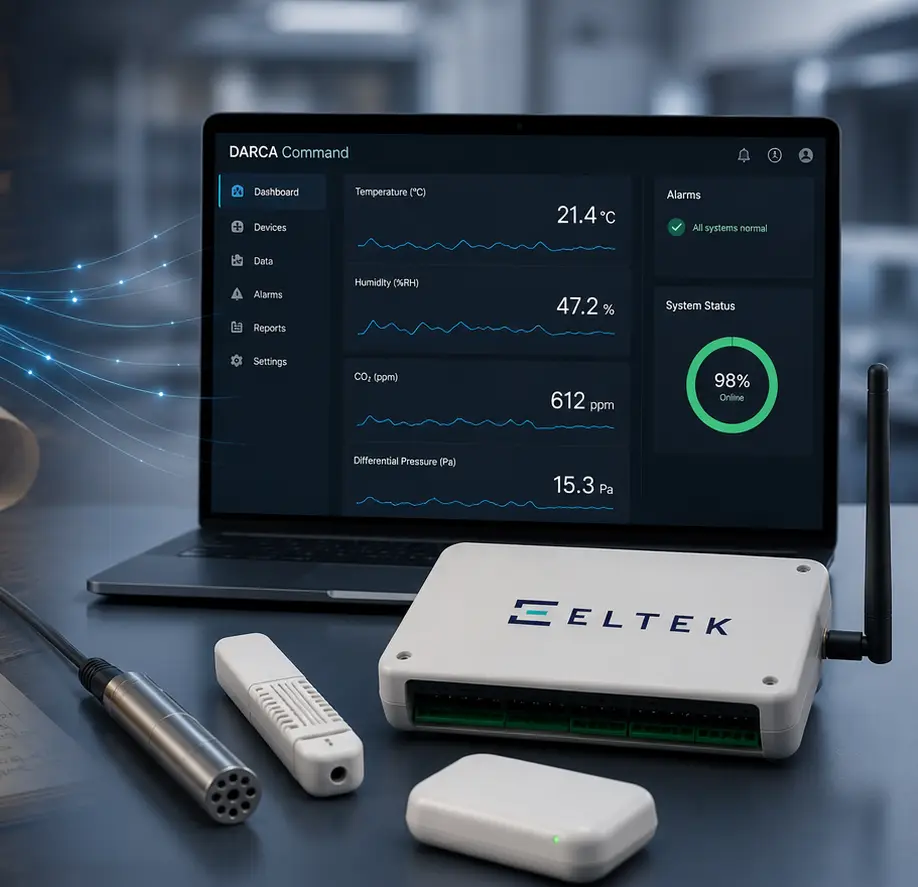
Darca Command
Compliance-ready dashboards, audit trails and scheduled reporting built for GxP, GMP, HTA, ISO and 21 CFR Part 11 environments.
ExploreProven in life sciences
Audit-ready records for a leading UK university biobank
Temperature mapping and continuous monitoring of ultra-low temperature storage down to −80°C, with GenII loggers, audit-trailed records and email and SMS alarms, meeting research-governance traceability for samples that have no second copy.
- GxP / GMP
- EU GMP Annex 11
- MHRA data integrity
- 21 CFR Part 11
- UKAS-traceable calibration

Show your quality team the evidence
Book a demo and our UK engineers will walk your quality and lab teams through the records, audit trails and reporting that support your compliance.
Related reading
Life Sciences monitoring
The full picture: labs, biobanks, cold chain, IVF and the regulated environments we monitor.
Read moreTemperature mapping guide
What a study proves, sensor placement, duration, UK compliance expectations, and the equipment behind it.
Read moreThe Darca Suite
Collect, Connect and Command, the connected sensing, alarms and audit-trailed software.
Read moreCase studies
Named installations, from cathedral estates to a −80°C university biobank, and the evidence they run on.
Read moreCompliance questions
Frequently asked questions
What is MHRA data integrity, and how does continuous monitoring support it?
The MHRA’s “GXP” Data Integrity Guidance and Definitions (March 2018) sets out the Agency’s expectation that data used to make GxP decisions is complete, consistent and accurate throughout its lifecycle. For environmental monitoring that means readings must be captured contemporaneously, attributed to a source, protected from undetected change, and available for review. Eltek’s Darca Command records temperature and humidity continuously as time-stamped, tamper-evident data with a secure audit trail, giving quality teams the evidence data integrity expects. No monitoring product makes a facility compliant on its own; validation and process remain the organisation’s responsibility.
What is ALCOA+ and how do environmental monitoring records meet it?
ALCOA+ is the shorthand for the principles of data integrity: attributable, legible, contemporaneous, original and accurate, extended by the “+” attributes complete, consistent, enduring and available. Continuous environmental monitoring supports each: readings are attributable to a source sensor and time, captured contemporaneously rather than transcribed, retained as the original record, accurate against UKAS-traceable calibration, and held complete and available for inspection. Eltek supplies the controls and the evidence; the validated, procedurally-controlled process around them remains yours.
What will an MHRA or GMP inspector want to see from my monitoring?
An inspector typically wants to see that records are complete and contemporaneous, that the audit trail shows who changed what and when, that equipment is calibrated and that a temperature-mapping exercise was carried out before use. Continuous monitoring provides that evidence trail so records can be defended rather than reconstructed.
How does monitoring reduce deviations and excursions?
Alarm escalation warns staff while a unit is only beginning to drift, not after stock is lost. Catching a fridge, freezer or store early means fewer excursions become full deviations, which reduces investigations, wastage and the risk of an inspection finding.
What is GAMP 5 Category 4, and how does it apply to monitoring software?
GAMP 5, ISPE’s risk-based approach to compliant GxP computerised systems, classifies software by how much it is adapted to your use. Configured commercial software, adjusted to your alarm thresholds, users and reports without altering its code, is generally treated as Category 4, and is validated for the way your organisation configures and uses it. Monitoring software such as Darca Command typically sits here. Eltek supplies the calibration certificates, mapping reports and audit-trailed records that support your validation; qualifying the system in its intended use remains the organisation’s responsibility.
What does EU GMP Annex 11 require for computerised monitoring systems?
EU GMP Annex 11 (Computerised Systems), part of EudraLex Volume 4 and retained by the MHRA, sets out how computerised systems used in GMP environments should be controlled, covering risk management, validation, data and audit trails. On audit trails it states that “consideration should be given, based on a risk assessment, to building into the system the creation of a record of all GMP-relevant changes and deletions (a system generated ‘audit trail’).” Eltek’s Darca Command records continuous, time-stamped temperature and humidity data with a secure audit trail, giving quality teams the GMP-relevant history Annex 11 anticipates. Validation of the system in its intended use remains the organisation’s responsibility.
Does 21 CFR Part 11 apply to a UK facility?
21 CFR Part 11 is a US FDA regulation. It is relevant to a UK organisation only where it has US market exposure, for example products destined for the US market or data supporting an FDA submission; for UK GMP the primary frameworks are EU GMP Annex 11 and the MHRA’s data-integrity guidance. Where Part 11 does apply, section 11.10(e) requires the “use of secure, computer-generated, time-stamped audit trails to independently record the date and time of operator entries and actions that create, modify, or delete electronic records,” and adds that “record changes shall not obscure previously recorded information.” Eltek’s Darca Command provides exactly this kind of audit trail. Configuration depends on system implementation and customer processes; Eltek supplies the evidence, the organisation owns validation.
Does Eltek monitoring make my facility compliant?
No monitoring product makes a facility compliant on its own, and any supplier who claims otherwise should be treated with caution. Compliance depends on your validation, procedures and controls as well as the technology. What Eltek provides are the underlying controls regulators ask for: secure, computer-generated, time-stamped, tamper-evident records with full audit trails, role-based access and scheduled reporting, backed by UKAS-traceable calibration. Eltek supplies the evidence and controls that support your compliance; validation and process remain yours.
What should I do after a temperature excursion in a GDP-regulated storage area?
An excursion in a GDP-regulated area requires a documented response: record the breach — time, duration, temperature reached — identify the product held in the area during the event, investigate the root cause, assess whether the product has been affected, document the outcome of that assessment, and implement corrective action to prevent recurrence. Your monitoring system supplies the timestamped event record and the alarm log; the investigation, product assessment and corrective action are the organisation's responsibility. Your quality management system should define the escalation procedure, including when to inform the Responsible Person. EU GDP 2013/C 343/01 requires deviations from established procedures to be documented and investigated, with appropriate corrective and preventive actions applied in line with quality risk management principles.
Does GDP require temperature mapping for a small wholesale store or a single-door fridge?
The EU GDP guidelines, retained in UK law, require storage areas to be temperature-mapped before use, regardless of their size. What scales with the size and complexity of the space is the protocol: a small, purpose-built medicines fridge will need a simpler study than a multi-zone ambient warehouse — fewer sensors, a shorter duration — but the requirement for a completed, documented mapping exercise before product is stored applies to both. The study protocol should justify its sensor count and placement in the documentation.
How long must temperature records be kept under GDP?
EU GDP 2013/C 343/01 requires records to be retained for at least five years — or for the period stated in national legislation if that is longer. The Human Medicines Regulations 2012 set a statutory minimum of five years for wholesale dealer records, and MHRA inspectorate guidance applies that same five-year minimum to temperature monitoring data specifically. Your Responsible Person and quality system should define the retention schedule for your operation, including any product-specific obligations that may extend it.