Environmental Case study
Proving how low-carbon homes really perform
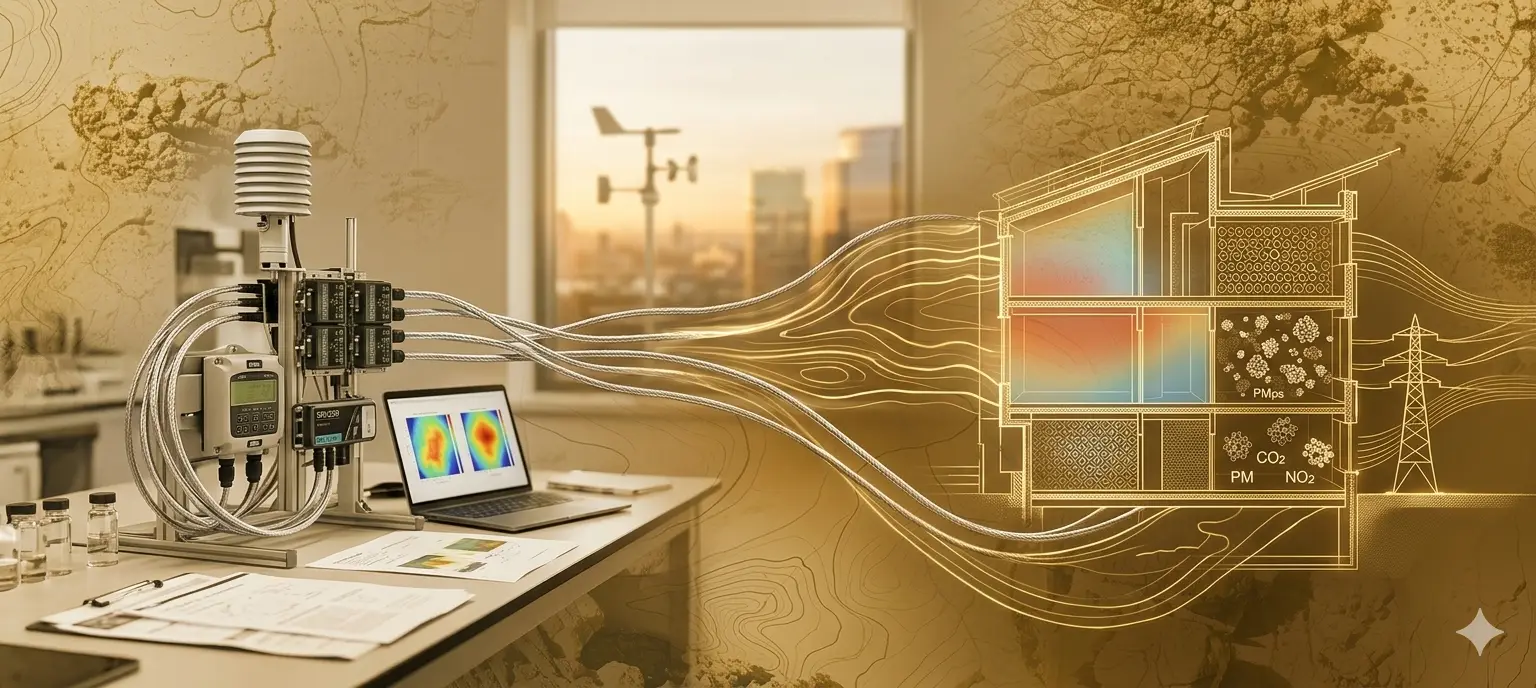
Government-funded Building for 2050 examines how to build homes that are low-carbon by design rather than by bolt-on technology. To find out how the buildings really perform, the project needed detailed, real-world data, captured without disrupting residents.
~120
Monitored locations
SRV250
Cloud gateway
CO₂ + energy
Multi-parameter
Low-carbon by design
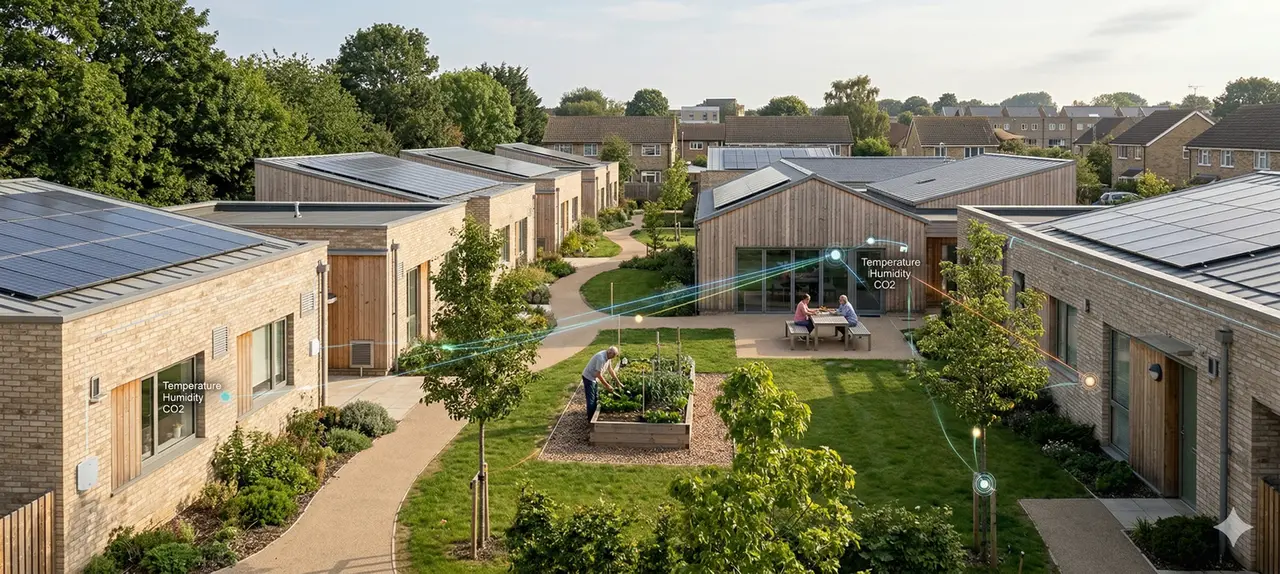
Funded by the Department for Business, Energy and Industrial Strategy and run by AECOM, Building for 2050 studies the drivers and barriers to low-cost, low-carbon housing. Eltek supplied the monitoring equipment, specified and installed by Bristol building-performance experts Four Walls, at the Marmalade Lane cohousing development in Cambridge.
A complete picture, wirelessly
Wireless sensors in around 120 locations feed an Eltek SRV250 logger, which collates the data and sends it at frequent intervals to a cloud server over the mobile data network. The system captures temperature, humidity, CO₂, electrical consumption, central-heating and hot-water temperatures, and how often windows are opened for ventilation, plus external weather, so Four Walls can analyse real-life building performance and energy use.
The platform
The Darca solutions behind it
One connected platform, Collect, Connect and Command, configured for this application.

Darca Collect
Wireless GenII sensors in ~120 locations capture temperature, humidity, CO₂, energy and window-opening, with no disruptive cabling in occupied homes.
Explore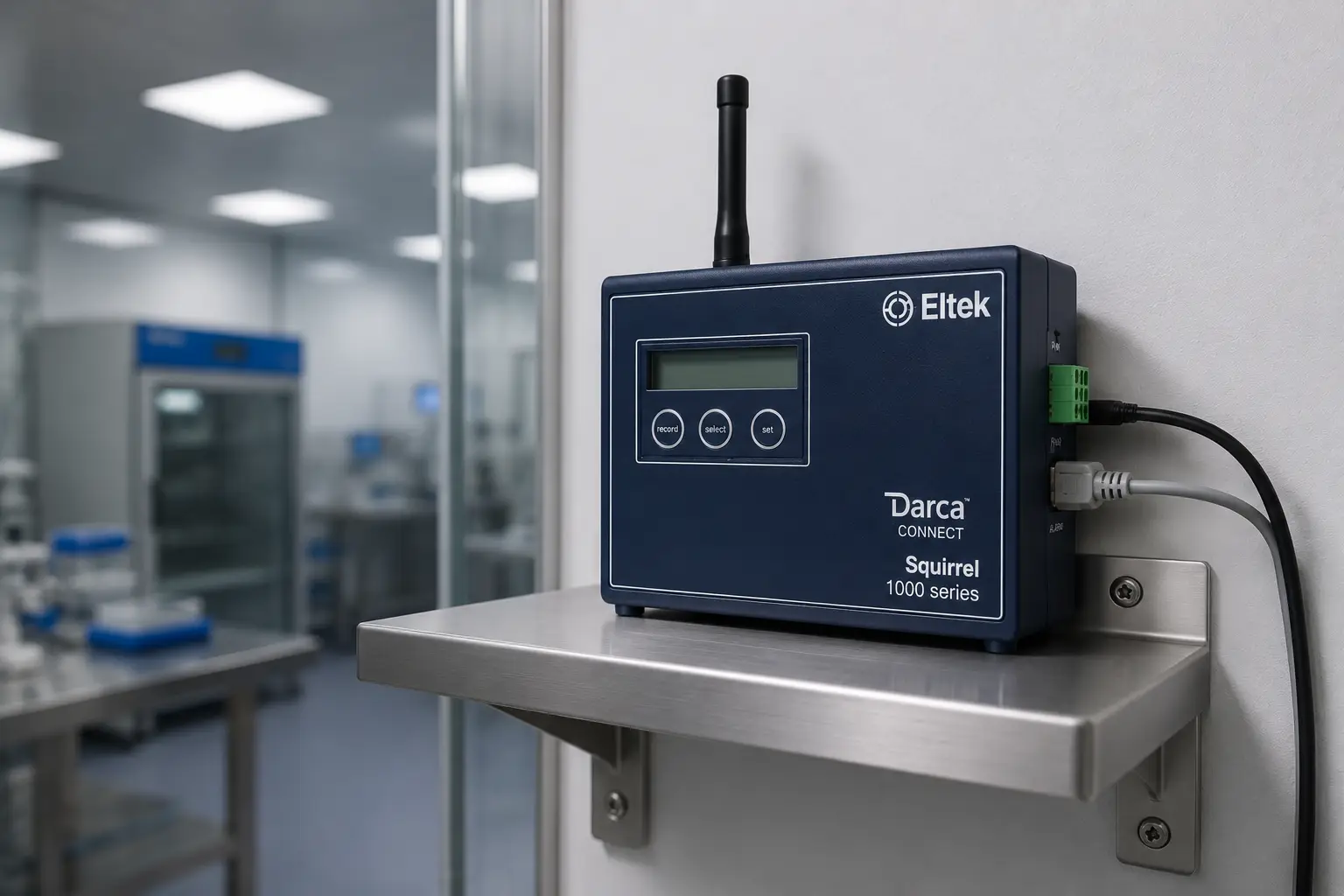
Darca Connect
An SRV250 gateway collates the network and relays it to the cloud over mobile data for analysis from anywhere.
Explore