Insight
Energy and environmental monitoring: understanding what your buildings really need
Your energy bill shows consumption, not whether it was effective. How monitoring temperature, humidity and CO₂ alongside energy data helps facilities managers, lab teams and heritage buildings understand what drives consumption and measure improvements.
The Eltek Engineering Team4 min read
Your energy bill tells you how much power you have used. It tells you very little about whether that energy was used effectively.
Was an empty room being heated overnight? Was cooling equipment working harder than usual? Did an energy-saving adjustment affect the conditions needed to protect samples, collections or products?
These are the questions that become easier to investigate when you monitor energy use alongside environmental conditions.
For laboratories, museums, manufacturing facilities and commercial buildings, connecting these measurements can help teams identify waste, understand performance and make better-informed decisions.
Why energy data needs environmental context
Heating, cooling and ventilation all use energy to maintain particular conditions. Measuring consumption alone gives you only part of the picture.
A rise in electricity use might reflect warmer weather, increased activity or additional equipment. It could also indicate an operational issue that deserves investigation.
By reviewing energy consumption alongside temperature, humidity and other relevant measurements, you can begin to understand what changed—and whether the extra energy delivered a useful result.
For example, a building might consume more energy while still struggling to maintain its required temperature. That combination gives facilities teams a clearer starting point for investigation than either reading would provide on its own.
Finding waste that a monthly bill cannot explain
A whole-building total can hide significant differences between rooms, departments and equipment.
More detailed monitoring can help answer practical questions:
- How much energy does the site use outside working hours?
- Which areas account for the largest share of consumption?
- Does demand follow operating schedules?
- How does consumption change with outdoor or indoor conditions?
- Did a maintenance intervention or equipment replacement improve performance?
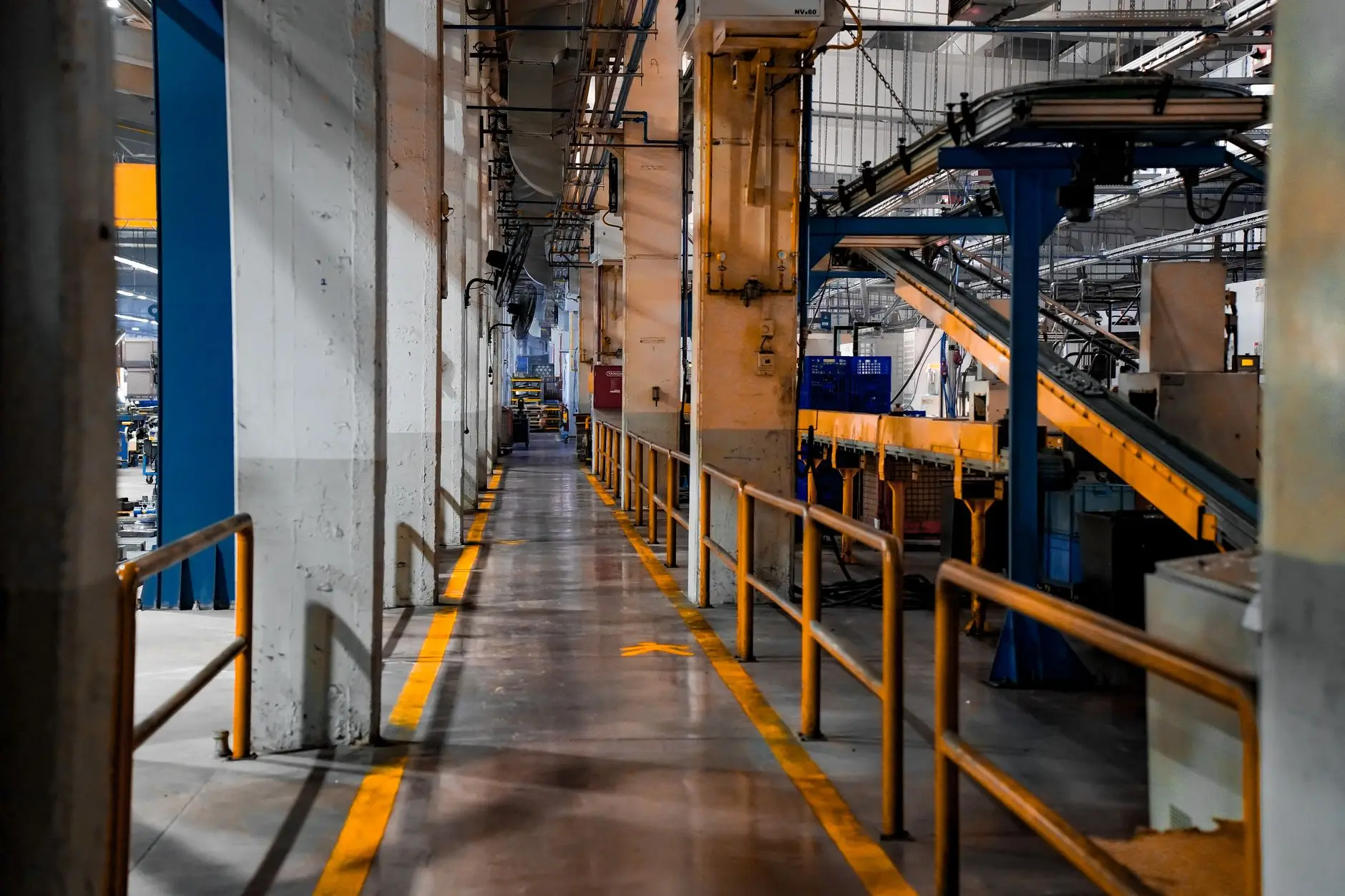
Recording consumption over time also helps reveal unusual patterns that warrant a closer look. The UK government's Energy Technology List recognises this as a use of energy monitoring equipment.
The aim is to build a useful baseline, investigate exceptions and measure the results of changes.
Life sciences: improving efficiency while protecting critical conditions
In life sciences facilities, energy decisions must account for the needs of research, storage and production.
Ultra-low temperature freezers are among the most energy-intensive pieces of laboratory equipment. Monitoring their performance is therefore relevant to both sample protection and operational efficiency.
Consider a freezer whose energy consumption increases while its internal temperature remains stable. That change could prompt checks of maintenance, door-opening patterns, room temperature or equipment condition. It does not prove a fault, but it provides a reason to investigate.
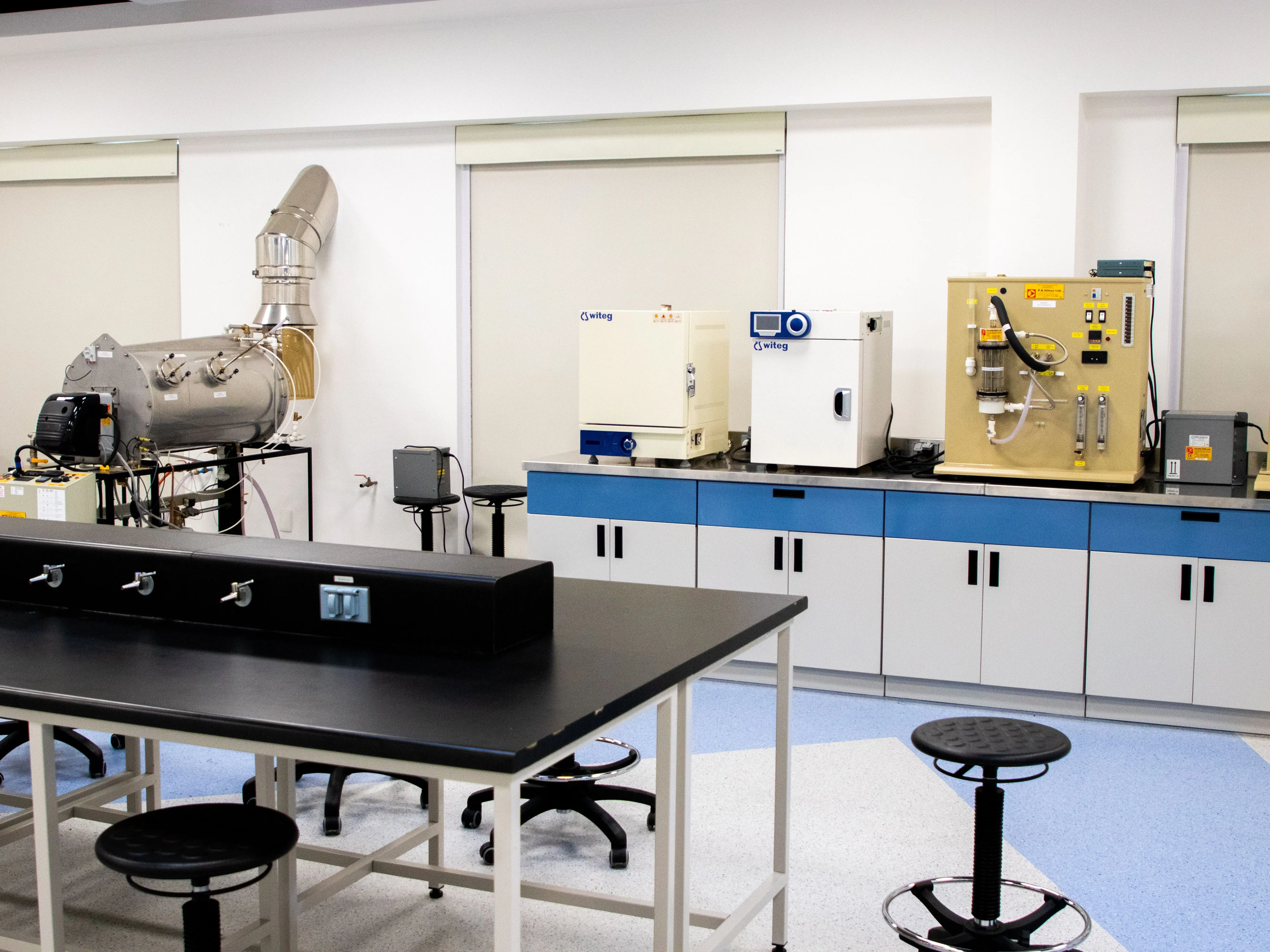
Ventilation is another important area. Any proposed adjustment must reflect the hazards and activities within the laboratory. I2SL's Smart Labs guidance recommends assessing those risks with facilities, research and safety specialists when determining ventilation requirements.
Energy and environmental data can help teams evaluate approved changes and check that required conditions continue to be maintained.
Buildings and heritage: balancing energy use with environmental needs
The same principle applies beyond laboratories.
In offices and university buildings, teams need to understand the relationship between energy consumption, indoor conditions and how spaces are used.
In museums, archives and historic properties, decisions must also reflect the needs of collections and the building itself.
Useful questions might include:
- Is heating operating when a space is unoccupied?
- Are neighbouring areas being heated and cooled unnecessarily?
- Do operating schedules match actual opening hours?
- Are temperature and humidity remaining within agreed limits after a change?
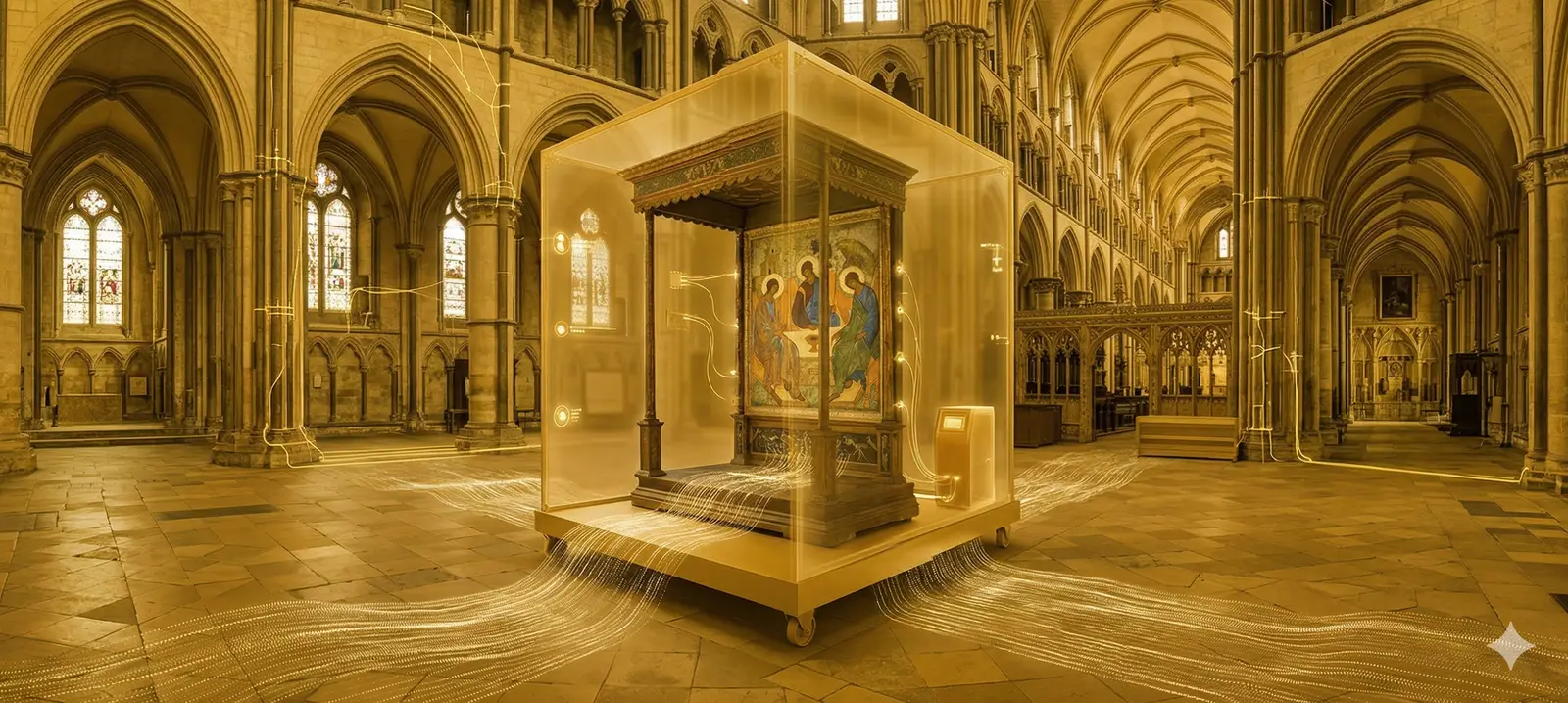
Monitoring helps turn these questions into evidence that facilities and conservation teams can review together.
Comparing performance across buildings and sites
Organisations with several locations face an additional challenge: bringing information together in a form that supports meaningful comparison.
A larger building will usually consume more energy than a smaller one. A laboratory operating around the clock will have different requirements from an office used during business hours.
Comparisons therefore need context, including floor area, operating hours, weather, equipment and activity.
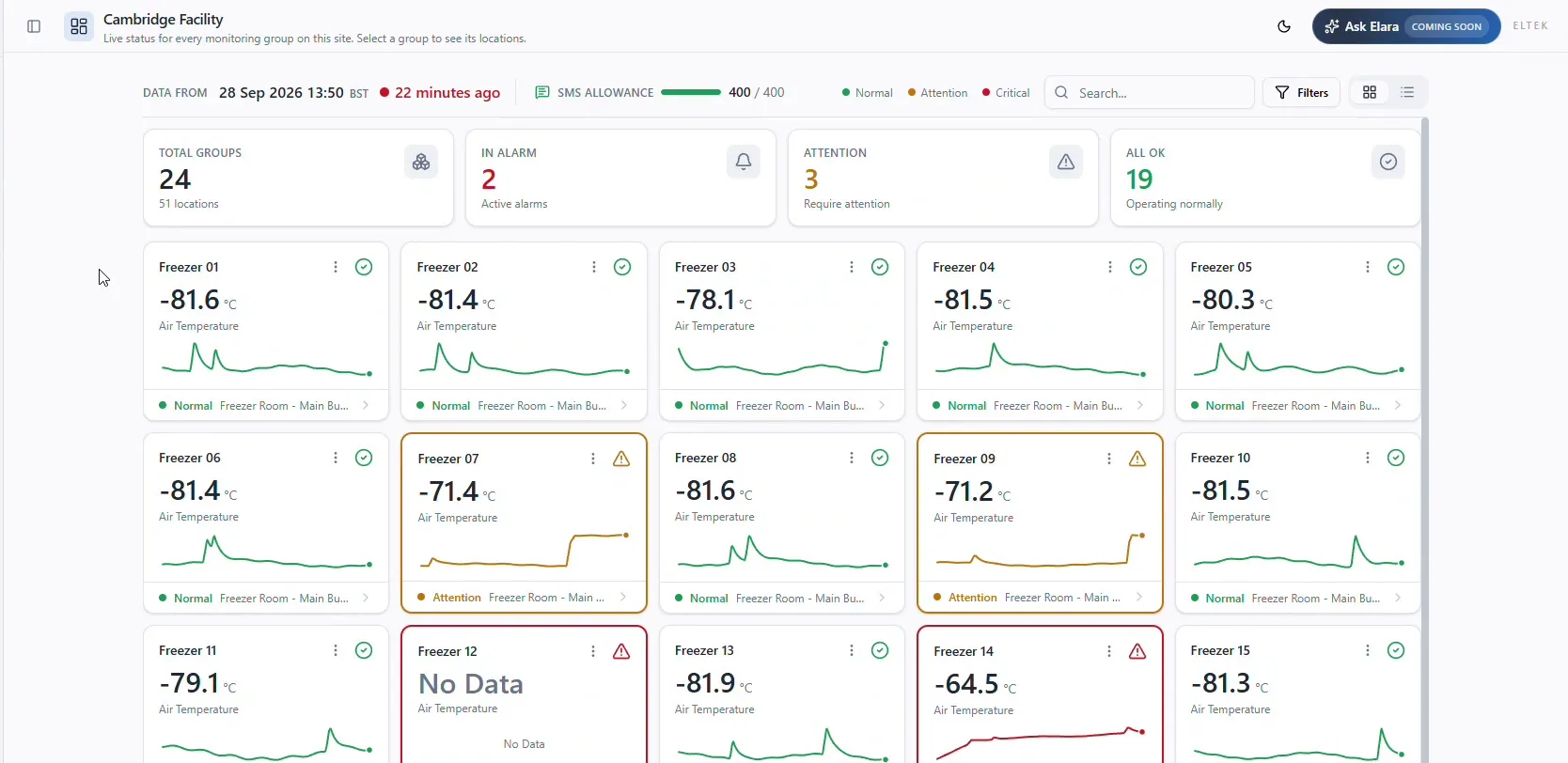
Bringing data from several sites into a shared view can help teams identify differences worth investigating, prioritise improvements and follow their progress. Eltek's connected Darca platform supports environmental monitoring across multiple buildings and locations, with cloud dashboards, trends and reporting.
Measuring whether improvements actually work
Energy monitoring is particularly useful when it supports a clear decision.
Start with a question: is a particular area using unnecessary energy overnight? Establish its normal consumption and environmental conditions, agree an appropriate change, then review what happens.
When comparing results, account for differences in weather, occupancy and operating activity. A lower bill alone does not explain whether an intervention worked.
Consumption data can also support sustainability reporting. Where carbon emissions are calculated, energy readings need to be combined with the appropriate conversion factors and a clearly defined reporting boundary.
Connecting energy and environmental insight with Eltek
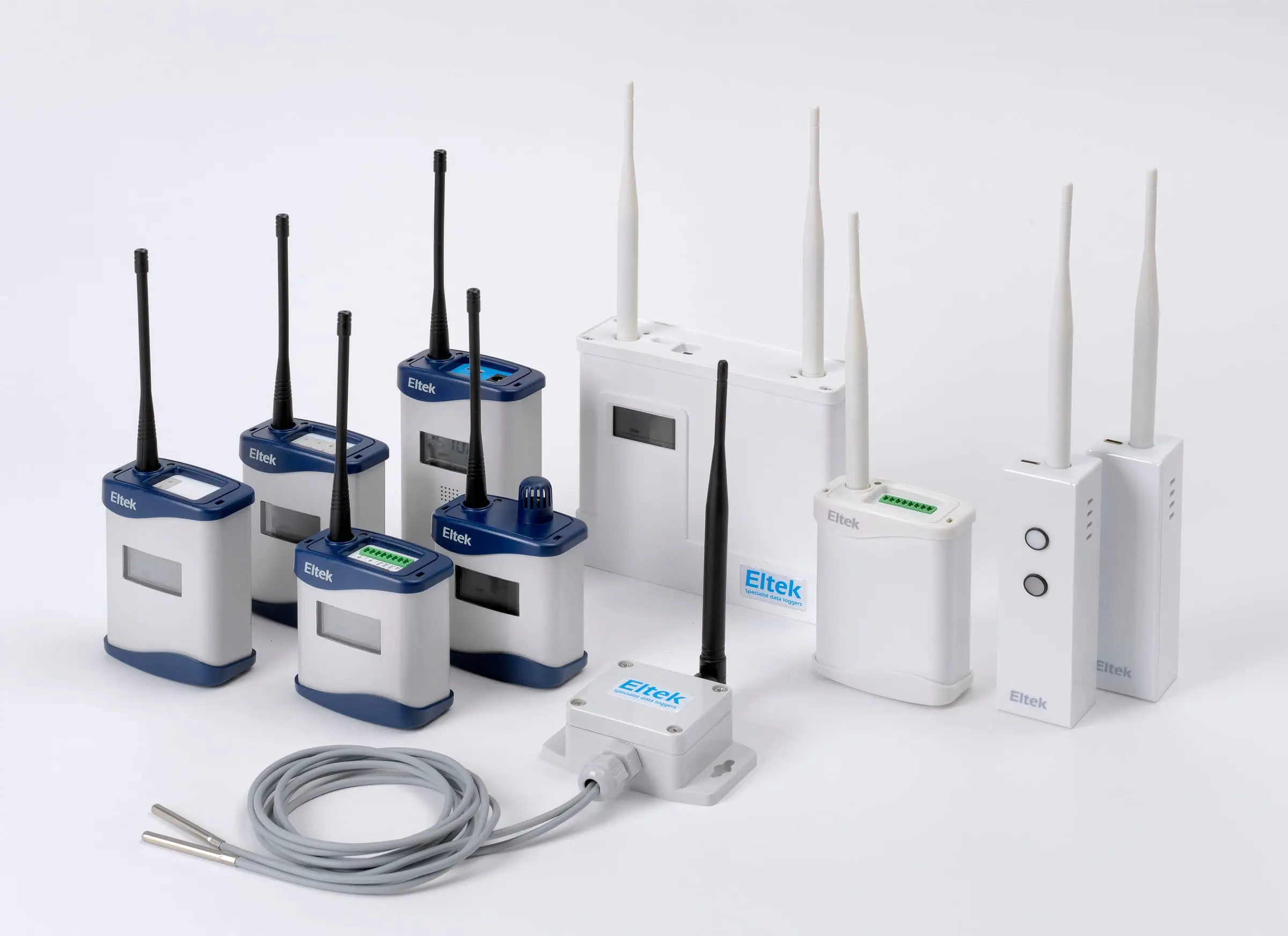
Eltek helps organisations understand their environments through connected wired and wireless monitoring.
Our experience includes the Building for 2050 project, where Eltek sensors tracked energy use alongside temperature, humidity, CO₂ and window-opening. Bringing these measurements together helped build a picture of how low-carbon homes performed in use.
For organisations looking to understand energy consumption across equipment, buildings or sites, the starting point is identifying what needs to be measured—and which environmental conditions matter alongside it.
Want to see how connected monitoring could support your energy and environmental goals? Speak to Eltek about your application and arrange a demonstration.
Key takeaways
- Energy data shows what you consumed. Environmental data shows whether it was effective. Reading both together reveals what a monthly bill alone cannot.
- Detailed monitoring by zone, equipment and time reveals which spaces run hardest and whether conditions track operating schedules — patterns a whole-building total cannot explain.
- In life sciences facilities, understanding how environmental conditions relate to energy use helps teams investigate efficiency without compromising the conditions that protect samples and research.
- In museums, archives and historic buildings, monitoring helps balance energy reduction with the stable temperature and humidity conditions collections require.
- Bringing data from multiple sites into a shared view supports meaningful comparison, improvement tracking and performance reporting across a whole estate.
Find out what your buildings and sites need to measure
Eltek's UK engineers can help you identify what to measure — and which environmental conditions matter alongside energy use — whether you manage a laboratory, a heritage building or a multi-site estate.
Book a demonstrationGet more insights like this
Get monitoring insights in your inbox
Practical guidance on compliance and environmental monitoring: mapping, audit trails, probe selection and multi-site reliability. Occasional, useful, no noise.
Unsubscribe any time. Your details are never shared.