Insight
Measuring Skin Temperature in Sports Science: The Grant Thermistor Standard
Why the Grant EUS-UU thermistor probe and SQ16 data logger are the measurement standard for skin temperature in university sports-science teaching and research, from heat-tolerance testing to sports-clothing trials.
The Eltek Engineering Team6 min read
Skin temperature is one of the most informative signals in sports science. It shapes thermoregulation, cardiovascular stress, perceived exertion, sweating behaviour and, ultimately, endurance performance. To measure it well during exercise, researchers need a sensor that stays accurate while an athlete sweats, moves and changes environment. For decades, that sensor has been the contact thermistor.
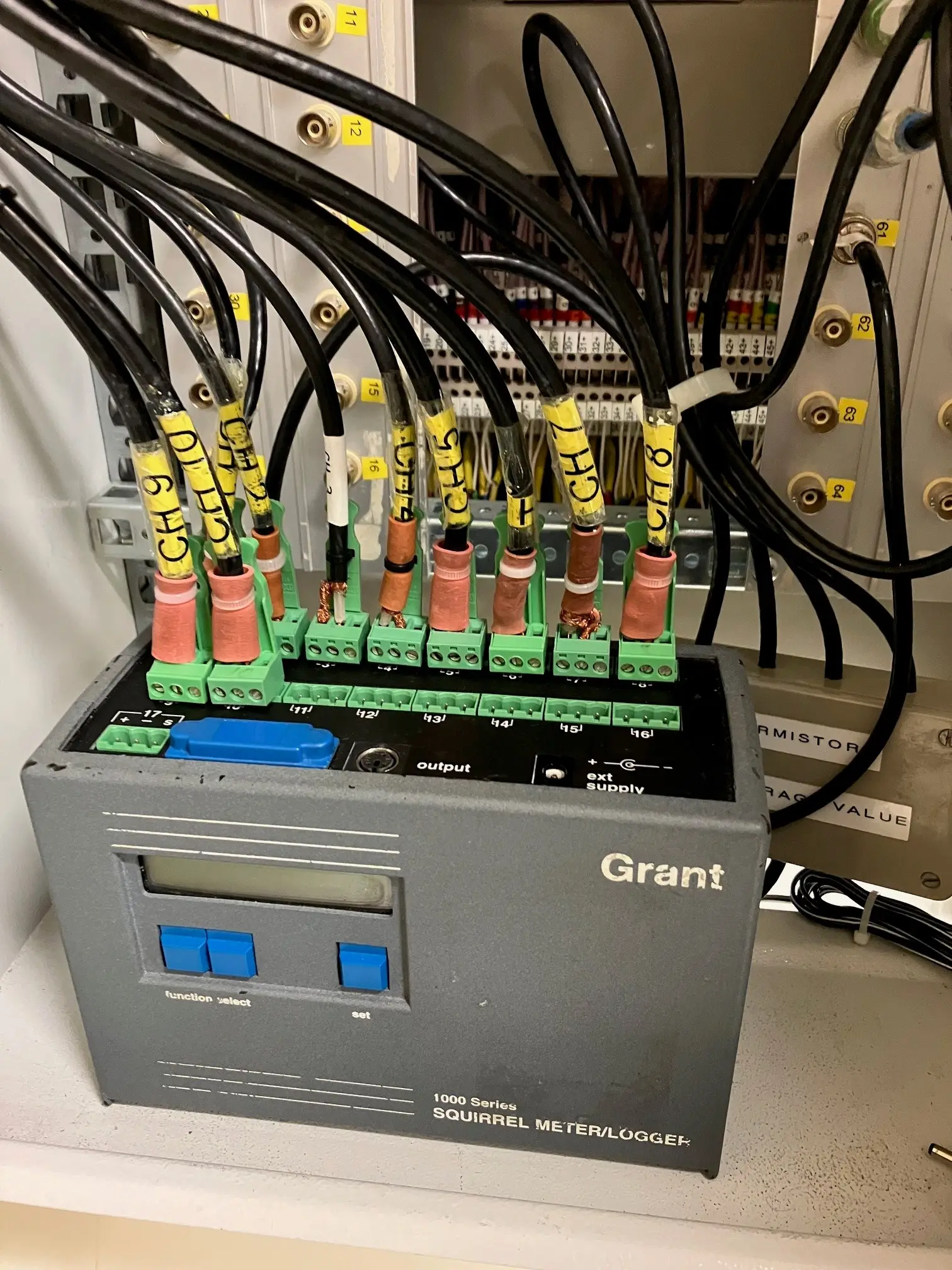
The Grant EUS-UU thermistor probe and the SQ16 data logger are a pairing many university laboratories reach for. They are used in exercise-physiology teaching, environmental-chamber studies, military heat assessments and sports-clothing evaluation, part of the wider measurement work Eltek supports across research and life-science laboratories.
Which sensor do sports-science labs use to measure skin temperature?
Sports-science laboratories measure skin temperature with contact thermistors, because they stay accurate during sweating, movement and clothing contact. The Grant EUS-UU surface thermistor, read by a Grant SQ16 data logger, is one of the most widely used combinations: it measures to ±0.1 °C on a low-mass cable and supports multi-site arrays for thermoregulation, endurance and sports-clothing research.
Why skin temperature matters
Skin temperature tells a researcher how well an athlete is managing heat. During exercise it reflects the balance between the heat the body produces and the heat it can shed through the skin. Read alongside core temperature, heart rate and sweat rate, it helps explain performance, fatigue and safety.
That is why skin temperature appears so often in applied physiology:
- It indicates an individual’s ability to stabilise core temperature during heat exposure.
- Elevated, unstable or regionally divergent skin temperatures can signal increased heat strain.
- The data support evaluation of sports-clothing systems, equipment load and heat-acclimation training.
Capturing those signals cleanly, at several body sites at once, is a measurement problem. It needs a sensor that is accurate, low-mass and robust, and a logger that can record many channels together.
The sensor: Grant EUS-UU thermistor probe
The Grant EUS-UU is a surface thermistor probe designed specifically for physiological skin-temperature measurement. Its design is built around the demands of exercise research:
- Measurement range: −50 °C to +150 °C
- Accuracy: ±0.1 °C
- Cable: slim, low-mass VL-series cable, 3.1 mm diameter
- Termination: bare-wire, for flexible connection to research-grade data loggers
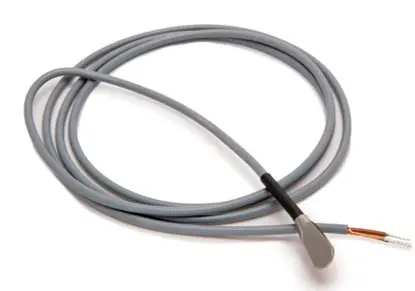
The compact sensing head and low thermal mass are what make it suitable for the skin. A low-mass probe equilibrates quickly to skin temperature, so it tracks rapid warm-ups, interval exercise and external cooling or warming without lagging behind the real reading. The slim cable sits comfortably under clothing and across joints, and the bare-wire termination lets a lab wire the probe into the channel layout a study needs. For how thermistors compare with other sensor types across demanding conditions, see our guide to selecting the right temperature probe.
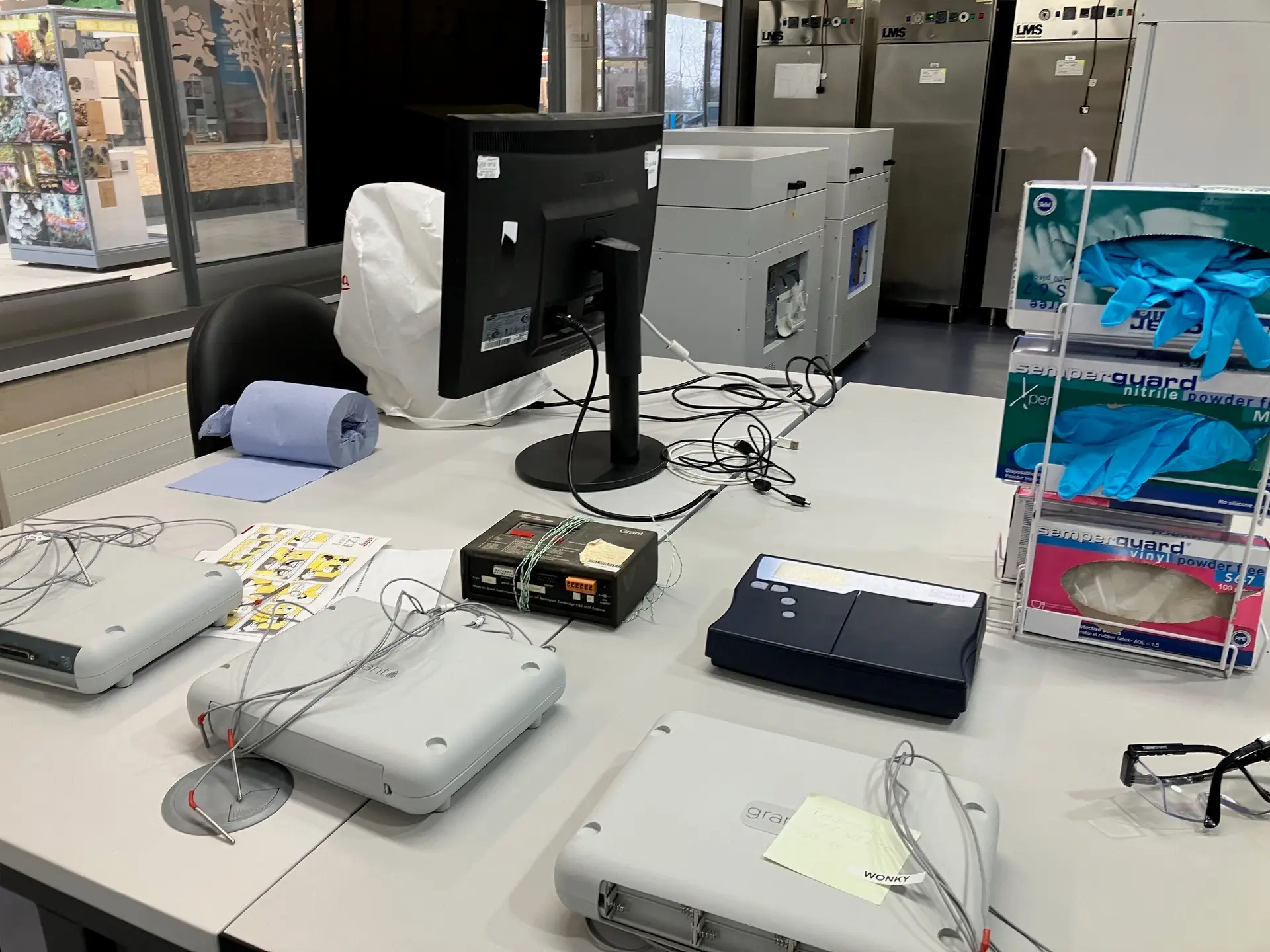
Paired with the SQ16 multi-channel data logger, the small sensor head and flexible cabling suit the 4-site, 6-site and 14-site temperature arrays used in thermoregulation, endurance testing and sports-clothing research. One logger captures the whole array together, on a single time base.
Proven in the research literature: MacRae et al. (2018)
The case for thermistors is not only practical, it is documented. The systematic review by MacRae et al. (2018) examined the sensors used across the sport, exercise and physical-activity literature, and two findings stand out:
- The most common sensor type. Thermistors were used in 89 of 172 reviewed studies, making them the dominant sensor type in the field.
- Grant is the most-cited manufacturer. Of the studies that reported a sensor brand, Grant Instruments (Cambridge, UK) was cited more often than any other company, in 29 studies. This reflects widespread trust in the quality, robustness and accuracy of Grant probes, particularly the EUS-series sensors.
These findings reflect why thermistors, and Grant sensors in particular, became the default choice: the practical reasons behind that preference, low thermal mass, multi-site flexibility and stability during exercise, are covered above.
A proof case: the UK Military Heat Illness Clinic
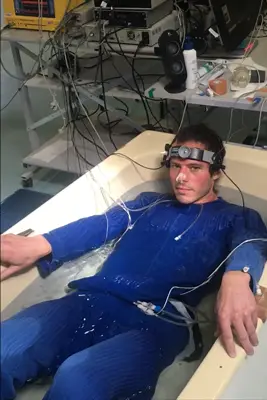
One of the most demanding applied examples comes from the UK Military Heat Illness Clinic, which uses Grant skin thermistors during its Heat Tolerance Test (HTT) (House, 2021). In this protocol, participants walk at 60% VO₂max in a 34 °C, 44% RH environmental chamber, while continuous skin-temperature readings from multiple sites help determine whether the individual can achieve thermal balance.
The logic that governs a heat-tolerance decision in that clinic, reading multi-site skin temperature to judge whether a person can hold thermal balance under load, is exactly the logic a sports scientist applies to an endurance athlete.
These insights map directly onto endurance-sport preparation: marathon and ultra-running heat strategies, triathlon kit assessment, and athlete-safety protocols all rest on the same skin-temperature evidence.
How UK universities use Grant probes in teaching
Across the UK, around 70 universities offer undergraduate and postgraduate degrees in fields such as sports science, sport and exercise science, sport and exercise physiology, sports coaching, sports therapy and sports rehabilitation. These programmes routinely include laboratory modules in exercise physiology, environmental physiology, sports biomechanics, performance testing, and sports medicine and rehabilitation.
Grant data loggers and probes, including the EUS-UU skin-temperature sensor, give students hands-on experience with the same research-grade equipment used in published studies. They support teaching across:
- Pre-exercise baseline assessment. Students record resting skin-temperature values before exercise, learning about homeostasis and individual variability.
- Monitoring during exercise. On treadmills, cycle ergometers or field-based endurance tasks, skin-temperature data help students understand thermoregulation and heat balance.
- Heat-stress testing. Environmental chambers or simulated heat sessions let students observe changes in skin temperature, sweat rate and physiological strain.
- Cold-exposure studies. In cold-room protocols, Grant probes are used to analyse skin-cooling rates, peripheral vasoconstriction and rewarming responses.
- Injury rehabilitation. In sports-therapy modules, students assess local skin temperature over injured tissue to explore inflammation, circulation and recovery.
Through these sessions, students gain familiarity with research-grade equipment, skills in data interpretation and thermal-response analysis, and experience that aligns directly with elite-sport, clinical and research careers. Grant equipment helps prepare the next generation of sport scientists, physiologists, therapists and performance analysts.
Applications in sports-clothing and endurance research
Beyond teaching, the EUS-UU thermistor and SQ16 logger are well suited to applied research programmes:
- Sports-clothing evaluation. Thermal mapping under technical fabrics; compression-garment and base-layer testing; analysis of breathable, reflective, moisture-wicking and insulating materials.
- Environmental training programmes. Monitoring heat-acclimation progression; cold-weather clothing studies for ultra-endurance and mountaineering; dual-stressor studies combining heat with altitude or humidity.
- Endurance-performance preparation. Heat-tolerance screening; sweat-distribution mapping for cooling strategies; pre-race garment and environmental-strategy optimisation.
In each of these, the value is the same: accurate, multi-site skin-temperature data that hold up under the real conditions of exercise.
A benchmark instrument for sports science
The Grant EUS-UU thermistor probe is one of the most widely used skin-temperature sensors in sports-science education and postgraduate research. Supported by decades of use across universities, by the findings of systematic review, and by real-world application in military heat-tolerance testing, the EUS-UU probe together with the SQ16 data logger remains a benchmark instrument for studying thermoregulation, clothing performance and human endurance across diverse environmental conditions.
If you are equipping or upgrading a sports-science lab, the Eltek team can help you specify the right probe-and-logger setup for your teaching and research.
For UK universities & colleges
The Sports Science Teaching Package
Build your teaching and research lab around the instruments the literature already trusts. Eltek’s Sports Science Teaching Package brings together the Grant SQ16 data logger, Grant EUS-UU-VL-5-0 thermistor probes and Squirrel software (SQS200 or SQS300), with:
- 15% off the package
- the software licence extended to 3 years (the standard licence is 2 years)
To claim it, enquire through our contact form and mention the Sports Science Teaching Package. Tell us how many measurement points you need and our UK engineers will help you specify the right configuration for your course and your students.
Enquire about the Sports Science Teaching PackageKey takeaways
- Skin temperature is a core variable in sports science, and contact thermistors remain the leading technology for measuring it during exercise.
- The Grant EUS-UU thermistor probe measures −50 °C to +150 °C at ±0.1 °C accuracy on a slim 3.1 mm VL-series cable with bare-wire termination.
- A 2018 systematic review found thermistors used in 89 of 172 studies, with Grant Instruments cited more often than any other manufacturer.
- The probe and SQ16 data logger are proven in real research, including the UK Military Heat Illness Clinic Heat Tolerance Test.
- Around 70 UK universities teach sports science, and Grant equipment gives students hands-on experience with research-grade instruments.
Need this in your lab?
Not sure how many measurement channels your studies need? Talk sensor layout and logger setup through with one of our UK engineers, and we will help you plan the right configuration. No obligation.
Talk to an Eltek engineerFrequently asked questions
What is the Grant EUS-UU thermistor probe used for?
The Grant EUS-UU is a surface thermistor probe designed for physiological skin-temperature measurement. It measures from −50 °C to +150 °C at ±0.1 °C accuracy on a slim, low-mass 3.1 mm VL-series cable with bare-wire termination, which makes it well suited to multi-site skin-temperature arrays during exercise, heat-stress testing and sports-clothing research.
Why do sports-science researchers use thermistors to measure skin temperature?
Contact thermistors stay accurate and stable under the conditions real exercise creates: sweating, high-intensity movement, clothing pressure and sudden environmental changes. Their low thermal mass lets them equilibrate quickly to skin temperature, so they track rapid warm-ups, interval work and cooling interventions. A 2018 systematic review found thermistors were the most common sensor type in sport and exercise research.
How many temperature points can the SQ16 data logger record at once?
The SQ16 is a multi-channel logger, so it can capture several skin-temperature sites from a single unit. The small sensor head and flexible cabling of the EUS-UU probe suit the 4-site, 6-site and 14-site arrays commonly used in thermoregulation, endurance testing and sports-clothing research.
What software do I need with the SQ16 and EUS-UU probes?
Readings from the SQ16 are managed in Grant’s Squirrel software, available as SQS200 or SQS300. Eltek’s Sports Science Teaching Package brings the SQ16, EUS-UU-VL-5-0 probes and SQS200 or SQS300 together with 15% off the package and the software licence extended to 3 years. Tell us what you need to monitor and our UK engineers will help you specify it.
Get more insights like this
Get monitoring insights in your inbox
Practical guidance on compliance and environmental monitoring: mapping, audit trails, probe selection and multi-site reliability. Occasional, useful, no noise.
Unsubscribe any time. Your details are never shared.