Life Sciences Case study
Live physiological monitoring inside a 40 kg bomb-disposal suit
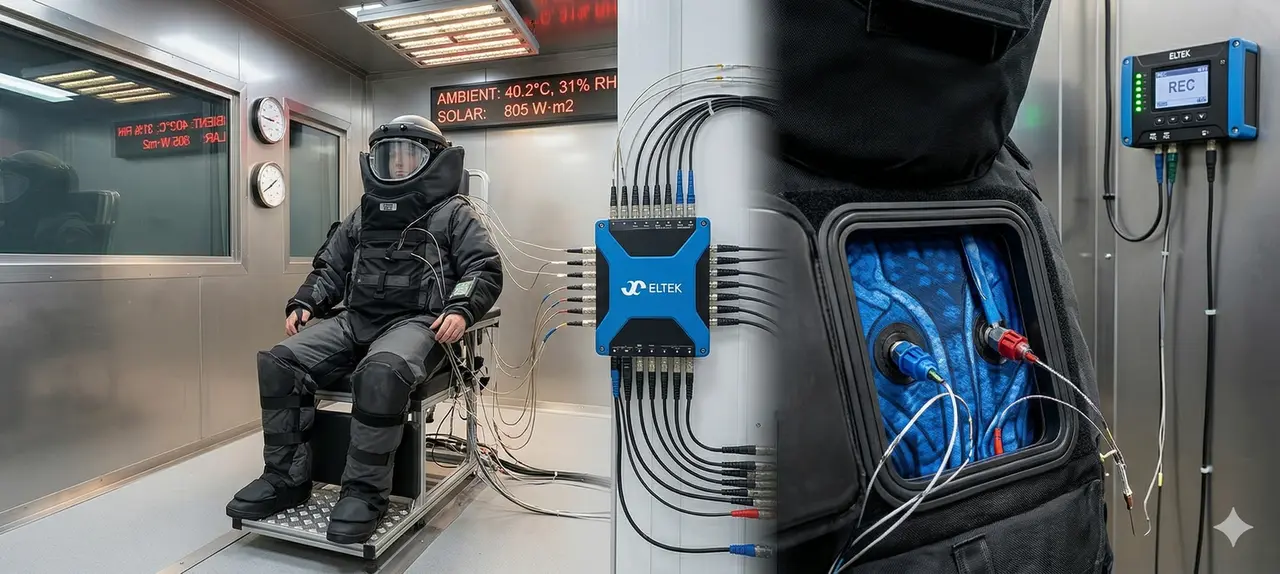
The Occupational and Environmental Physiology Group at Coventry University studies the human body in extreme conditions. For one study, a Liquid Cooling Suit worn under a 40 kg Explosive Ordnance Disposal suit, real-time monitoring was fundamental to both the science and participant safety.
7
Simultaneous measurement points
10 s
Logging interval
1 km
Wireless range
Research in extreme environments
CPASES runs observational and simulation studies in its environmental chamber (−25 to +50 °C, 20–90% RH, simulated solar irradiation and altitude) and in the field. PhD researcher Dirk Dugdale investigated the thermal burden of a 40 kg EOD suit and the mitigating effect of a Liquid Cooling Suit worn beneath it.
Multiple channels, live, at safe range
Thermocouples introduced to the cooling circuits let the team measure heat absorption and body heat storage, while the GenII system transmitted from seven body and cooling-suit locations at 10-second intervals, with transmission ranging up to 1 km, and battery-backup portability for moving between rooms and into the field.
“At any one time, I used the GenII system to transmit measurements from 7 different body and cooling suit locations at 10 second intervals. Monitoring participants’ thermal status live was fundamental to my work and participant health and safety.”
The platform
The Darca solutions behind it
One connected platform, Collect, Connect and Command, configured for this application.
Darca Collect
The GenII system transmits from seven body and cooling-suit locations at once, over ranges up to 1 km, with battery-backup portability.
Explore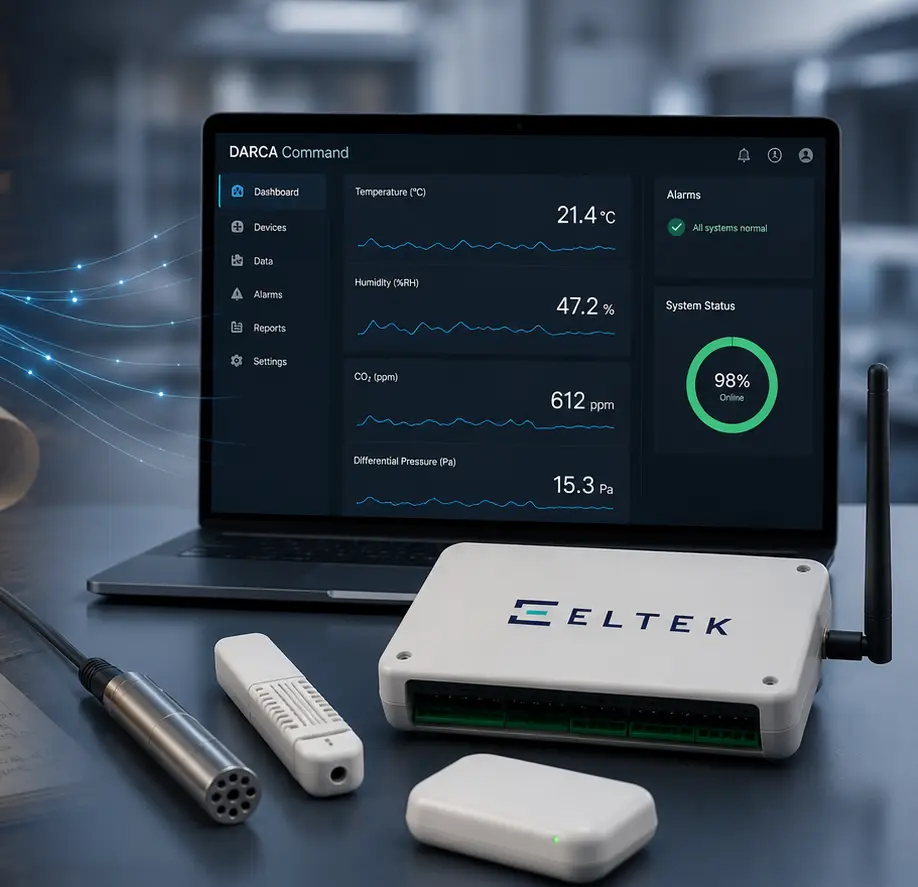
Darca Command
Darca Plus centralises the streams for live monitoring and logging, so researchers can watch participant thermal status in real time.
Explore