
Temperature Monitoring
The complete guide to temperature monitoring
Temperature monitoring is the continuous measurement of conditions across a storage or process environment, so you always know product is being held within its safe range. This page covers what a monitoring system does, how to choose between wired and wireless sensing, the UK compliance expectations to meet, and how Eltek monitors continuously with alarms and audit-ready records.
What this guide covers
Temperature monitoring, explained
This guide covers temperature monitoring end to end. The eight sections that follow move from what monitoring is and why it matters, through what separates a system worth buying from a box that just logs numbers, how wired and wireless sensing compare, and how Eltek’s Darca platform monitors continuously with real-time alarms and audit-ready records, to the environments it protects and how monitoring differs from mapping. Use the on-this-page list to jump straight to the part you need.
- Why it matters
- A single ultra-low-temperature freezer can hold years of research or thousands of doses. Monitoring escalates a breach in real time and produces the time-stamped evidence regulated storage has to show.
- Wired, wireless, or both
- Most estates use both. Battery-powered GenII wireless deploys where cabling is impractical, while Darca Wired and GD-series probes cover fixed high-accuracy points, all feeding one platform.
Section 01
What temperature monitoring is
Temperature monitoring is the continuous, automatic watch over the conditions inside a controlled space. Calibrated sensors record temperature, and frequently humidity and other conditions too, at set intervals around the clock, compare each reading against defined limits, and store the results as a permanent, time-stamped record. When a reading drifts outside its limits, the system raises an alarm so someone can act before conditions cause damage.
The purpose is evidence and early warning. Whether you are protecting vaccines in a pharmacy fridge, samples in a biobank freezer, a production process, or artefacts in a museum store, monitoring gives you objective proof that conditions held their specification, and a warning the moment they do not.
Monitoring is not a spot check
A manual spot check tells you the temperature at one point, at one moment, and only if someone was there to take it. Continuous monitoring records every position it watches around the clock, so an excursion at 3am on a bank holiday is captured, timestamped and escalated, not missed.
A setpoint is not evidence
A fridge dialled to the right number does not prove it held that number, everywhere, all day. Monitoring produces the objective, time-stamped record that shows conditions actually stayed within specification, which is what an auditor asks to see.
Monitoring is what happens after mapping
A temperature mapping study is a one-time (or periodic) exercise that finds where a space runs warmest and coldest and justifies where the sensors belong. Monitoring is the permanent watch that follows, at the positions the study identified.
Section 02
Why it matters
The value in a controlled space is often far larger than the equipment holding it: a single ultra-low-temperature freezer can hold years of irreplaceable research or thousands of doses. A silent overnight excursion, a failing compressor or a door left ajar can undo all of it, and a manual check the next morning finds out too late.
Monitoring closes three gaps at once. It protects the contents by escalating a breach in real time so someone can respond. It produces the evidence regulated environments must show, that conditions stayed within specification and that excursions were caught and acted on. And it removes the manual burden, freeing people from clipboard rounds that are easy to skip, easy to fudge, and blind to everything that happens between readings.

Section 03
What to look for in a temperature monitoring system
Every system logs a number. The difference between one worth buying and a box that just records is what it does with that number, how far you can trust it, and whether it will still serve you as you grow. Use this as a specification checklist.
Continuous, automatic logging
Readings captured on a fixed interval without anyone present, frequently enough to catch transient events such as door openings and compressor cycles, not an occasional manual reading transcribed onto a clipboard.
Real-time alarms that escalate
A breach should reach the right person the moment it happens, by SMS, email and on-screen, and keep escalating until it is acknowledged, so a problem is acted on before conditions cause damage rather than discovered the next morning.
Calibrated sensors with traceable accuracy
Sensors should carry current calibration certificates traceable to national measurement standards, in the UK normally UKAS-accredited calibration to ISO/IEC 17025, and cover the full range you operate, including ultra-low temperatures where generic kit often falls short.
A tamper-evident, time-stamped record
Data should be stored with secure, computer-generated audit trails that cannot be quietly edited, the electronic-record controls regulated environments expect, so the record stands up as evidence.
Compliance-ready reporting
Scheduled and on-demand reports suited to regulated workflows including GxP, GMP, HTA and 21 CFR Part 11, so producing evidence for an inspection is a few clicks, not a week of spreadsheet archaeology.
Coverage that scales across sites and zones
One platform that shows every site and zone at a glance and drills into any single sensor, with connectivity and repeaters that reach across large, multi-zone and multi-building estates.
Wired and wireless in one system
The freedom to deploy battery-powered wireless sensors where cabling is impractical and fixed wired probes where you need cabled high accuracy, both feeding the same software, so the architecture fits the building rather than the other way round.
Role-based control and long-term support
Permissions that keep the right people in control across teams and sites, per-site configuration of thresholds and schedules, and a supplier that will still be supporting the system, and calibrating the sensors, years from now.
Section 04
Wired, wireless, or both
The wired-versus-wireless question rarely has a single answer. Most real estates use both, and the right platform lets you mix them freely rather than forcing a choice.
Wireless
Battery-powered sensors that need no cabling, so they deploy quickly across a large warehouse, a listed heritage building or a busy laboratory, and scale with repeaters that extend range across multi-zone and multi-building sites. Eltek’s GenII wireless range measures temperature, humidity, CO₂ and pressure, including the GD24 thermocouple temperature transmitter. Wireless suits most estates and almost every retrofit.
Wired
Fixed, cabled sensing for positions that need cabled high accuracy or a permanent power and data run, delivered through Darca Wired and the GD-series transmitters. The GD44 also brings analogue voltage and current-loop signals from existing plant and instruments into the same system. Where a point needs high channel counts and high-density, high-precision measurement, the Grant Squirrel DAQ range, including the SQ16Plus multi-channel logger, provides the wired architecture and feeds the same connected platform alongside the wireless GenII sensors.
Because both feed the same Darca software, you can put wireless where cabling is impractical and wired where you need it, and see everything in one place. That is the practical advantage of one platform that speaks both: the architecture fits the building, not the other way round.
Section 05
How Eltek monitors temperature
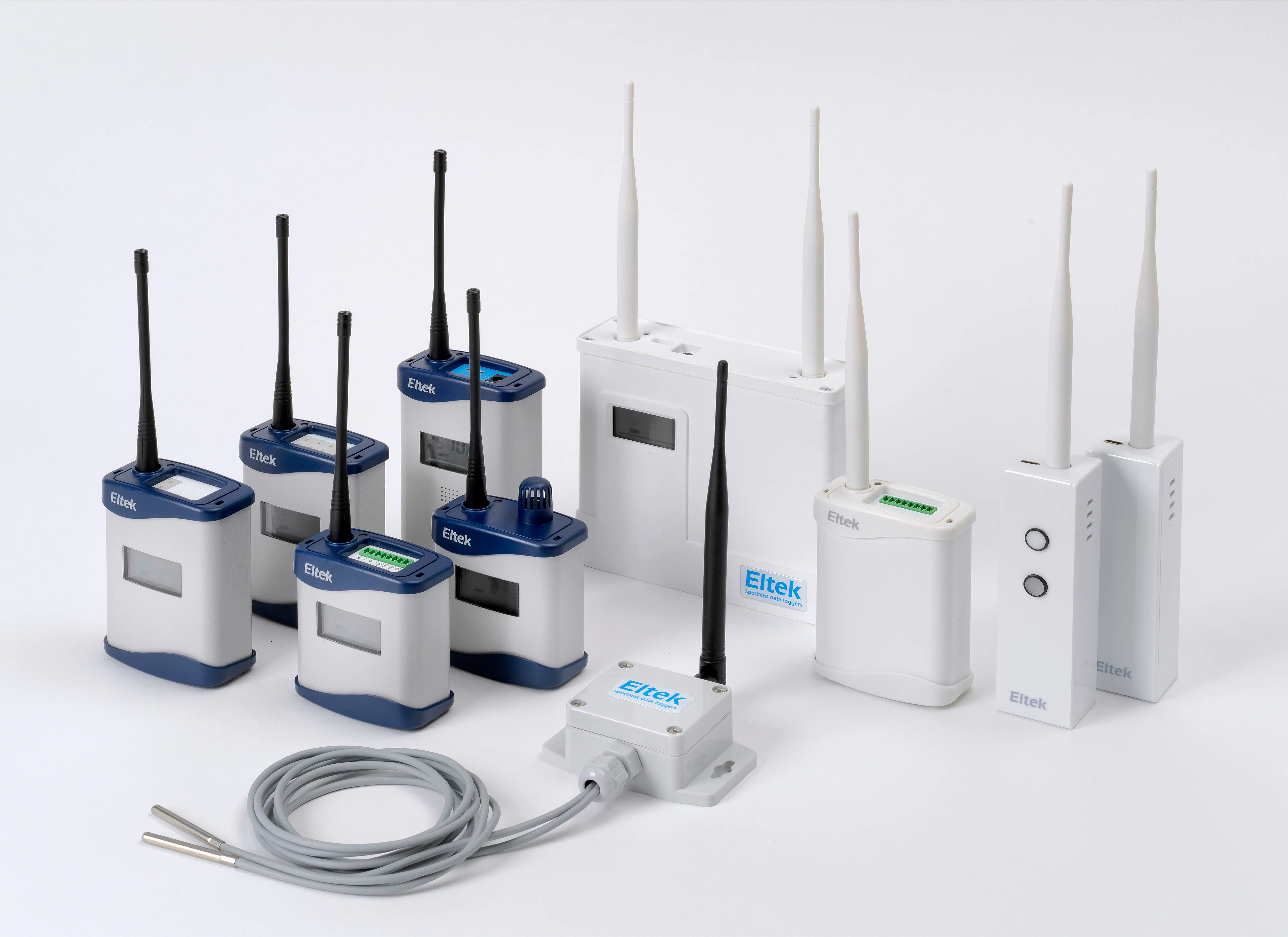
Eltek brings sensing, connectivity and cloud software together in one connected platform, Darca, in three layers. Each maps directly to the checklist above, and Eltek has designed and manufactured monitoring equipment in the UK for over 40 years as part of the Royston Instruments Group.
Collect
Calibrated sensing, wired and wireless
Battery-powered GenII wireless transmitters measure temperature, humidity, CO₂ and pressure with no cabling to run, while Darca Wired and the GD-series transmitters cover fixed, cabled, high-accuracy installs. Sensors and probes are calibrated with UKAS-traceable certificates and cover the full range, including ultra-low temperatures.
See the sensing rangeConnect
Secure connectivity from site to software
The SRV450 receiver logger and wireless hub gathers data from the wireless network and relays it securely to the Darca Command cloud, a single-box link from site to software, and the SMS450 receiver logger with grouped text-message alarms turns a threshold breach into an instant SMS alert. Repeaters extend range across large, multi-zone and multi-building sites.
How the network fits togetherCommand
Visibility, alarms and audit-ready records
Darca Command shows live dashboards across every site and zone, raises real-time alarms by SMS, email and on-screen, and produces compliance-ready reports with full audit trails suited to GxP, GMP, HTA and 21 CFR Part 11 workflows. Role-based permissions and per-site configuration keep each environment tuned to what it needs.
Explore Darca CommandSection 06
Temperature monitoring by environment
The principles are the same everywhere; the specifics differ by sector. Eltek monitors regulated storage, industrial processes and heritage collections across the UK. Explore the environment closest to yours.

Life sciences and healthcare
Laboratory fridges and freezers, ultra-low-temperature biobank storage, incubators, stability chambers and cold rooms, with the audit-ready records regulated storage depends on.
Explore
Manufacturing and industrial
Process and environmental conditions across production, storage and test areas, including analogue signals from existing plant via current-loop and voltage transmitters.
Explore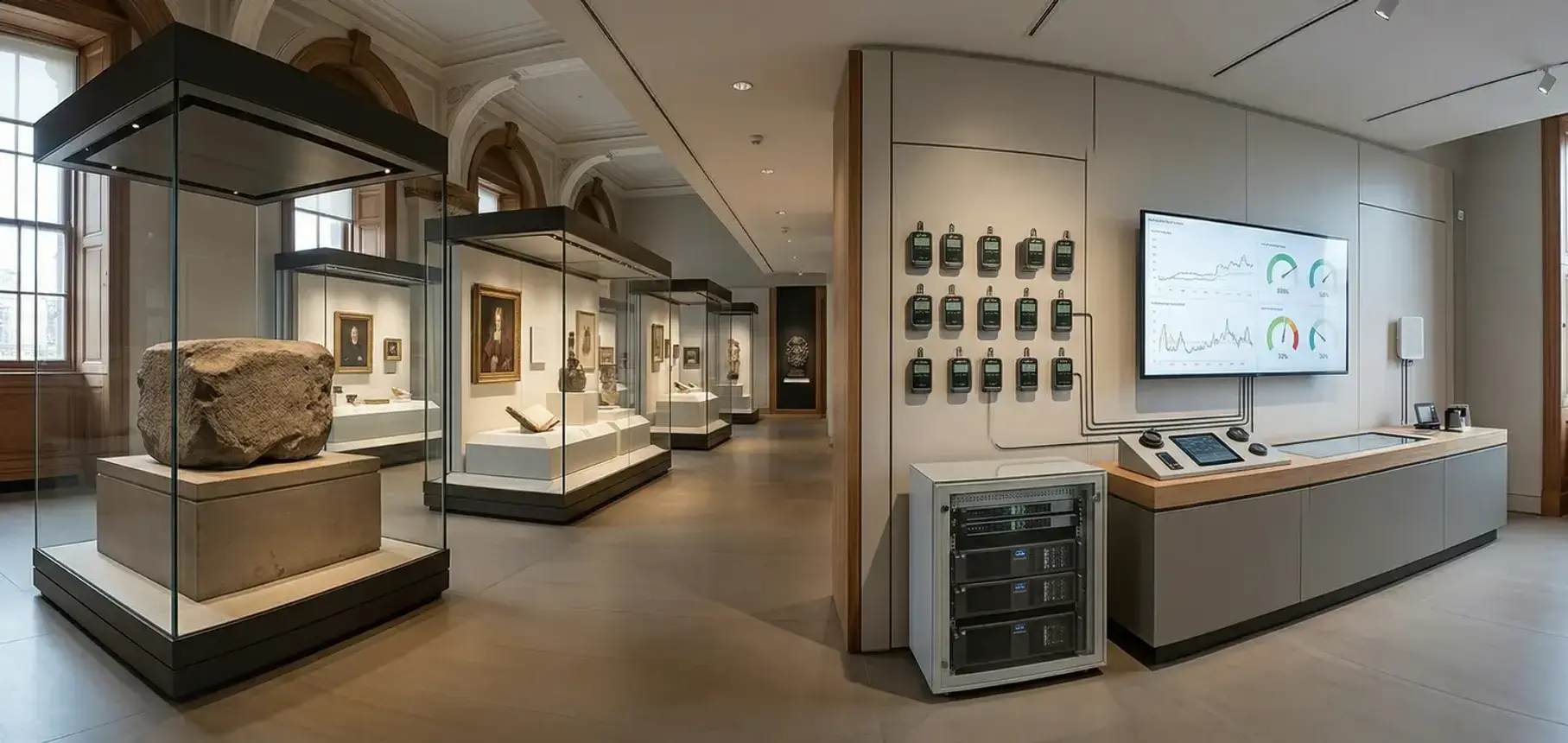
Museums, galleries and heritage
Temperature, humidity and light in galleries, stores and historic interiors, with wireless sensors that need no cabling run through listed fabric.
ExploreAlso monitoring food, cold storage and retail and the built environment. See all applications.
Section 07
Monitoring vs mapping
The two are often confused, but they are two stages of one evidence chain, not alternatives.
Temperature mapping
A one-time or periodic qualification study. Calibrated loggers are placed throughout a space to find where it runs warmest and coldest and to justify where the permanent sensors belong.
Read the mapping guideTemperature monitoring
The permanent watch that follows. Sensors sit at the positions the mapping study justified and record continuously, so any excursion is caught, alarmed and evidenced as it happens.
How Eltek monitorsSection 08
Temperature monitoring: frequently asked questions
What is temperature monitoring?
Temperature monitoring is the continuous measurement and recording of temperature, and often humidity and other conditions, in a controlled space such as a laboratory fridge, freezer, cold room, warehouse, cleanroom or museum store. Calibrated sensors log data automatically at set intervals, raise alarms when readings drift outside defined limits, and store a time-stamped, tamper-evident record. It replaces manual spot checks with round-the-clock evidence that conditions stayed within specification.
What is the difference between temperature monitoring and temperature mapping?
They are two stages of the same evidence chain rather than alternatives. Temperature mapping is a one-time or periodic qualification exercise that places calibrated loggers throughout a space to characterise how temperature is distributed across the whole volume and to identify where the extremes are. Temperature monitoring is what happens afterwards: permanent sensors watch the positions the mapping study justified, continuously, so any excursion is caught as it occurs. In short, mapping decides where the monitoring sensors belong; monitoring then keeps watch at those positions.
What should I look for in a temperature monitoring system?
Look for continuous automatic logging rather than manual spot checks; real-time alarms that escalate by SMS, email and on-screen until acknowledged; calibrated sensors with accuracy traceable to national standards, in the UK normally UKAS-accredited calibration to ISO/IEC 17025; a tamper-evident, time-stamped record with secure audit trails; compliance-ready reporting for your regulatory workflow; coverage that scales across sites and zones; the option of both wired and wireless sensing; and a supplier that will support and recalibrate the system for years.
Should I choose wired or wireless temperature monitoring?
Most real estates use both. Wireless sensors are battery-powered and quick to deploy where running cable is impractical, for example across a large warehouse, a listed building or a busy laboratory, and they scale easily with repeaters. Wired sensors suit fixed positions that need cabled, high-accuracy measurement or where a permanent power and data run already exists. A good platform, such as Eltek’s Darca, accepts both feeding one set of software, so you can match the architecture to each space rather than compromise on one approach.
Does temperature monitoring help with regulatory compliance?
Yes. Regulated environments have to evidence that storage held its specified conditions, not just that a setpoint was dialled in. A monitoring system provides that evidence: continuous time-stamped data, alarms that show excursions were caught and acted on, and secure audit trails. Eltek’s Darca Command produces compliance-ready reporting suited to GxP, GMP, HTA and 21 CFR Part 11 workflows. No monitoring system makes a facility compliant on its own; validation of the storage in its intended use stays the organisation’s responsibility, and the system supplies the traceable evidence that supports it.
How does Eltek monitor temperature?
Eltek uses one connected platform, Darca, in three layers. Collect measures conditions with battery-powered GenII wireless transmitters for temperature, humidity, CO₂ and pressure, and with Darca Wired and the GD-series transmitters for fixed cabled installs. Connect relays data securely from site to software through the SRV450 hub, with the SMS450 raising SMS alarms and repeaters extending range. Command provides live dashboards, real-time alarms and compliance-ready reporting with full audit trails. Sensors carry UKAS-traceable calibration, and Eltek has designed and manufactured monitoring equipment in the UK for over 40 years.
Can one system monitor temperature across multiple sites?
Yes. Darca Command shows every site and zone in one view and lets you drill into any single sensor, so a team can watch storage across several buildings or locations from one place. Connectivity through the SRV450 hub and repeaters that extend range across large, multi-zone and multi-building sites means the same platform scales from a single laboratory fridge to a whole estate, with role-based permissions keeping the right people in control at each site.
What conditions can Eltek monitor besides temperature?
As well as temperature, Eltek’s GenII wireless range measures relative humidity, CO₂ and pressure, and analogue transmitters such as the GD44 bring in voltage and current-loop signals from existing plant and instruments. That means a single monitoring platform can cover the full environmental picture a space depends on, from a museum store watching temperature, humidity and light to an industrial process watching an analogue sensor output, all in one connected system with the same alarms, reporting and audit trail.
The platform
The Darca Suite
One complete platform for monitoring laboratories, biobanks, clinics and regulated environments.
Darca Collect
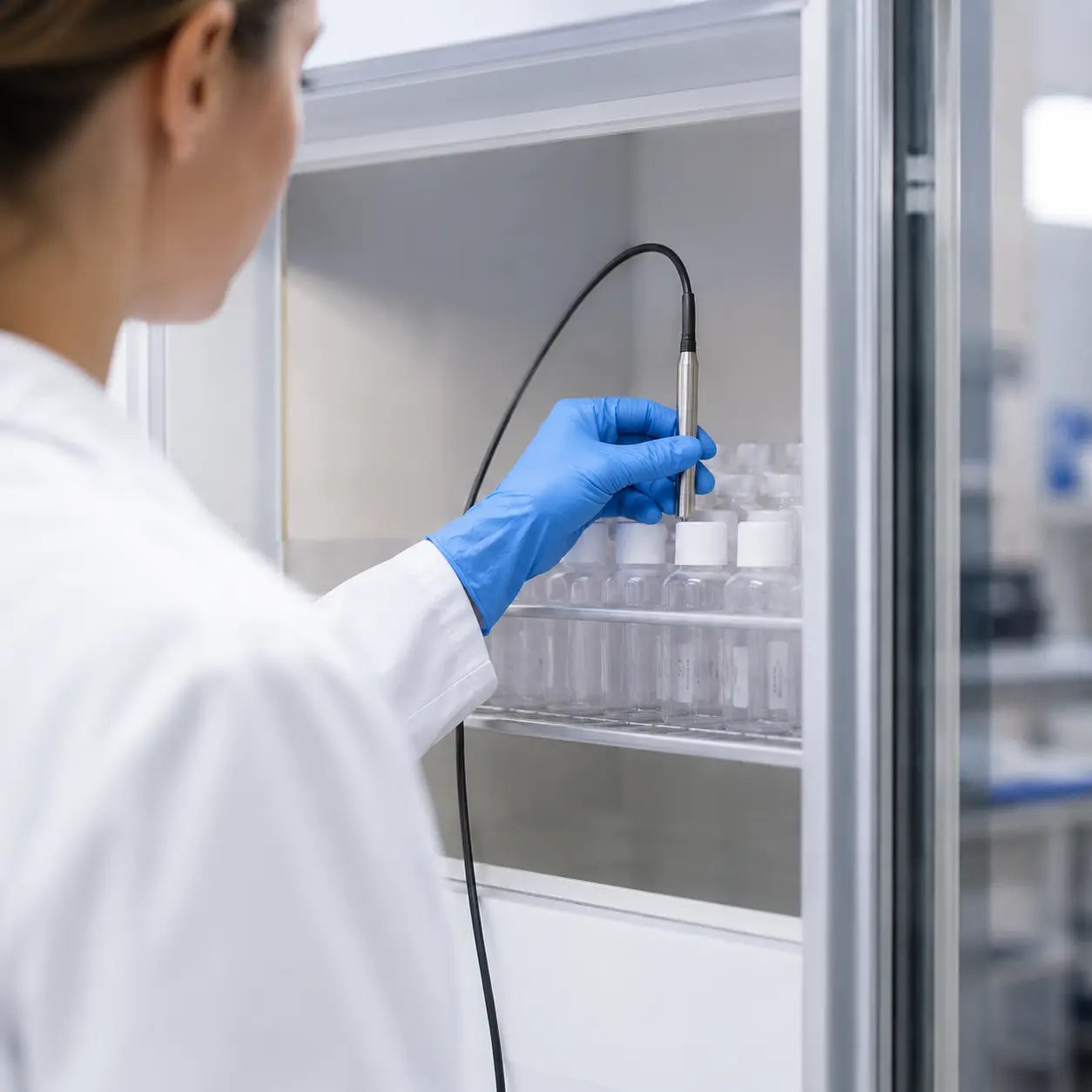
Wireless GenII transmitters and high-accuracy wired probes matched to ULT freezers, cold rooms, incubators, IVF equipment and stability chambers.
Explore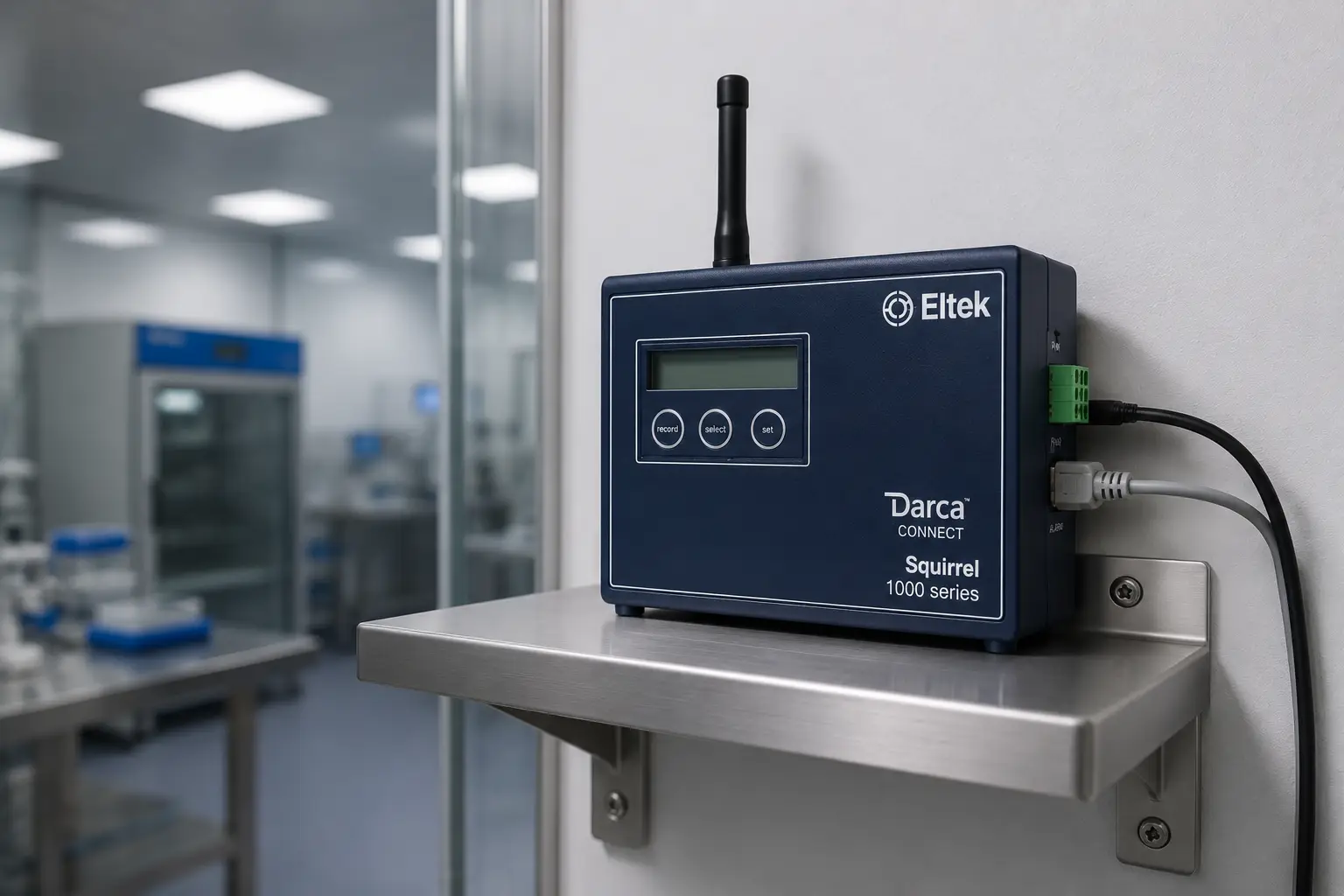
Darca Connect
The SRV450 hub gathers the network and SMS450 alarms escalate an out-of-tolerance excursion to the right person instantly, so samples are protected.
Explore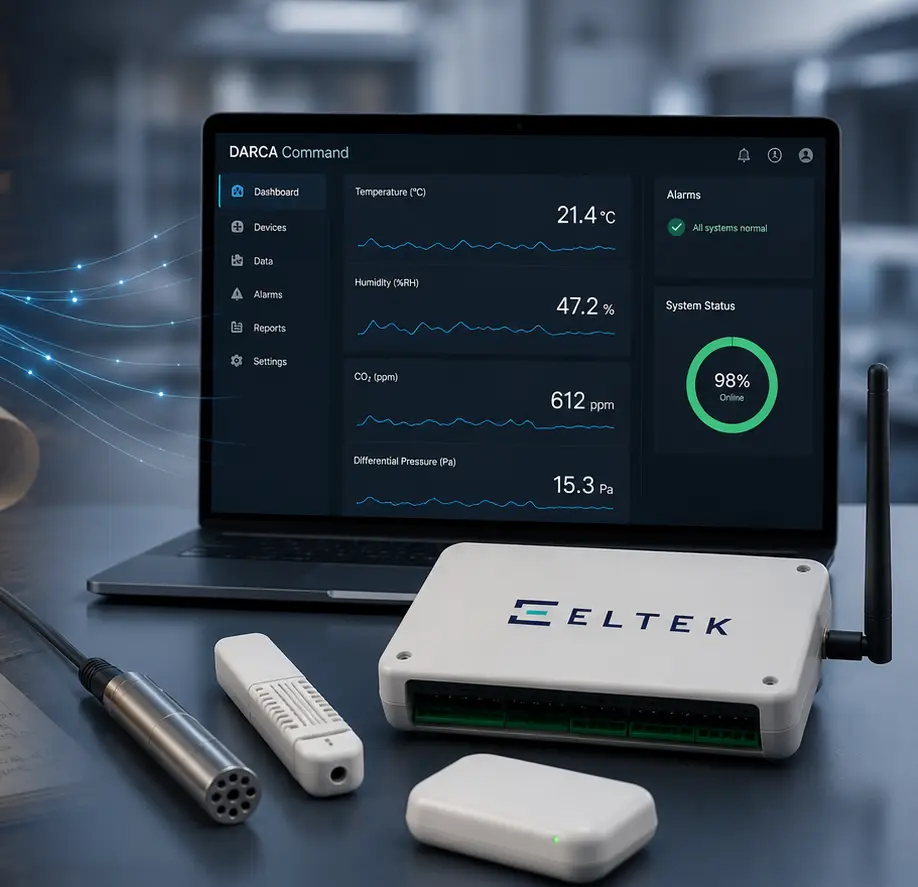
Darca Command
Compliance-ready dashboards, audit trails and scheduled reporting built for GxP, GMP, HTA, ISO and 21 CFR Part 11 environments.
ExploreSpeak to an Eltek expert about temperature monitoring
Tell us the spaces, the temperature ranges and how many points you need to watch, and our engineers will help you specify the sensors, connectivity and Darca software to monitor them continuously, with alarms and audit-ready records.