
Data Loggers
The complete guide to data loggers
A data logger is a device that records measurements like temperature and humidity at set intervals, building a continuous, timestamped history you can trust for compliance. This page explains the wired and wireless types, what to look for when you choose one, why calibration matters, and how Eltek’s loggers feed one connected platform with alarms and audit-ready records.
What this guide covers
Data loggers, explained
This guide covers data loggers end to end. The eight sections that follow move from what a data logger is and why it matters, through the wired and wireless types and what separates a logger worth buying from a box that just records numbers, to how Eltek’s loggers feed the Darca platform with real-time alarms and audit-ready records, the environments they work in, and how a logger differs from a full monitoring system. Use the on-this-page list to jump straight to the part you need.
Section 01
What a data logger is
A data logger is an electronic device that measures a physical condition, most often temperature, and frequently humidity and other conditions too, and records each reading automatically at a set interval. Calibrated sensors capture the data, and the logger stores it with a time stamp so you have a continuous, objective history rather than a single reading someone happened to take.
Some loggers are standalone: they store readings for you to download and review later. Others are networked, sending data live to software that shows current conditions, raises alarms when readings drift outside set limits, and produces reports. Whichever it is, the purpose is the same, an accurate record you can trust and, on a connected system, an early warning the moment conditions change.
A logger records, it does not just display
A dial or a handheld thermometer shows you a number now. A data logger keeps every reading it takes, on a fixed interval around the clock, so you have a continuous history rather than a single glance that is gone the moment you look away.
It works when nobody is there
The point of automatic logging is the readings nobody was present to take. An overnight excursion, a weekend door left ajar or a slow compressor failure is captured, timestamped and, on a connected system, alarmed, rather than missed until the next manual round.
A logger is the sensing layer of monitoring
Loggers do the measuring; a monitoring system adds the connectivity, alarms, dashboards and reporting on top. A standalone logger stores readings for later download, while a networked logger feeds software continuously so you can see conditions and respond live.
Section 02
Why data loggers matter
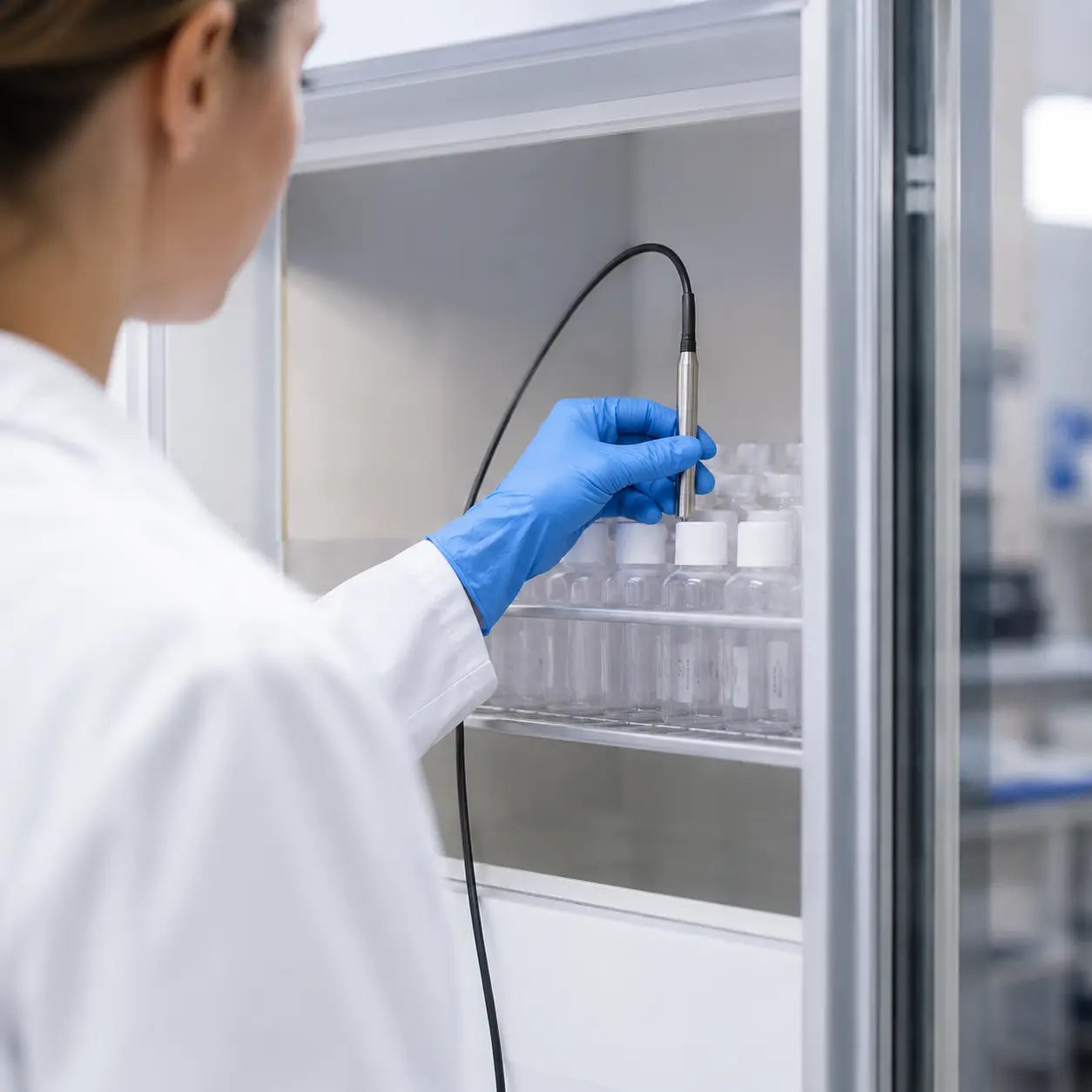
The value in a controlled space is often far larger than the equipment holding it: a single ultra-low-temperature freezer can hold years of irreplaceable research or thousands of doses, and a batch on a production line can be worth a day’s output. A silent overnight excursion, a failing compressor or a door left ajar can undo all of it, and a manual check the next morning finds out too late.
A data logger closes three gaps at once. It captures what nobody was there to see, every reading, around the clock, including the ones between manual rounds. It produces the evidence regulated environments must show, that conditions stayed within specification. And on a connected system it turns a reading into an alarm, so a breach is escalated in real time rather than discovered after the damage is done.
Section 03
Types of data logger
Data loggers are usually grouped by how they connect, how you get the data off them, and what they measure. Most real installations combine more than one type on a single platform.
Wireless data loggers
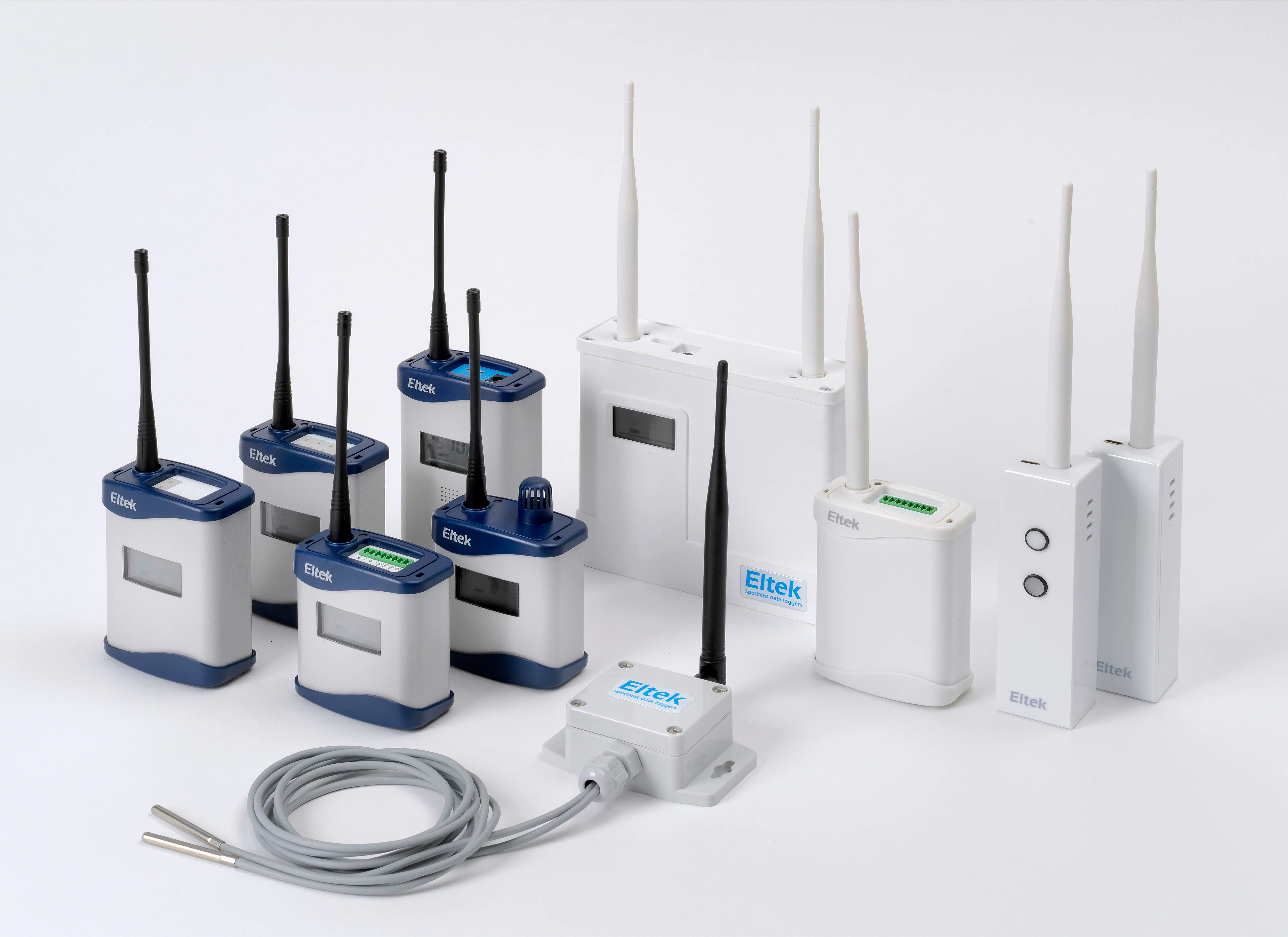
Battery-powered sensors that need no cabling, so they deploy quickly across a warehouse, a listed building or a busy laboratory, and scale with repeaters that extend range across multi-zone and multi-building sites. Eltek’s GenII wireless range measures temperature, humidity, CO₂ and pressure.
Wired data loggers
Fixed, cabled sensing for positions that need cabled high accuracy or a permanent power and data run, delivered through Darca Wired and the GD-series transmitters. Where a point needs high channel counts and high-density, high-precision measurement, the Grant Squirrel DAQ range, including the SQ16Plus multi-channel logger, provides the wired architecture.
Standalone or connected
A standalone logger stores its readings for you to download and review later. A connected logger sends data live to software, so conditions are visible and alarms escalate in real time. Eltek’s loggers feed the Darca platform, and the Eltek Bridge (BRI-250) links legacy transmitters into it too.
By what they measure
Different loggers capture different conditions. Eltek measures temperature, relative humidity, CO₂ and pressure with GenII wireless, and brings in analogue voltage and current-loop signals from existing plant and instruments through the GD44 transmitter, all on one connected platform.
Section 04
What to look for in a data logger
Every logger records a number. The difference between one worth buying and a box that just stores readings is how far you can trust it, how completely it captures, and whether it will still serve you as you grow. Use this as a specification checklist.
Accuracy you can trust, with traceable calibration
A logger is only as good as its calibration. Look for sensors with current certificates traceable to national measurement standards, in the UK normally UKAS-accredited calibration to ISO/IEC 17025, covering the full range you operate, including ultra-low temperatures where generic kit often falls short.
The right measurement range and parameters
Match the logger to what you actually need to record, whether that is temperature alone or temperature with relative humidity, CO₂, pressure or analogue process signals, across the full range your environment reaches.
Continuous, gap-free logging
Readings should be captured on a fixed interval frequently enough to catch transient events such as door openings and compressor cycles, without gaps, so the record is complete rather than a series of occasional snapshots.
Wired, wireless, or both on one platform
The freedom to deploy battery-powered wireless loggers where cabling is impractical and fixed wired probes where you need cabled high accuracy, both feeding the same software, so the architecture fits the building rather than the other way round.
Real-time alarms that escalate
On a connected logger a breach should reach the right person the moment it happens, by SMS, email and on-screen, and keep escalating until it is acknowledged, so a problem is acted on before conditions cause damage.
Secure, tamper-evident records
Data should be stored with secure, computer-generated audit trails that cannot be quietly edited, the electronic-record controls regulated environments expect, so the record stands up as evidence at an audit or inspection.
Software to see, report and prove it
Raw readings are not enough. Look for software that shows every logger at a glance, drills into any single sensor, and produces the scheduled and on-demand reports regulated workflows such as GxP, GMP, HTA and 21 CFR Part 11 depend on.
Scale and long-term support
One platform that grows from a single fridge to a whole estate, with connectivity and repeaters that reach across multi-zone sites, and a supplier that will still be supporting the system, and recalibrating the sensors, years from now.
Section 05
How Eltek’s data loggers work
Eltek does not sell loggers in isolation. Its wired and wireless loggers feed one connected platform, Darca, in three layers. Each maps directly to the checklist above, and Eltek has designed and manufactured monitoring equipment in the UK for over 40 years as part of the Royston Instruments Group.
Collect
The loggers: calibrated, wired and wireless
Battery-powered GenII wireless transmitters, such as the GD14e wireless transmitter for humidity and multi-point temperature and the GD24 wireless thermocouple (K and T) transmitter, log temperature, humidity, CO₂ and pressure with no cabling to run, while Darca Wired, the GD-series transmitters and the high-channel-count Grant Squirrel SQ16Plus cover fixed, cabled, high-accuracy and high-density installs. Every sensor and probe is calibrated with UKAS-traceable certificates across the full range, including ultra-low temperatures.
See the sensing rangeConnect
Getting the data off the logger, securely
The SRV450 hub gathers data from the wireless network and relays it securely to the Darca Command cloud, a single-box link from logger to software, and the SMS450 turns a threshold breach into an instant SMS alert. Repeaters extend range across large, multi-zone and multi-building sites.
How the network fits togetherCommand
Seeing, alarming and proving the readings
Darca Command shows live dashboards across every logger and zone, raises real-time alarms by SMS, email and on-screen, and produces compliance-ready reports with full audit trails suited to GxP, GMP, HTA and 21 CFR Part 11 workflows. Role-based permissions and per-site configuration keep each environment tuned to what it needs.
Explore Darca CommandSection 06
Data loggers by environment
The principles are the same everywhere; the specifics differ by sector. Eltek’s loggers watch regulated storage, industrial processes and heritage collections across the UK. Explore the environment closest to yours.
Life sciences and healthcare
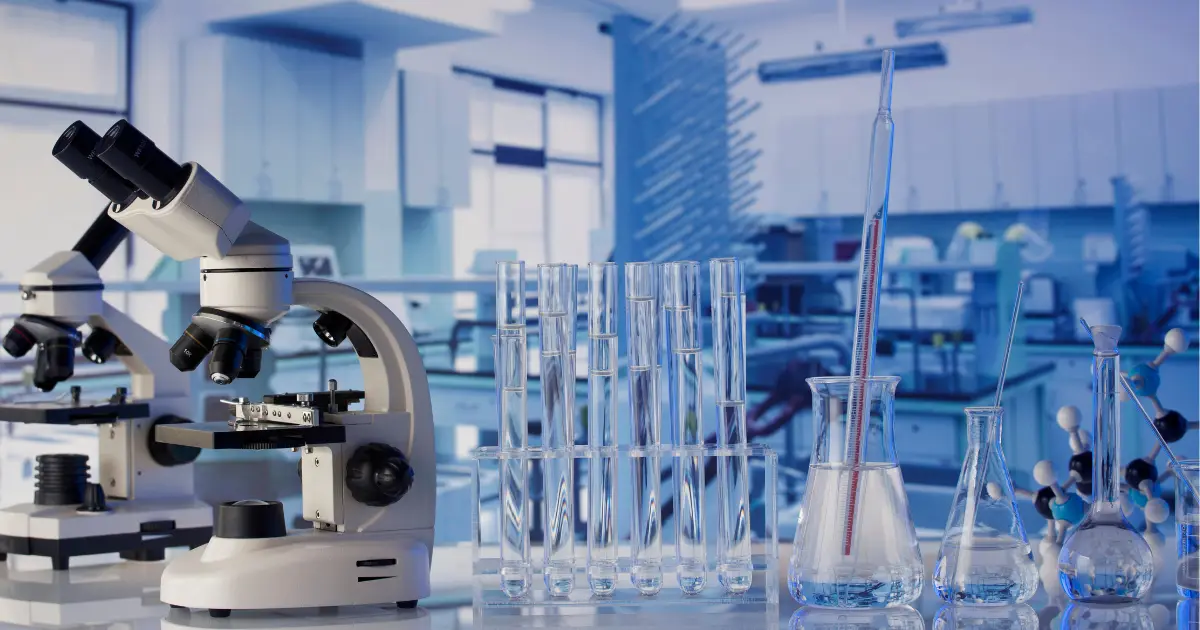
Laboratory fridges and freezers, ultra-low-temperature biobank storage, incubators, stability chambers and cold rooms, with the audit-ready records regulated storage depends on.
Explore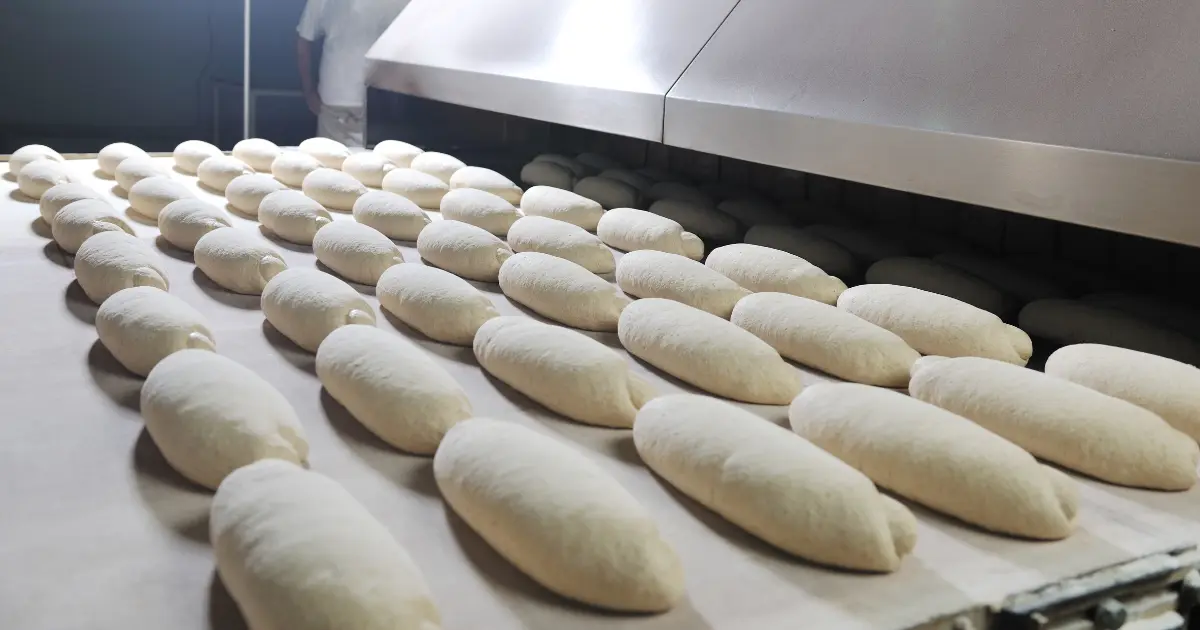
Manufacturing and industrial
Process and environmental conditions across production, storage and test areas, including high channel counts through the Grant Squirrel SQ16Plus and analogue signals from existing plant.
Explore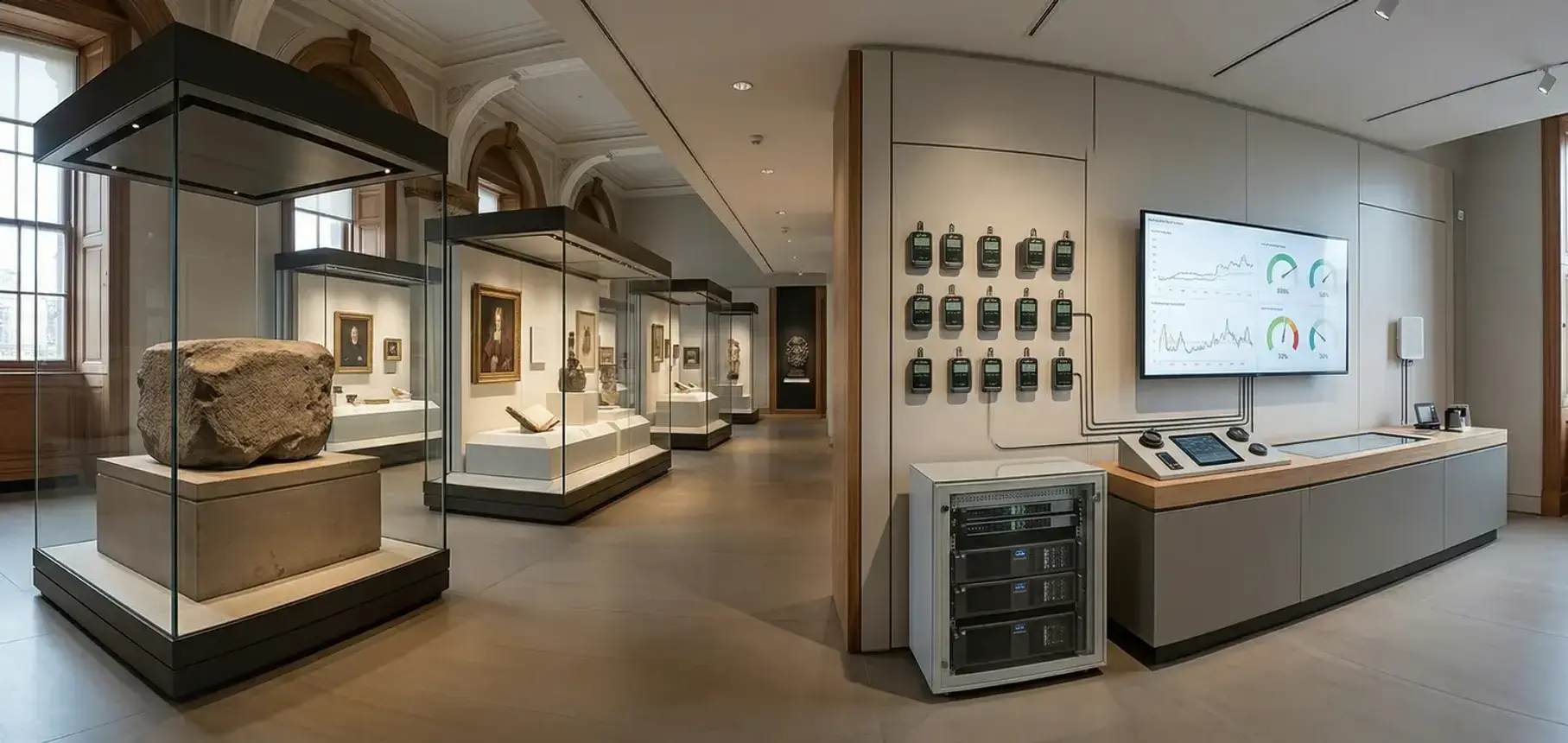
Museums, galleries and heritage
Temperature, humidity and light in galleries, stores and historic interiors, with wireless loggers that need no cabling run through listed fabric.
ExploreAlso logging food, cold storage and retail and the built environment. See all applications.
Section 07
Data logger vs monitoring system
The terms are often used interchangeably, but they describe different things: the device, and the system built around it.
The data logger
The device that does the measuring and recording. It captures readings from calibrated sensors on a fixed interval and stores them with a time stamp, wired or wireless.
The monitoring system
The whole solution around the loggers: connectivity to get data off them, alarms that escalate a breach, dashboards that show every sensor, and reporting that proves conditions held.
Read the monitoring guideBefore you monitor a space you often map it first: a temperature mapping study uses calibrated loggers to find where a space runs warmest and coldest and justify where the permanent loggers belong. Mapping decides where the loggers go; monitoring then keeps watch at those positions.
Section 08
Data loggers: frequently asked questions
What is a data logger?
A data logger is an electronic device that measures and records a physical condition, such as temperature, relative humidity, CO₂ or pressure, automatically at set intervals using calibrated sensors. It stores each reading with a time stamp so the record can be reviewed later. Networked loggers also send readings live to software that shows conditions, raises alarms when they drift outside set limits, and produces reports. In short, a data logger replaces manual, written-down readings with a continuous, objective, time-stamped record.
What is the difference between a data logger and a temperature monitoring system?
A data logger is the device that does the measuring and recording. A temperature monitoring system is the whole solution built around loggers: the connectivity that gets data off them, the alarms that escalate a breach, the dashboards that show every sensor, and the reporting that proves conditions held. A standalone logger stores readings for later download; a monitoring system connects loggers so conditions are visible and alarmed in real time. Eltek’s loggers feed the Darca platform, which adds exactly that connectivity, alarms and reporting.
What are the main types of data logger?
Data loggers are usually grouped three ways. By connection, they are wireless (battery-powered, no cabling, quick to deploy and scale with repeaters) or wired (fixed, cabled, for high-accuracy or high-channel-count points). By how you get the data, they are standalone (readings downloaded later) or connected (readings sent live to software). And by what they measure, from temperature alone to temperature with relative humidity, CO₂, pressure or analogue process signals. Eltek offers wireless GenII loggers, wired Darca Wired and GD-series transmitters, and the high-channel-count Grant Squirrel SQ16Plus, all on one connected platform.
Should I choose a wired or wireless data logger?
Most real estates use both. Wireless loggers are battery-powered and quick to deploy where running cable is impractical, for example across a large warehouse, a listed building or a busy laboratory, and they scale easily with repeaters. Wired loggers suit fixed positions that need cabled, high-accuracy measurement, high channel counts or a permanent power and data run. Eltek’s Darca platform accepts both, wireless GenII transmitters and wired Darca Wired, GD-series and Grant Squirrel loggers, feeding one set of software, so you can match the logger to each space rather than compromise on one approach.
What should I look for in a data logger?
Look for calibrated sensors with accuracy traceable to national standards, in the UK normally UKAS-accredited calibration to ISO/IEC 17025; the right measurement range and parameters for what you monitor; continuous, gap-free logging at a sensible interval; the option of both wired and wireless on one platform; real-time alarms that escalate by SMS, email and on-screen; secure, tamper-evident records with audit trails; software that shows and reports the data for your regulatory workflow; and a supplier that will support and recalibrate the system for years.
How accurate are data loggers, and why does calibration matter?
A data logger is only as trustworthy as its calibration. Accuracy depends on the sensor type and the range it is used across, so the reading only holds up if the logger carries a current calibration certificate traceable to national measurement standards, in the UK normally UKAS-accredited calibration to ISO/IEC 17025. Eltek calibrates its sensors and probes with UKAS-traceable certificates covering the full range, including ultra-low temperatures where generic kit often falls short, and offers ongoing recalibration so the record stays defensible over the life of the system.
What can Eltek data loggers measure?
Eltek’s GenII wireless range measures temperature, relative humidity, CO₂ and pressure, and analogue transmitters such as the GD44 bring in voltage and current-loop signals from existing plant and instruments. Wired probe types including thermistor, thermocouple and PT100 cover everything from ultra-low temperatures to high-temperature process ovens, and the high-channel-count Grant Squirrel SQ16Plus handles complex, high-density measurement. That means a single connected platform can capture the full environmental picture a space depends on, with the same alarms, reporting and audit trail.
Can a data logger connect to software or the cloud?
Yes. Eltek’s data loggers feed the Darca platform. The SRV450 hub gathers the wireless network and relays it securely to Darca Command in the cloud, where live dashboards, real-time alarms by SMS, email and on-screen, and compliance-ready reporting sit on top of every logger. Darca Command runs in the browser, so you can check live conditions and respond to alarms from the lab, the plant floor or your phone. For sites already running a legacy Eltek system, the Eltek Bridge (BRI-250) links existing transmitters into the same connected platform.
The platform
The Darca Suite
One complete platform for monitoring laboratories, biobanks, clinics and regulated environments.
Darca Collect
Wireless GenII transmitters and high-accuracy wired probes matched to ULT freezers, cold rooms, incubators, IVF equipment and stability chambers.
Explore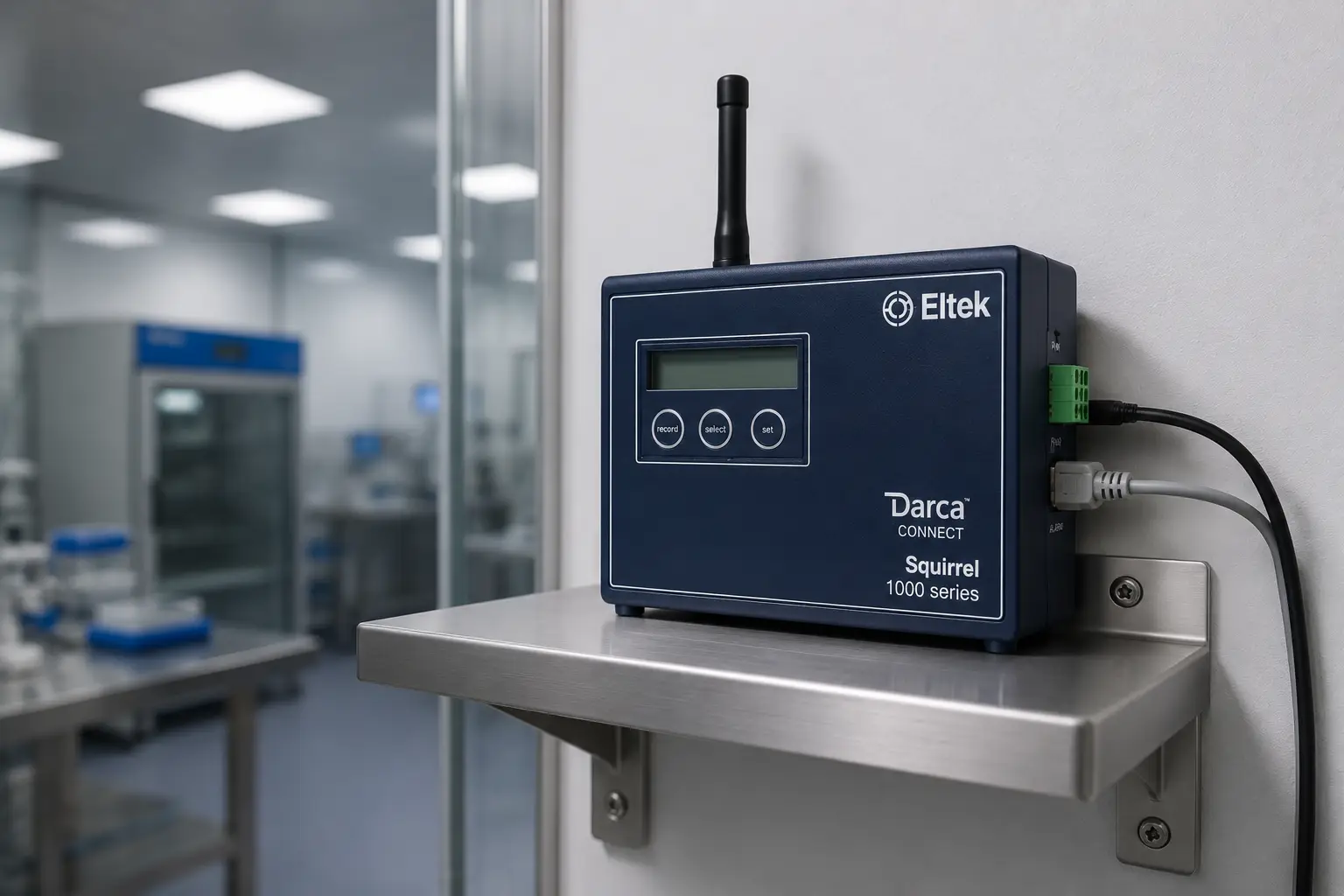
Darca Connect
The SRV450 hub gathers the network and SMS450 alarms escalate an out-of-tolerance excursion to the right person instantly, so samples are protected.
Explore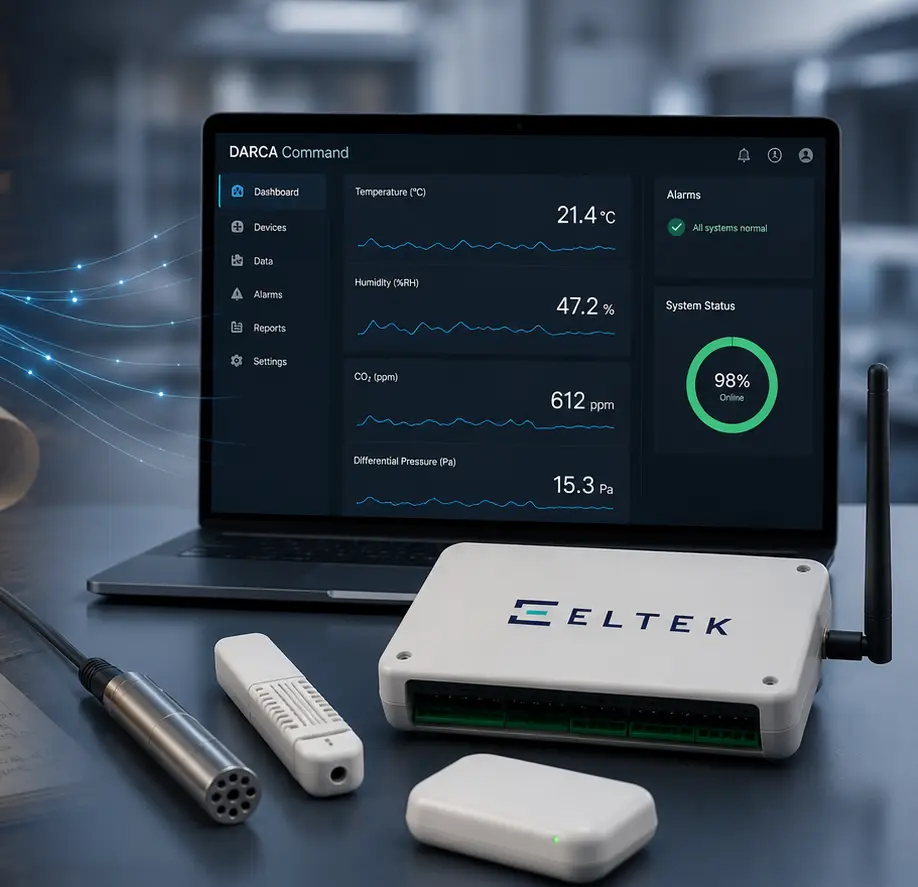
Darca Command
Compliance-ready dashboards, audit trails and scheduled reporting built for GxP, GMP, HTA, ISO and 21 CFR Part 11 environments.
ExploreSpeak to an Eltek expert about data loggers
Tell us what you need to measure, the ranges, and how many points you need to log, and our engineers will help you specify the right wired or wireless loggers, connectivity and Darca software, calibrated and supported for the life of the system.