Guide
Understanding Compliance: From Mapping to Audit Trails
From temperature mapping to non-editable audit trails, how continuous monitoring turns compliance from a burden into evidence.
The Eltek Engineering Team9 min read
In a regulated environment, monitoring isn’t about the readings on the screen today, it’s about the evidence you can produce eighteen months from now when an inspector asks. Whether you work under GxP, store human tissue under the HTA, or hold a cold chain to specification, the questions are the same: was it in range, how do you know, and can you prove no one quietly changed the record? Meeting them is a process with four clear stages.
Compliance is a lifecycle, not a document
It’s easy to treat compliance as a folder of certificates. In practice it’s a continuous loop: you characterise the environment, define what “good” looks like, watch it constantly, and keep a trustworthy record of the whole thing. Monitoring runs through all four stages, mapping → validation → continuous monitoring → audit trails and reporting, and a gap in any one weakens the rest.
Step 1: Temperature mapping
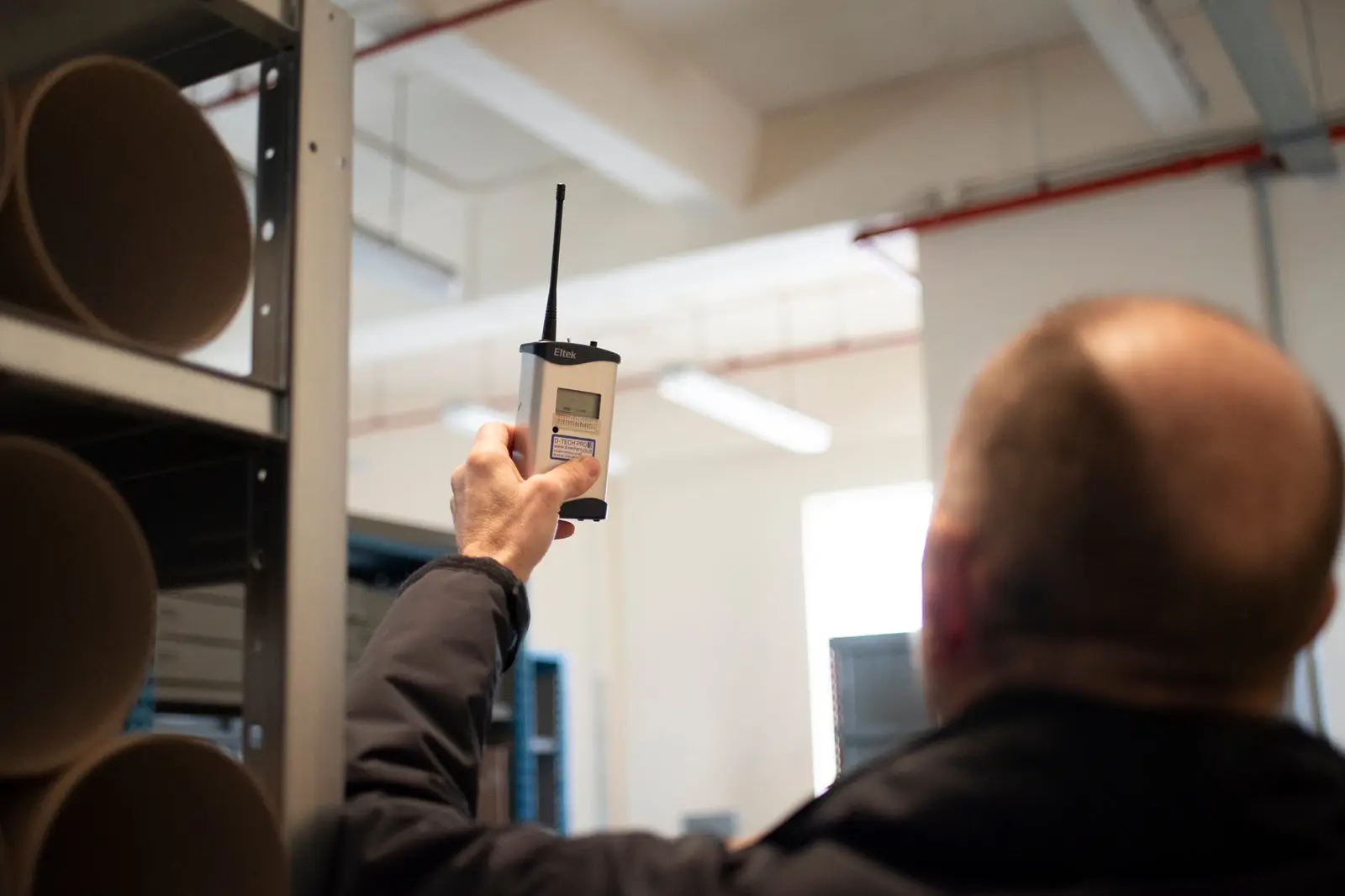
Before you can monitor a space, you need to understand it. Temperature mapping (thermal mapping) places a grid of calibrated sensors throughout a chamber, cold room, warehouse or incubator to find how conditions really vary: the warm patch near the door, the cold spot behind the fan, the stratification top to bottom. Good practice is to map both empty and loaded, and across representative conditions (including door openings and, where relevant, a power-loss scenario), over a defined period.
Mapping answers the question that makes everything downstream credible: where should the permanent monitoring sensors go? Place them at the worst-case locations the map reveals and your monitoring reflects reality; place them by convenience and you may be watching the one spot that never has a problem. Because the whole exercise rests on the sensors, use probes with calibration traceable to national standards, ideally UKAS-accredited, a theme we cover in our guide to selecting the right temperature probe.
Step 2: Validation and setting your limits
Mapping produces evidence; validation turns it into rules. This is where you document that the environment does what it should (the qualification steps many teams know as IQ/OQ/PQ) and where you set the limits and alarm thresholds the live system will enforce, informed by the hot and cold spots the map found, not by a round number picked in a meeting. Validation is also where you decide sampling frequency, who receives alarms, and what a deviation triggers. Done properly, it makes the day-to-day monitoring defensible: every limit has a rationale on file.
Step 3: Continuous monitoring
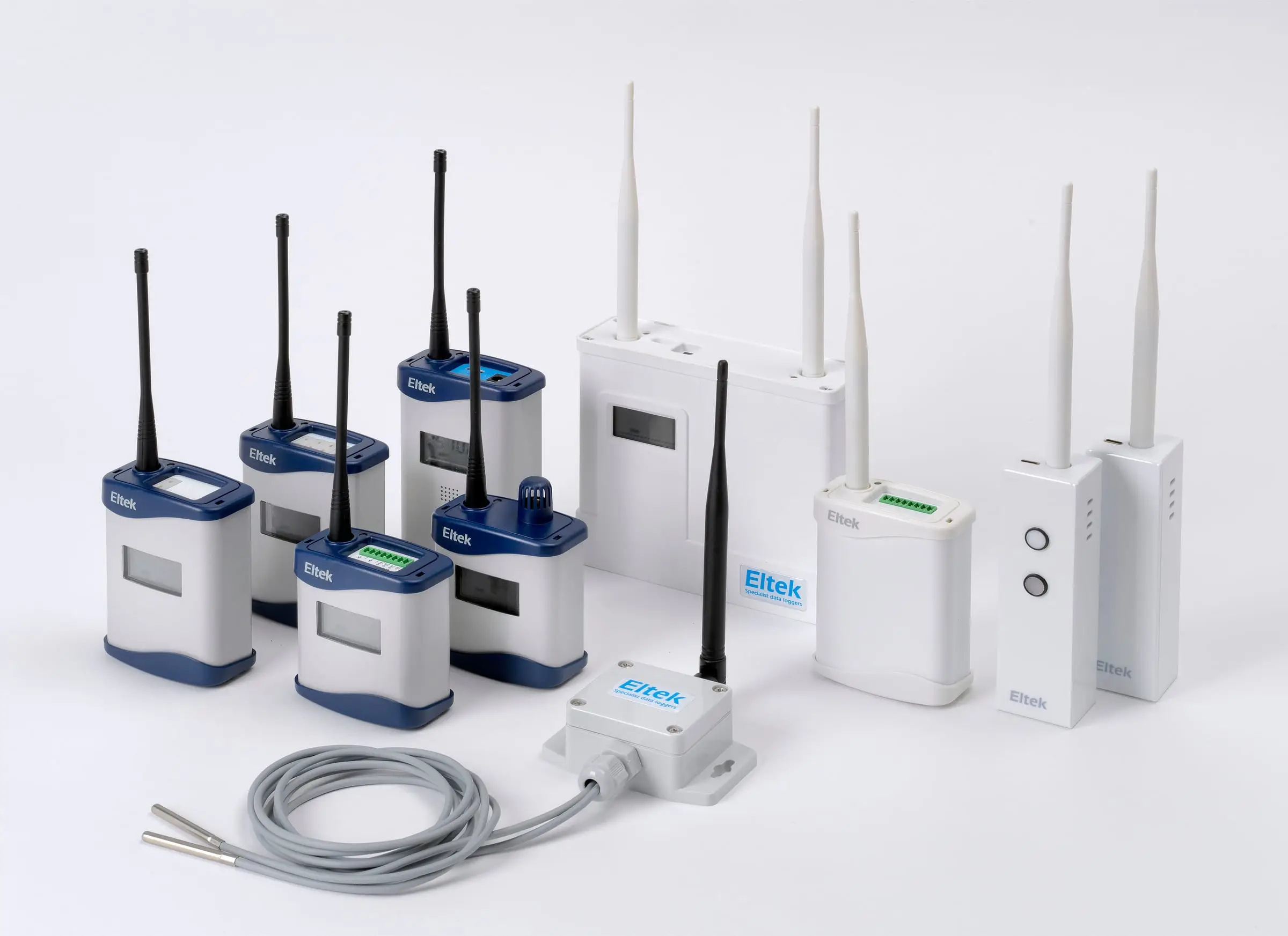
With sensors placed and limits set, monitoring becomes the daily reality. The bar for a regulated setting is high: continuous, gap-free logging, with data protected against interruptions, and alarms that reach a human being in time to act. This is exactly what Eltek’s Darca Solutions Suite is built for: GenII wireless sensors reporting to a receiver-logger, local buffering so a network or power blip delays data rather than losing it, and multi-stage email and SMS alarms. In a low-temperature biobank we monitor at a leading UK university, that combination delivered continuous logging with no data gaps even during network interruptions, and eliminated the time-consuming manual checks that were never fully auditable in the first place.
Step 4: Audit trails and reporting
The final stage is what an inspection actually examines: the record. For it to carry weight, monitoring data must be time-stamped and non-editable, with a complete audit trail showing who did what and when, the working definition of data integrity captured by the ALCOA principles (attributable, legible, contemporaneous, original, accurate). This is the substance behind the regulations teams cite:
- 21 CFR Part 11, the FDA’s expectations for electronic records and signatures: audit trails, access control, and records you can trust as originals.
- EU GMP Annex 11, the equivalent expectations for computerised systems in GMP environments.
- GxP, the umbrella of Good Practice quality guidelines across manufacturing, laboratory and distribution.
- HTA, Human Tissue Authority requirements for organisations storing human tissue, where continuous environmental evidence supports licensing.
At the same biobank, Eltek’s records provided full audit trails and time-stamped, non-editable data aligned with these data-integrity principles, supporting GxP-aligned workflows including deviation investigation, evidence for audits and inspections without reliance on manual logs. Darca’s reporting turns that continuous record into the summaries and exports an auditor expects, on demand rather than assembled in a panic the week before.
What to look for in a monitoring system
- Traceable calibration, sensors calibrated against national standards, on a defined schedule.
- Continuous, protected logging, no gaps, with local buffering through interruptions.
- Time-stamped, non-editable records with a full audit trail and access control.
- Configurable multi-stage alarms that escalate and reach people off-site.
- Reporting and export that produces audit-ready evidence quickly.
- Scalability so new equipment and sites join without redesign.
An honest word on “compliance”
No monitoring product can make an organisation compliant by itself, and you should be wary of any that claims to. Regulations like 21 CFR Part 11 and Annex 11 govern your systems, processes and validation; a monitoring platform’s job is to provide the controls and evidence that make meeting them practical and defensible. Eltek supplies the tools, traceable measurement, continuous records, audit trails and reporting, and works alongside your quality team; the validation and the procedures around them remain yours. That honesty is the point: compliance you can defend is built on a clear division of responsibility, not on a certificate that promises to do the work for you.
If you’re mapping a new space, tightening an existing system, or preparing for an inspection, our engineers work with regulated teams every day. Explore Eltek in laboratories and life science, read the university biobank case study, or see how this connects to multi-zone monitoring across a large facility.
Key takeaways
- Compliance is a lifecycle: map the space → validate the limits → monitor continuously → produce the audit trail.
- Temperature mapping characterises hot and cold spots so you place sensors and set alarms where they actually matter.
- Continuous monitoring with time-stamped, non-editable records and audit trails supplies the evidence frameworks like 21 CFR Part 11, EU GMP Annex 11 and GxP expect.
- No product makes you “compliant” on its own: a good system provides the controls and evidence; validation and process stay your responsibility.
- Use calibration traceable to national standards (UKAS-accredited) so the numbers behind your evidence hold up.
Need this in your facility?
From mapping a new cold store to standing up continuous monitoring with audit-ready records, our UK engineers work with regulated teams every day. Tell us where you are in the process and we’ll help.
See Eltek in regulated environmentsGet more insights like this
Get monitoring insights in your inbox
Practical guidance on compliance and environmental monitoring: mapping, audit trails, probe selection and multi-site reliability. Occasional, useful, no noise.
Unsubscribe any time. Your details are never shared.