
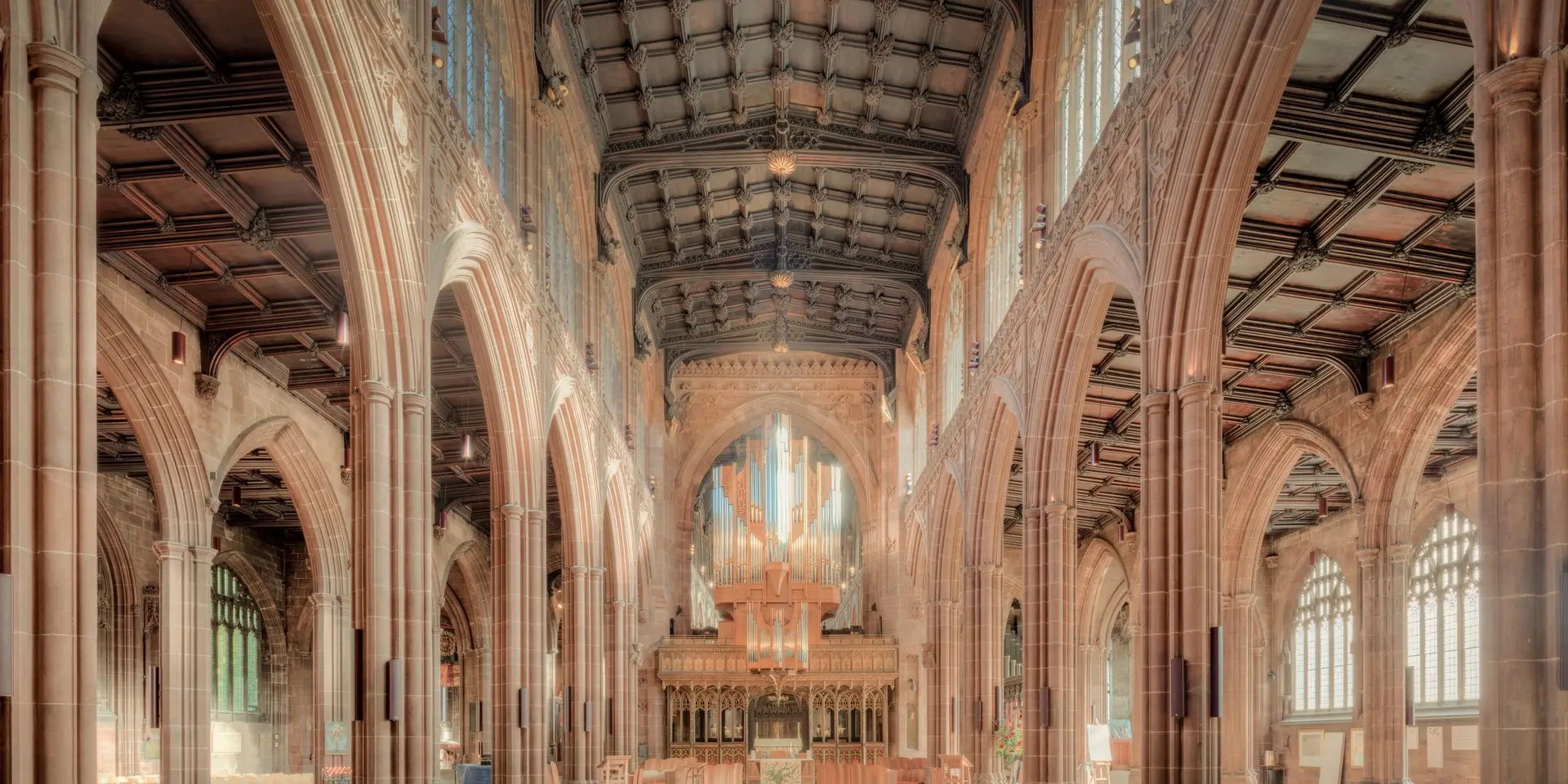
Monitoring listed and historic buildings without disturbing the fabric
Battery-powered wireless sensors monitor the locations that matter most, delivering a continuous environmental record across historic buildings and seasonal spaces, without cabling, drilling or impacting the fabric of listed properties.
Trusted at Canterbury Cathedral since 2007, and in the Long Room at Trinity College Dublin.
The problem
Historic buildings are a different technical problem
Modern museum monitoring assumes cable routes, mains power at every point and reliable staff access. A medieval cathedral, a country house in trust care, or an outlying coach house shares none of those assumptions. Listed fabric cannot be drilled. Roof voids and undercrofts may go weeks between visits. Thick masonry absorbs and deflects radio signals in ways a modern building never would. Eltek has worked in buildings like these for over 40 years, as Canterbury Cathedral and Trinity College Dublin show.
How do you monitor temperature and humidity in a listed or historic building without drilling or cabling?
In a listed or historic building, environmental monitoring uses battery-powered wireless transmitters fixed without drilling or cabling through protected fabric. Repeaters carry readings across thick masonry walls, floors and outlying buildings. A central receiver-logger relays data to a cloud dashboard and triggers SMS alarms when conditions drift, giving conservators a continuous, timestamped evidence record.

The challenge
What makes environmental monitoring in a historic building so difficult?
No routes for cables
Listed, painted or fragile fabric cannot be drilled or chased. A cable run that is routine in a modern building may cause irreversible harm to protected surfaces, decorative plaster or structural stonework. Monitoring has to work without one.
Hard to reach, often unstaffed
Roof voids, towers, crypts, undercrofts and outlying estate buildings are the spaces that matter most and the ones visited least. A system that needs somebody to walk up and read a logger leaves gaps in exactly the wrong places.
Thick masonry and radio range
Stone walls, rubble-filled cores and structural steelwork scatter and absorb radio signals, so coverage that works in one room can fail in the next, or across a courtyard to the stable block. The real cost is not a weak signal, it is a gap in the record at the one point you most needed to understand.
Seasonal swings and building behaviour
Solar gain, damp ingress through porous masonry and conservation heating mean the conditions that matter in October are not the ones that matter in April. A baseline taken in summer tells you very little about February, which is why the record has to run continuously across a full year rather than sample it.

Light through the lantern is a conservation variable in its own right, alongside temperature and humidity
CB70 and CB70X transmitters record visible and ultraviolet light alongside climate conditions, so the evidence base captures how your building’s own daylight behaves across the year.
The solution
How Eltek monitors a complex historic site
Four principles: nothing cabled through protected fabric, radio coverage that is designed rather than hoped for, data collected remotely from places nobody visits, and a long-run record you can put in front of a conservator, a lender or an assessor.
Non-invasive battery wireless
Battery-powered GenII wireless transmitters fix to surfaces with no cabling through listed, painted or fragile fabric. GD10 and GC10 monitor temperature and relative humidity; CB70 and CB70X add visible and ultraviolet light. Servicing one means replacing batteries, nothing more.
Coverage designed around thick walls
RP250-USB repeaters relay readings around thick walls, floors and steel, extending coverage across large, multi-room and multi-building sites. Eltek’s UK systems use a licence-free 434 MHz band chosen for good building penetration. Coverage on a historic site is designed, not assumed.
Remote collection from unstaffed spaces
The SRV450 receiver-logger gathers the wireless network and relays it securely to Darca Command over 4G, so conditions are visible without anyone entering a roof void or driving to an outlying building. SMS450 turns a threshold breach into grouped SMS alerts.
Built for long unattended runs
GenII transmitters are designed for long battery life, so a sensor can sit in a roof space, gallery or undercroft for extended periods between service visits. Planned maintenance becomes the schedule, and an unplanned trip up a tower the exception.
Evidence for lenders and accreditation
Darca Command holds a continuous, timestamped record of conditions at every monitored point, with trends and reports. That is what conservators, loans committees and assessors ask to see: not a claim that conditions held, but a documented trail of what actually happened.
Standards and guidance
What environmental standards apply to collections in historic buildings?
British and European guidance for heritage collections has moved away from prescribing a single set of environmental conditions towards a risk-based, evidence-led approach: conditions appropriate to the collection, the building and how it is used, justified by evidence. The accepted principle is that no single set of conditions is ideal for every material, with an emphasis on keeping temperature low and relative humidity moderate, and on gradual rather than rapid change.
BS EN 16893:2018, Conservation of cultural heritage. Specifications for location, construction and modification of buildings or rooms intended for the storage or use of heritage collections, is the current standard covering the buildings and rooms in which collections are held. It superseded the earlier BSI documents in this area, among them PAS 198:2012, the previous specification for managing environmental conditions for cultural collections. Where an organisation also holds archives or a library, BS 4971:2017, Conservation and care of archive and library collections, is the current British Standard for those materials.
For a historic building, the practical consequence is the same either way. If guidance will not hand you a universal number, the conditions you agree with your conservation advisers have to be justified by evidence, and that evidence is a continuous record of how your own building actually behaves through a full year. That is what monitoring is for, and it is why museums and heritage organisations treat the data as part of the collections-care record rather than a facilities report.
In practice that reframes what the record is for. It is not a confirmation that conditions matched a target, it is the evidence base from which the conditions appropriate to your collection, your building and the way it is used are justified in the first place, and then held. When a lender, an accreditation body or your own conservation committee asks what conditions prevailed, the answer is the record itself.
The platform
The Darca Solutions Suite
One connected suite, wired and wireless, for buildings you cannot drill, cable or visit often.

Darca Collect
GenII wireless transmitters, the GD10, GC10, CB70 and CB70X, monitor temperature, relative humidity and light across roof spaces, galleries and outlying buildings, placed without drilling or disturbing listed or painted fabric.
Explore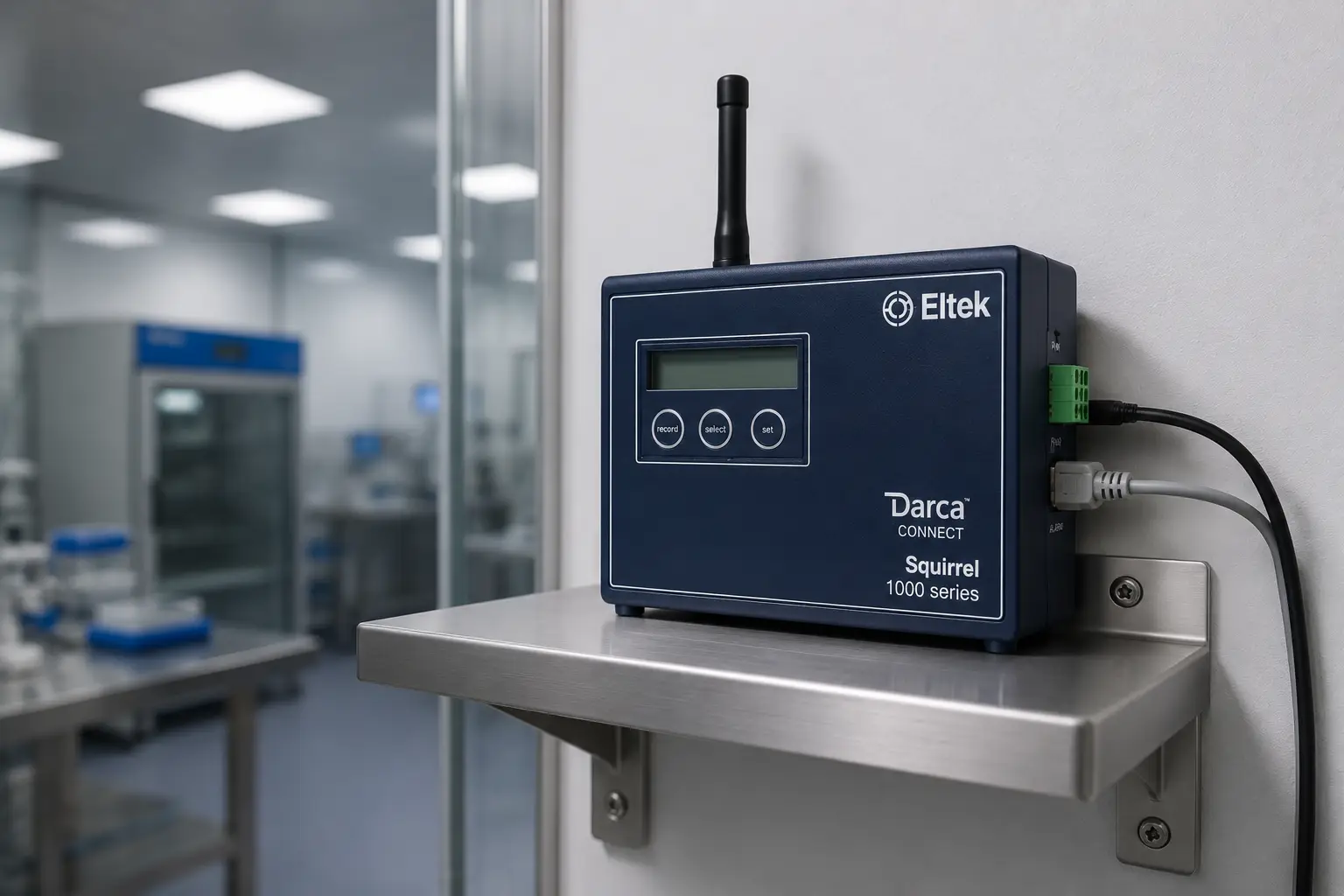
Darca Connect
The SRV450 receiver-logger and RP250-USB repeaters form the backbone, carrying readings through thick masonry and across a multi-building estate to one collection point, with SMS450 alarms the moment a threshold is breached.
Explore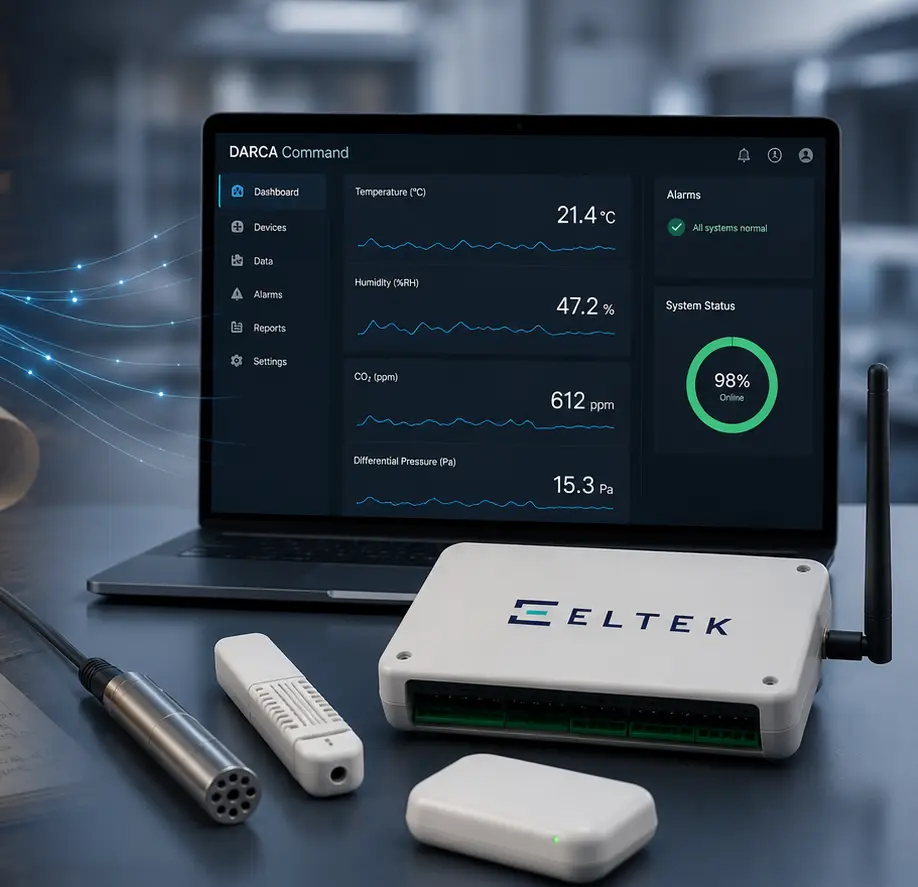
Darca Command
Trends, floor plans and timestamped, audit-ready reporting, so conservation and estates teams can see every space at a glance and evidence conditions to lenders and assessors from anywhere.
ExploreProven in historic buildings
Around 70 transmitters across a UNESCO World Heritage Site, with nothing cabled through listed fabric
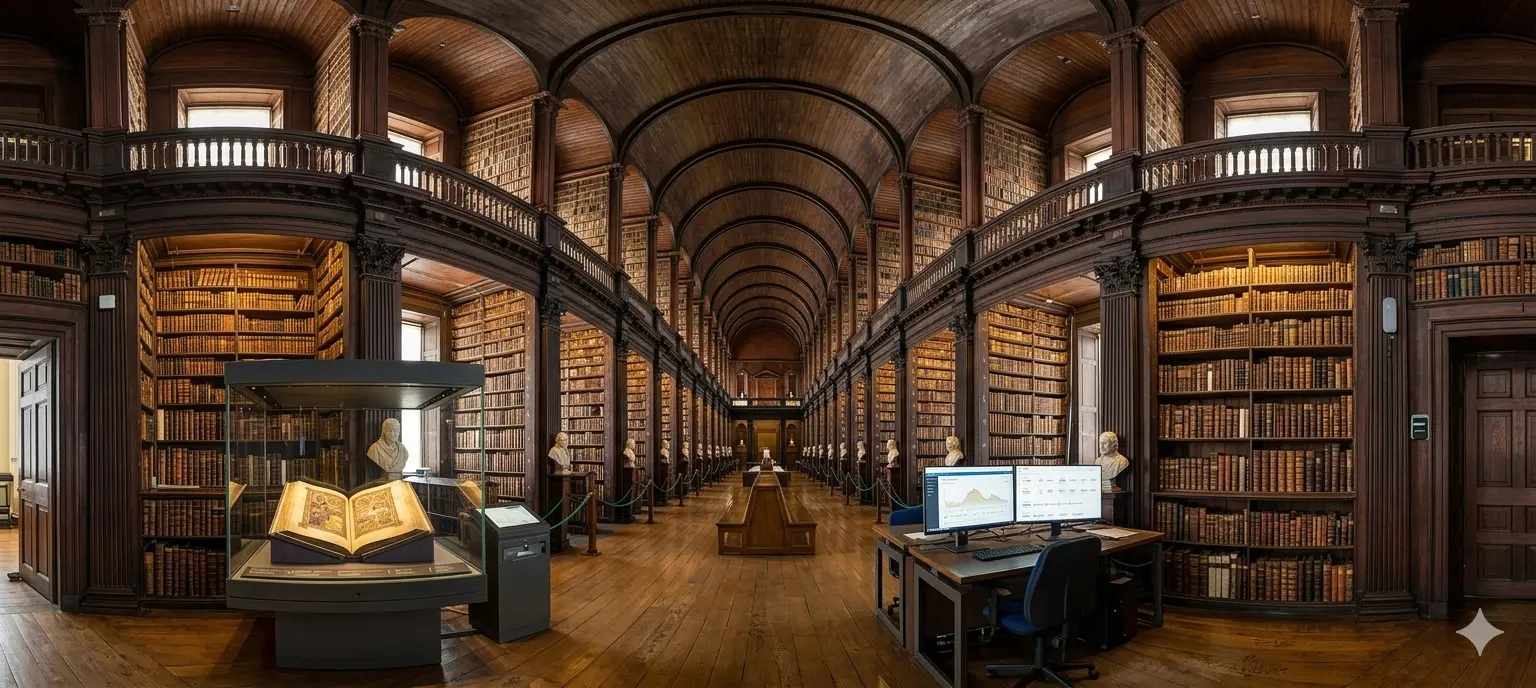
Canterbury Cathedral has monitored with Eltek since 2007, a system that now extends to around 70 wireless transmitters and 200 channels of data across one of Britain’s most complex historic sites. It began at the Black Prince’s Tester, a painted panel exposed to high light levels and a heating-driven temperature gradient. Repeaters then extended radio coverage to libraries, archives and heavily built strong rooms, and later to the stained glass and to structural monitoring: crack and joint movement, inclinometers measuring wind loading and the ringing of the Bell Harry bells, and bore-hole sensors tracking the water table. All of it flows into one application, which divides the site into zones for each user group so every specialist sees the conditions relevant to their own work, without anyone walking the precinct to collect a reading. Eltek works alongside Tobit Curteis Associates, a practice specialising in environmental deterioration in historic buildings and the conservation of wall paintings. At Trinity College Dublin, GC10 and CB70 transmitters monitor the 65-metre Long Room of the Old Library, home to the Book of Kells.
- UNESCO World Heritage Site
- Monitoring since 2007
- Around 70 transmitters, 200 channels
- Nothing cabled through listed fabric
Speak to an Eltek expert
Tell us about the building, what you need to monitor and where you cannot run a cable, and our UK engineers will map the transmitters, repeaters and receiver your site needs.
Related reading
How wireless coverage is designed in difficult buildings
Why repeaters matter, how a network routes around thick walls and steel, and how coverage on an awkward site is planned rather than guessed.
Read moreChoosing and placing probes in harsh environments
Sensor choice and placement where conditions are difficult, and why where you measure changes what the data tells you.
Read moreThe Eltek technology behind it
Darca Collect, Connect and Command: the wired and wireless sensing, the hubs and alarms, and the software that ties a site together.
Read moreMore in Museums & Heritage
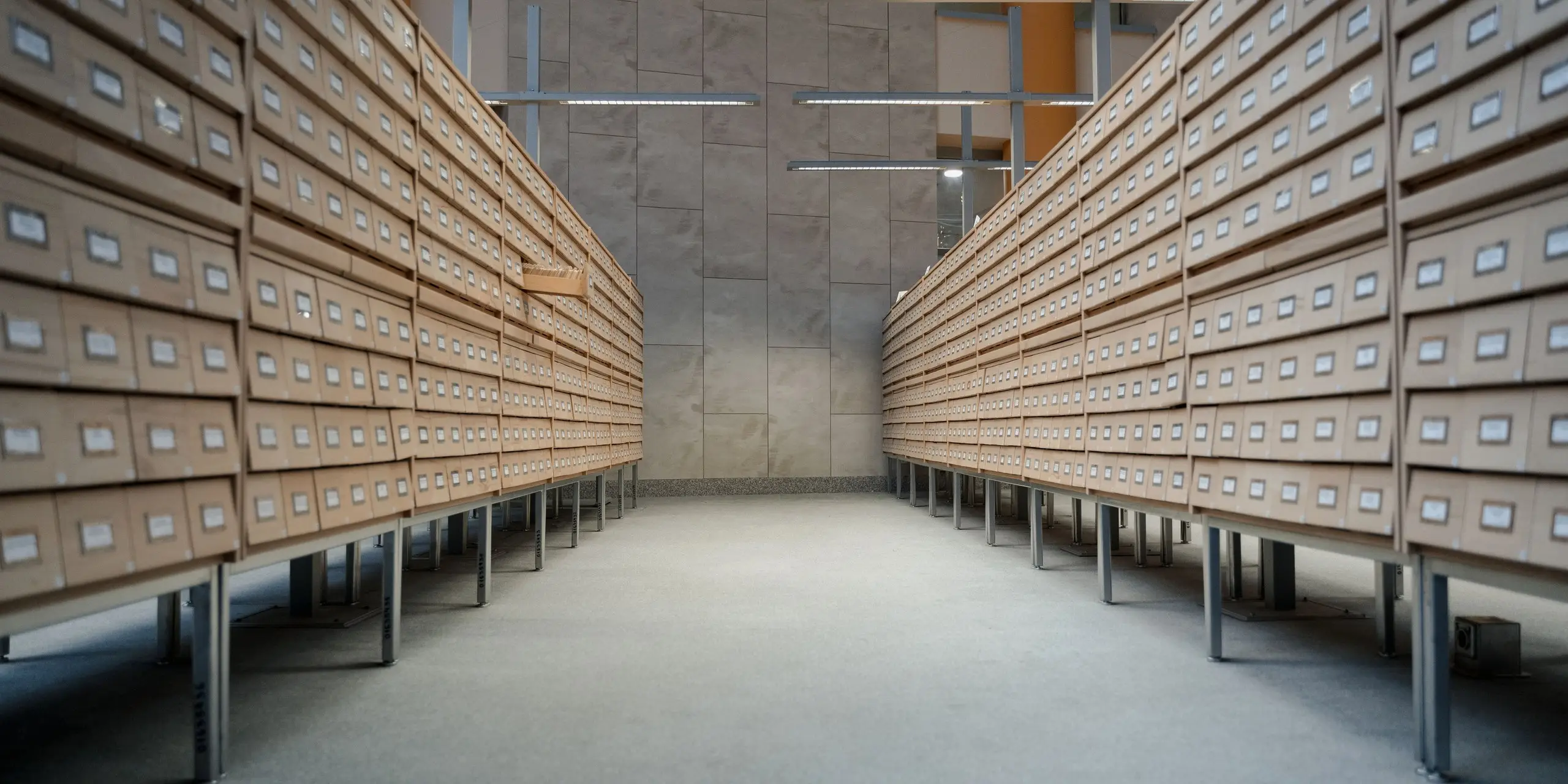
Archives & Collections Storage
Archive stores, off-site repositories and special collections. Continuous temperature and humidity monitoring for the conditions paper, photographs and rare books depend on.
Explore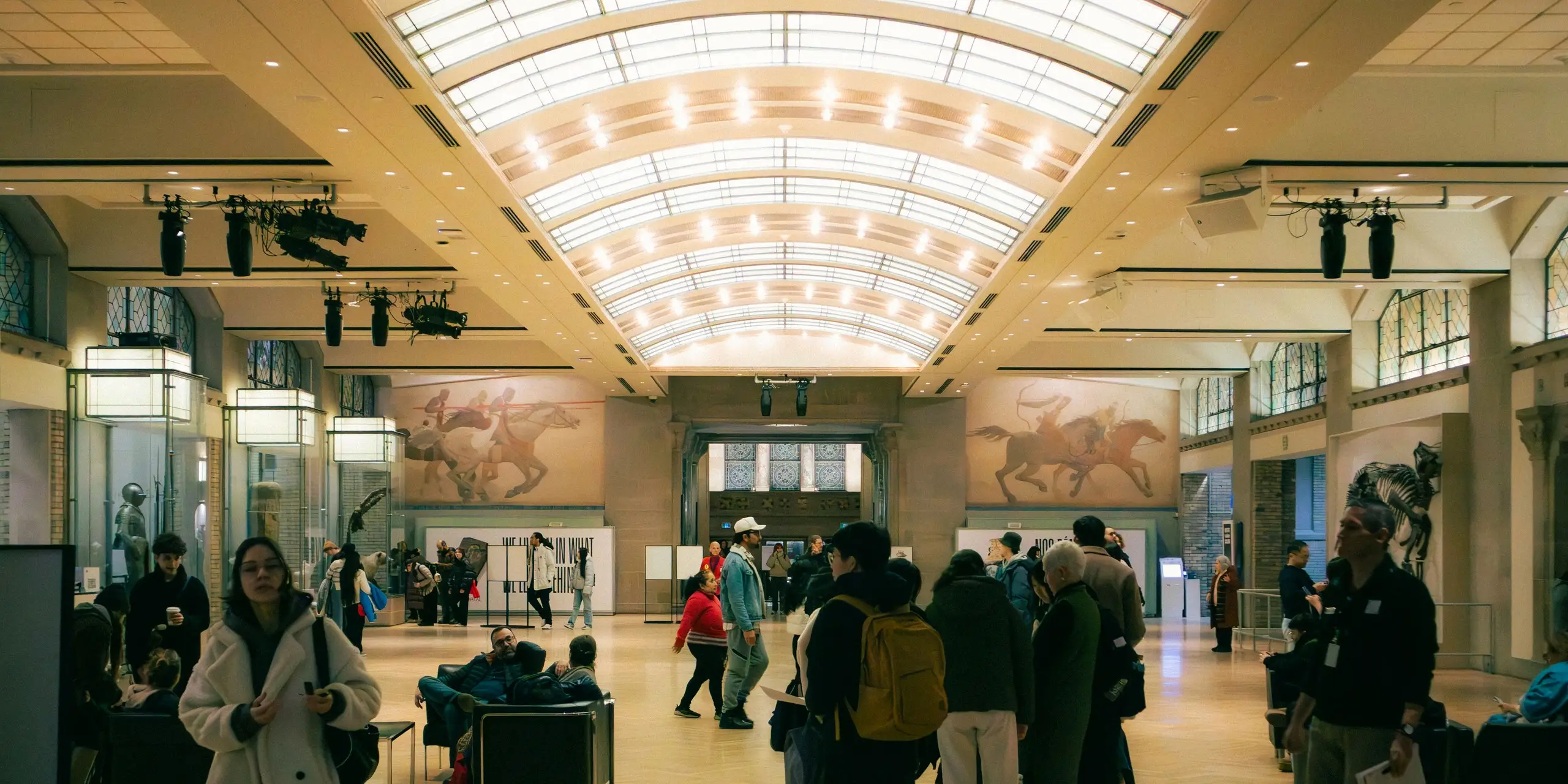
Galleries, Exhibitions & Loans
Temporary exhibitions, travelling shows and incoming or outgoing loans. Continuous temperature, humidity and light records that evidence the conditions a lender agreed.
Explore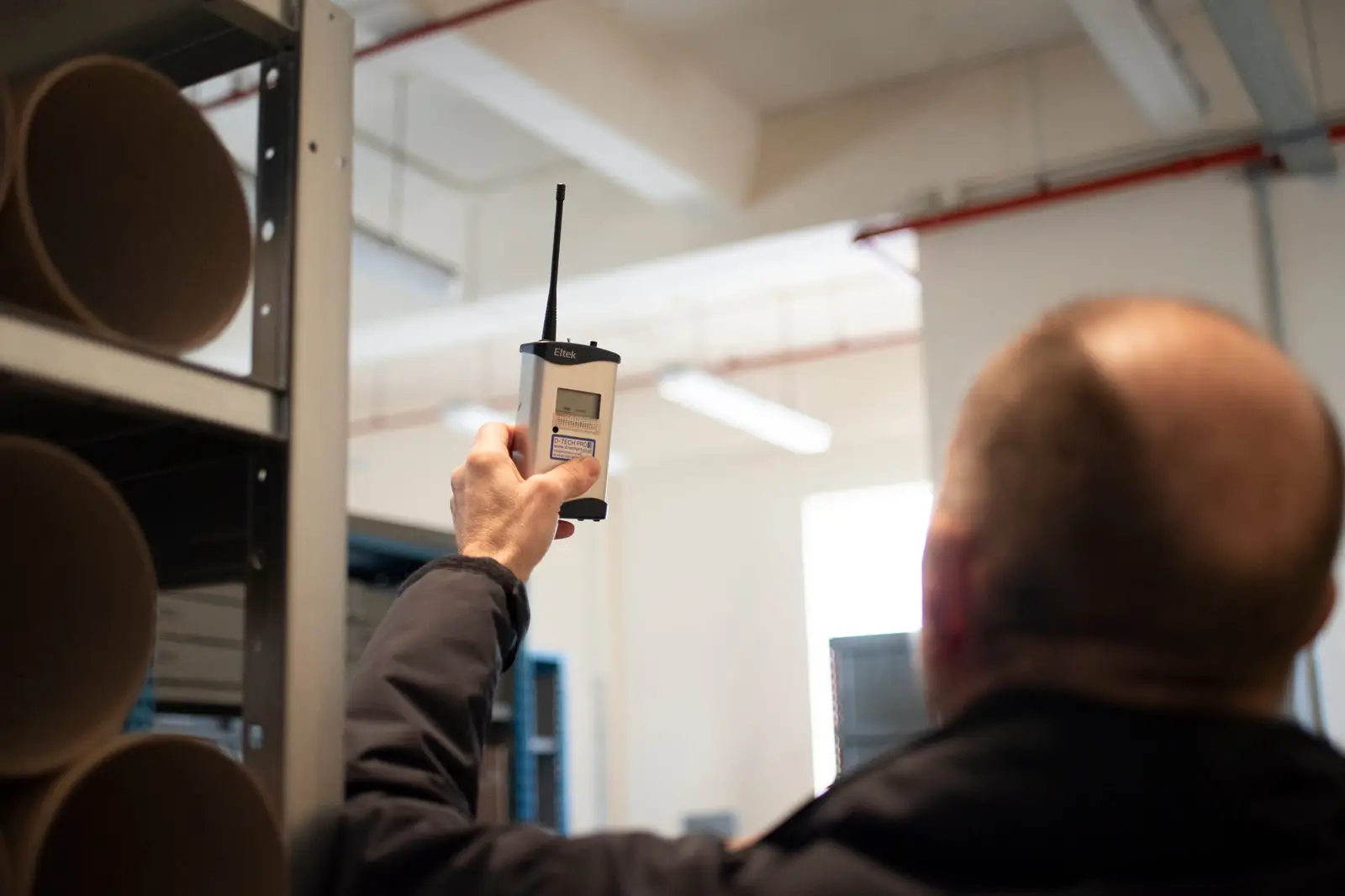
Humidity monitoring guide
Why relative humidity is the biggest environmental risk to collections, what to look for in a system, wired versus wireless RH sensing, and how Eltek monitors humidity and temperature continuously.
ExploreFrequently asked questions
Can we install environmental monitoring in a listed building without drilling or cabling through the fabric?
Yes. Battery-powered GenII wireless transmitters are fixed to surfaces without cabling through walls, floors or structural fabric, so there is no need to drill through listed stonework, chase cables through decorative plaster or disturb fragile surfaces. Transmitters send readings wirelessly to an SRV450 receiver-logger, which relays them to Darca Command over 4G. Periodic battery replacement is the only routine intervention.
Our building has very thick stone walls. How do you get reliable wireless coverage from room to room?
Thick masonry, rubble-filled walls and structural steelwork all reduce wireless range, so coverage cannot be assumed from an open-air specification. Eltek’s UK systems use a licence-free 434 MHz band chosen for good building penetration, and where walls or distances prevent a direct link, RP250-USB repeaters relay readings around the obstacle. Coverage is designed for each site. At Canterbury Cathedral, repeaters extended radio coverage to libraries, archives and heavily built strong rooms.
Some of our spaces are unstaffed for weeks at a time. How would we know if conditions changed?
Remote collection removes the dependency on site visits. The SRV450 receiver-logger gathers readings from across the site and relays them continuously to Darca Command over 4G, so conditions are visible in real time from any connected device. When a threshold is breached, SMS450 sends grouped SMS alerts to the right person straight away. Nobody has to enter a roof void, tower or undercroft to find out what has been happening there.
What environmental standards apply to collections in historic buildings, and do they specify exact conditions?
BS EN 16893:2018 is the current standard covering the buildings and rooms in which heritage collections are stored or used, and BS 4971:2017 covers the conservation and care of archive and library collections. Neither is a table of setpoints. British and European guidance has moved away from prescribing a single set of conditions towards a risk-based, evidence-led approach: conditions appropriate to the collection, the building and how it is used, justified by evidence. Eltek supplies the continuous record that evidences your building’s behaviour against the conditions you and your advisers agree are appropriate.
How disruptive is it to retrofit monitoring into an occupied historic building?
A wireless installation is designed to be non-invasive. Battery-powered GenII transmitters are secured to surfaces with no cable runs through walls or floors, and repeaters extend coverage without structural work. The SRV450 receiver-logger needs one mains point and a mobile signal or wired internet, rather than a network of cabled routes. Because the network is extended with repeaters rather than rebuilt, sensors can also be added or relocated later as conservation priorities change.
What ongoing maintenance does a wireless system need in a building we rarely visit?
The routine task is battery replacement at the transmitters, which is why long battery life matters more in a roof void or a tower than it does in an office. There is no cabling to inspect and no structural work to revisit, and because coverage is extended with repeaters rather than rebuilt, a network can be adjusted without returning to the fabric. Eltek designs and manufactures in the UK and supports systems in the field directly, with the same engineers who specify them.
What does the monitoring record actually give us to show a lender or an accreditation body?
Darca Command holds a continuous, timestamped record of conditions at every monitored point, with trend analysis and reporting over any period you choose. Clear, audit-ready reports of this kind are what help satisfy lenders, loan agreements and accreditation, because they show the conditions actually measured at the collection rather than a set point on a building management system. The record evidences what happened, when and where, which is the question those bodies ask.