
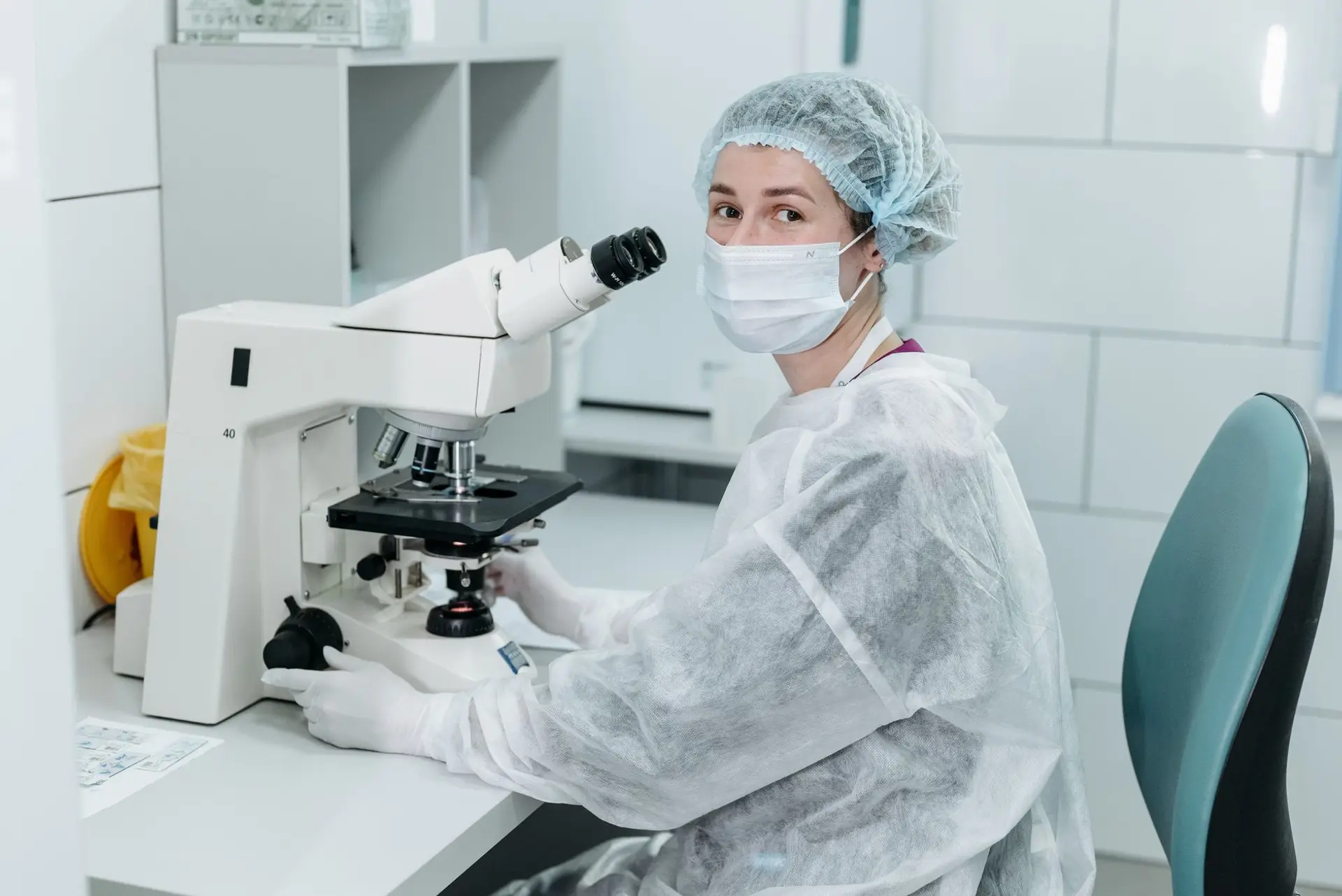
Protect every embryo, egg and sample you hold
Continuous monitoring of the incubators, cryogenic storage and laboratory conditions that gametes and embryos depend on, with alarms that reach the right person the moment conditions drift, because the samples you hold have no second copy.
Trusted in fertility, embryology and cryogenic storage laboratories across the UK.
Trusted by life sciences teams at









The problem
When a sample is irreplaceable, monitoring is not optional
A fertility laboratory holds material that cannot be remade. An embryo, a patient’s eggs, a stored sperm sample: each represents a moment that will not come again, and often a treatment cycle that a family has waited and paid for. The equipment that protects them, incubators and cryogenic storage, is unforgiving of drift, and a failure at 2am is still a failure. Many clinics begin with this equipment watched through several separate systems, routine manual checks and locally recorded data, which makes it hard to hold a single, real-time view across every incubator, cryogenic tank and laboratory area at once. The people who run these labs do not want a spec sheet; they want to know that if a freezer or an incubator starts to go wrong, someone will be told in time to act, and that the lab is watched around the clock even when the building is empty. The equipment we monitor covers exactly this kind of storage.
How should an IVF or embryology laboratory monitor its environment?
An IVF or embryology laboratory monitors the incubators, cryogenic storage and lab conditions that gametes and embryos depend on, continuously and with alarms, because the samples it holds have no second copy. Sensors record temperature and the storage environment around the clock and escalate the moment conditions drift, so a clinic can act before irreplaceable material is lost.
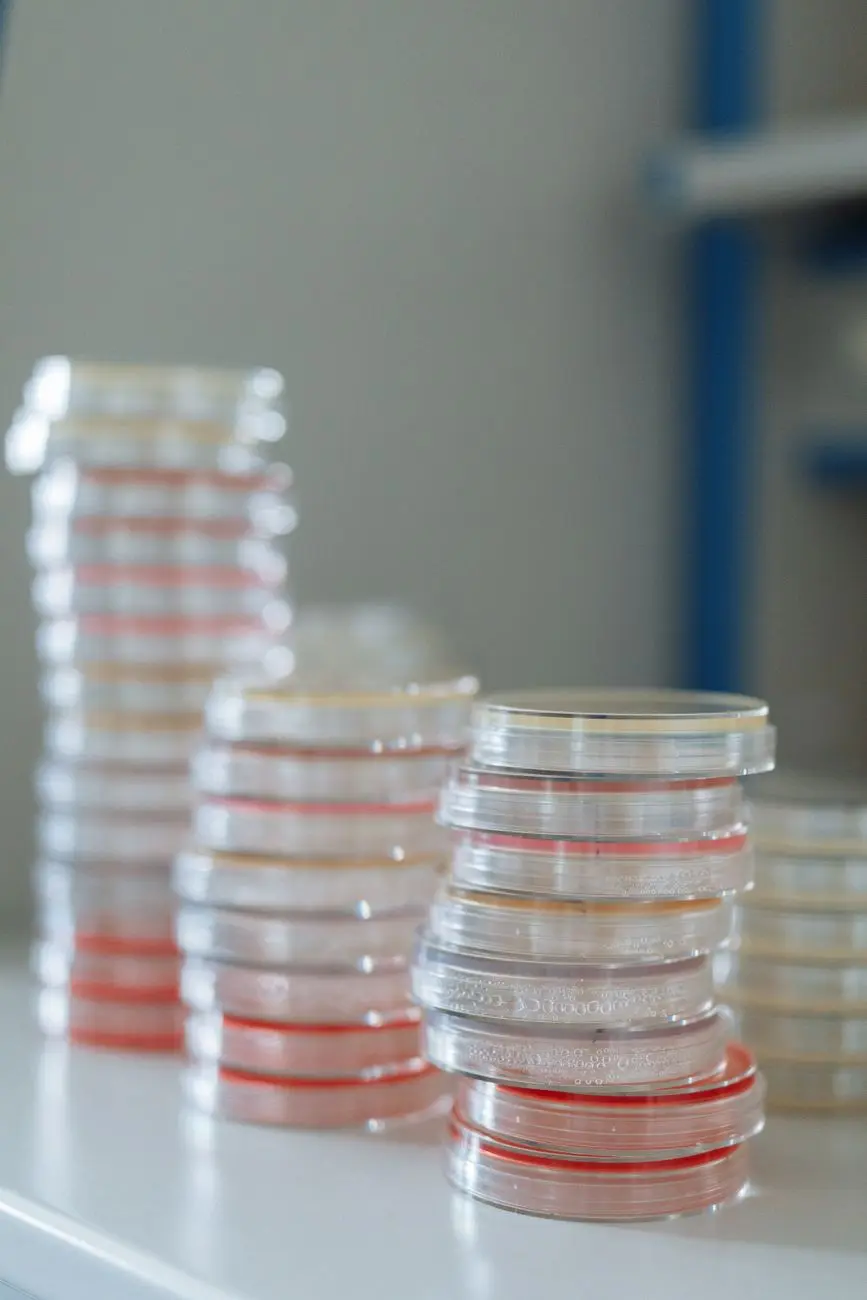
The challenge
What makes monitoring a fertility laboratory so critical?
Samples with no second copy
An embryo or a patient’s stored eggs cannot be recreated. There is no re-order, no repeat batch, and the cost of losing one is measured in a family’s treatment, not in stock value. That changes what a monitoring failure means.
Cryogenic storage that has to hold
Gametes and embryos are stored cryogenically for long periods, sometimes years. The storage has to hold continuously and be watched continuously, because a slow loss can go unnoticed until the moment the sample is needed, when it is far too late.
Incubators where small changes matter
Embryo culture depends on a tightly controlled environment, and even a brief departure from it can affect a delicate, time-critical process. Monitoring has to see the drift as it happens, not at the next manual check.
The 2am alarm nobody can miss
Fertility labs are not staffed around the clock, but the risk does not keep office hours. An alarm has to leave the building, reaching the right person by SMS and email out of hours, or it is not really an alarm at all.
The solution
How Eltek monitors a fertility laboratory
Four principles: watch every incubator and cryogenic store continuously, escalate a problem to a real person out of hours, keep an unbroken record of the conditions samples were held in, and calibrate against traceable standards so that record is trusted.
Incubators and cryogenic storage on one system
Wireless GenII transmitters and wired probes monitor incubators and cryogenic storage continuously, so every unit in the lab reports into one platform and nothing depends on a manual round.
Alarms that leave the building
SMS450 turns a threshold breach into grouped SMS and email alerts that escalate to the right person, including nights and weekends. If the first person does not acknowledge an alert, it passes automatically to the next authorised team member, so a drifting freezer or incubator is caught, and never left unanswered, while there is still time to move samples or intervene.
An unbroken record for every sample
Darca Command holds a continuous, time-stamped record of the conditions in every incubator and store, so a clinic can evidence exactly what environment a patient’s samples were held in, over any period. Readings are buffered locally through any brief power or network interruption and backfilled once the connection returns, so that record is never broken.
Calibration you can trust
Sensors carry UKAS-traceable calibration, so a reading means what it says, which matters when the material being protected is irreplaceable and the record may be reviewed by a regulator.
Monitoring that scales with the lab
As a clinic adds cryogenic tanks, treatment rooms or further sites, the same platform extends to cover them, so monitoring grows with the laboratory instead of being rebuilt each time capacity changes.
One UK engineering team
Specification, calibration and support come from the same Eltek engineers who design and build the system in the UK, so a fertility lab deals with the people who understand it, not an overseas helpdesk.
Standards and guidance
How is monitoring regulated in a UK fertility clinic?
UK fertility treatment and the storage of gametes and embryos are regulated by the Human Fertilisation and Embryology Authority (HFEA), which licenses clinics and sets out, in its Code of Practice, the standards a licensed centre works to, including the safe and secure storage of gametes and embryos. A clinic has to be able to account for the conditions in which that material is held.
Continuous environmental monitoring supports that accountability directly. It provides the ongoing record of incubator and cryogenic-storage conditions, and the alarms that let a clinic respond before a problem becomes a loss. Where a clinic also carries out research, or stores human tissue for other purposes, the Human Tissue Authority (HTA) framework may apply alongside the HFEA’s.
As with every regulated environment, monitoring evidences conditions, it does not confer compliance. The clinic owns its procedures, its validation and its response to an alarm; Eltek supplies the continuous, traceable record and the alerts that support them. The compliance page sets out how that evidence maps to the wider frameworks.
The platform
The Darca Suite
One connected suite for the incubators, cryogenic storage and laboratory conditions a fertility clinic depends on.
Darca Collect
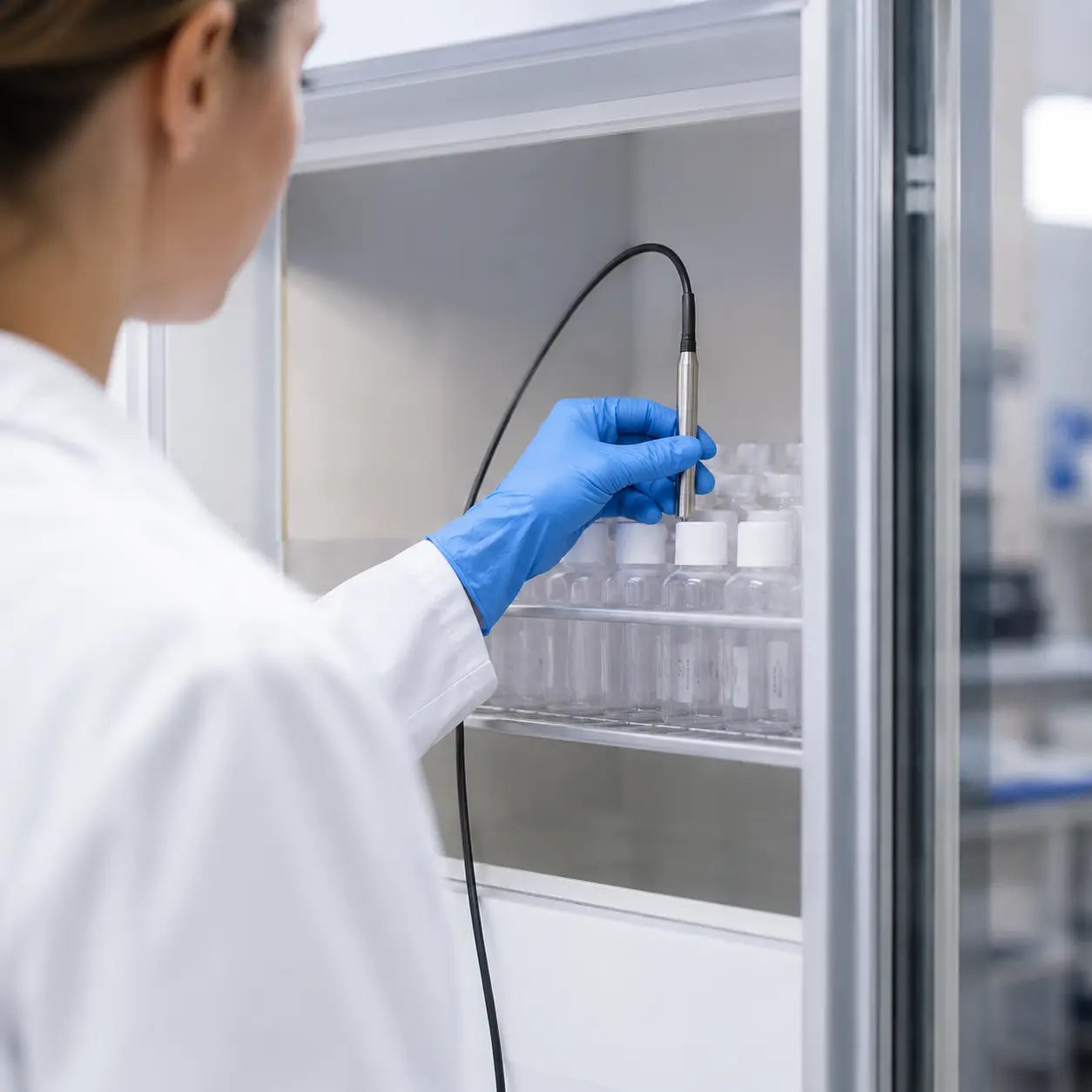
Wireless GenII transmitters and wired probes monitor incubators, cryogenic storage and the laboratory environment, positioned at agreed points without interrupting day-to-day clinical activity and calibrated against UKAS-traceable standards so every reading is defensible.
Explore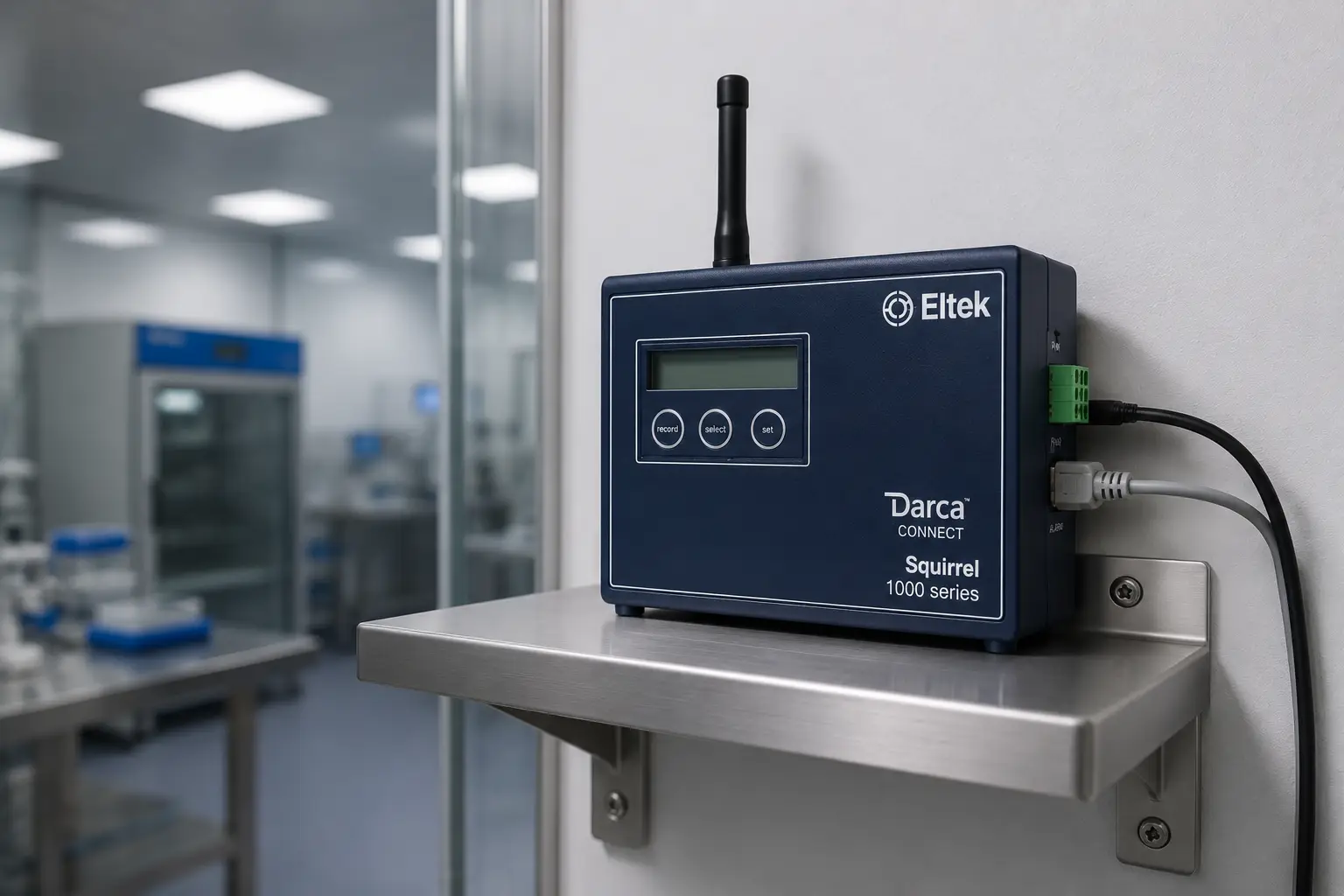
Darca Connect
The SRV450 hub relays the network securely and SMS450 escalates an out-of-tolerance alarm by grouped SMS and email, including nights and weekends, so a problem reaches a real person in time.
Explore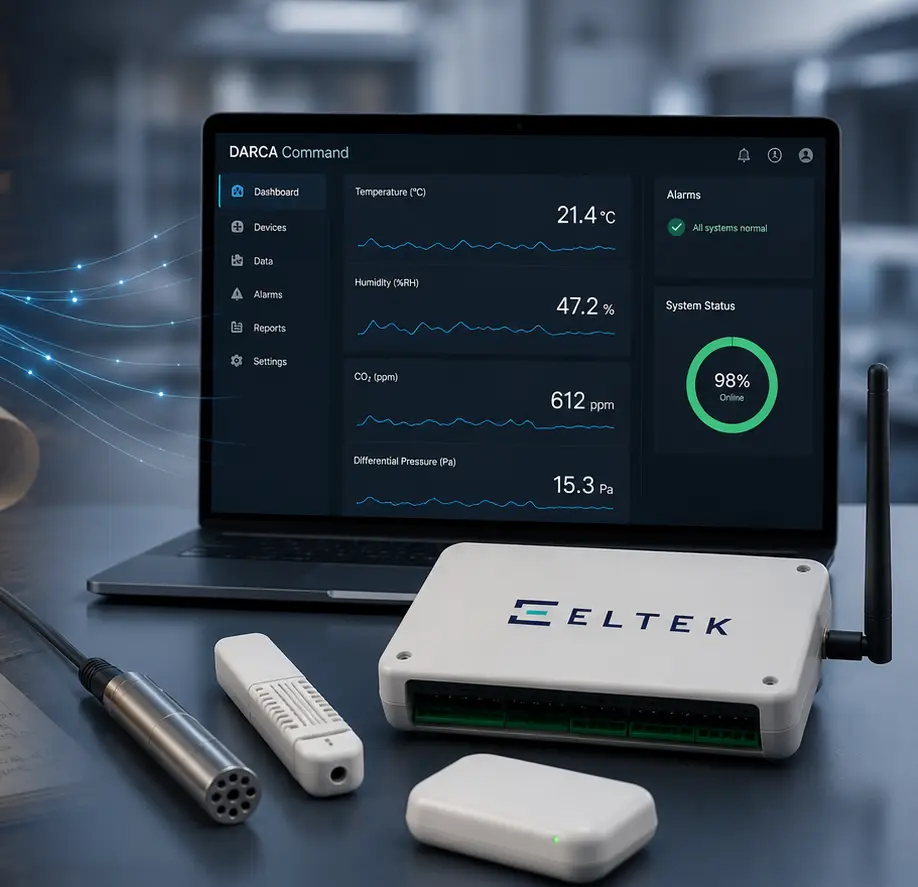
Darca Command
Darca Command holds a continuous, time-stamped, tamper-evident record of the conditions every sample was held in, with trends, scheduled reports, a clear record of each alarm and how it was acknowledged and escalated, and role-based access.
ExploreProven in regulated science
Continuous monitoring and out-of-hours alarms for storage that cannot fail unnoticed
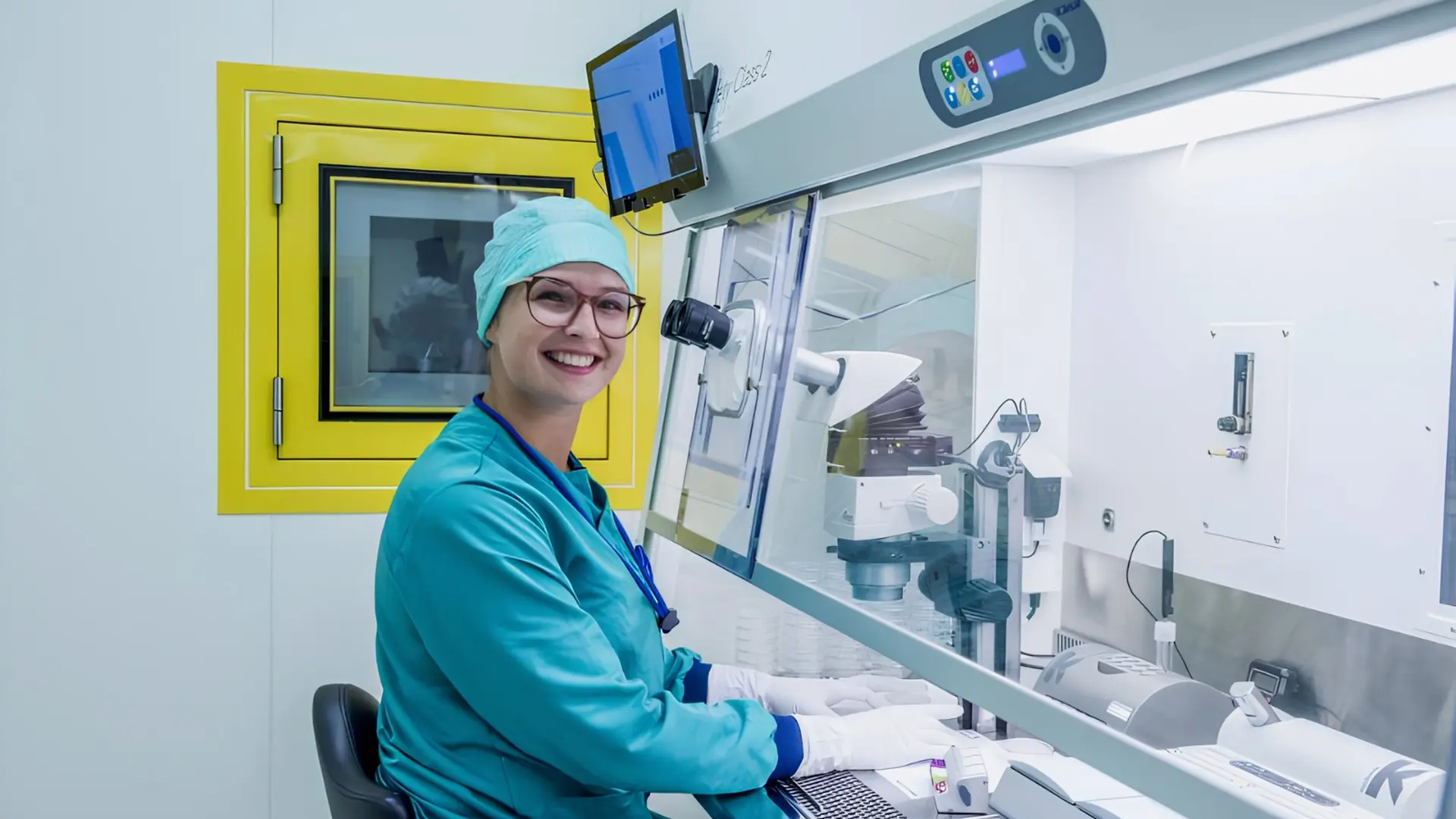
Eltek has protected irreplaceable material in the UK for over 40 years, from ultra-low temperature biobank samples to the cold chain a laboratory runs on. Wireless GenII sensors, the cloud-connected Darca Suite and SMS and email alarms that escalate out of hours give a fertility laboratory continuous visibility of every incubator and cryogenic store, and the timestamped record to evidence the conditions a patient’s samples were held in, all backed by UKAS-traceable calibration and supported by UK engineers.
- HFEA-regulated clinics
- Cryogenic storage
- Out-of-hours alarms
- UKAS-traceable calibration
Speak to an Eltek expert
Tell us about your incubators, cryogenic storage and laboratory, and our UK engineers will set up the continuous monitoring and out-of-hours alarms that protect the samples in your care.
Related reading
Environmental monitoring for IVF clinics
Why continuous monitoring and out-of-hours alarms matter in an embryology laboratory, and what to look for.
Read moreEquipment we monitor
Incubators, cryogenic storage, refrigerators and freezers, and how each is monitored and alarmed.
Read moreThe Darca Suite
Collect, Connect and Command: the sensing, the alarms that escalate, and the audit-trailed software behind them.
Read moreMore in Life Sciences
Pharmaceutical Manufacturing
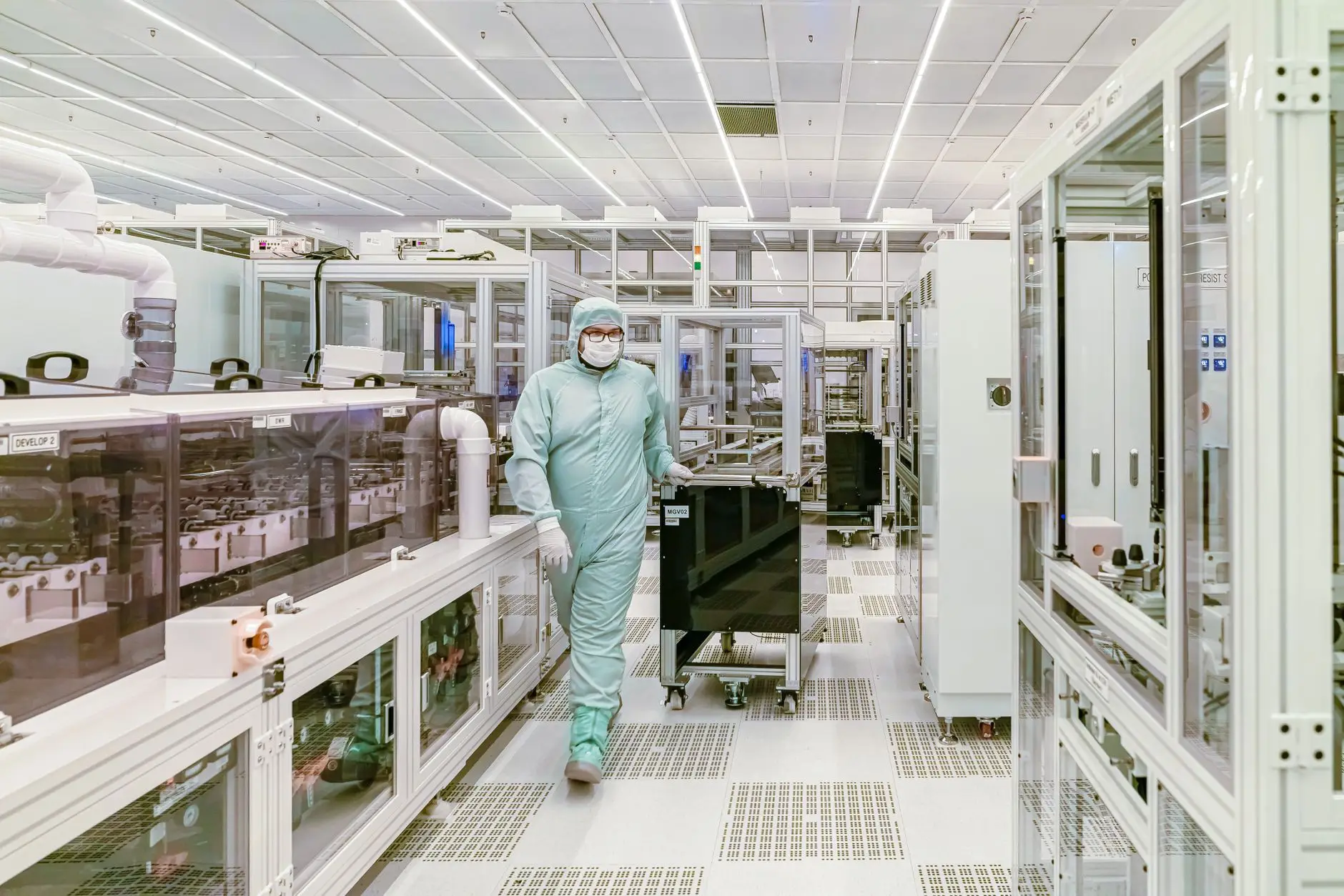
GMP sites, cleanrooms, cold rooms and stability storage. Continuous monitoring and audit-ready records for the environments a regulated batch depends on.
Explore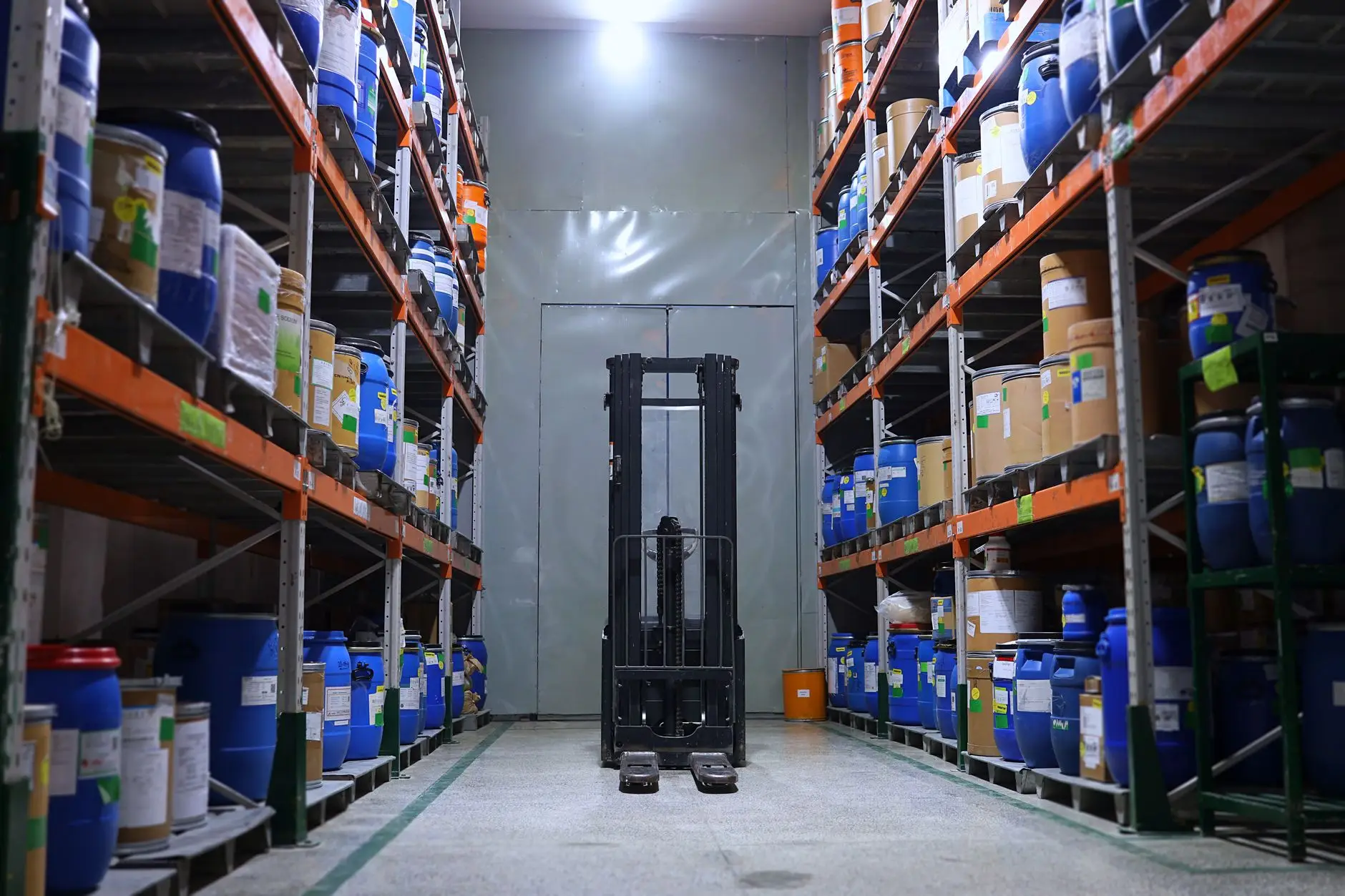
Cold Chain Monitoring
Cold rooms, refrigerators, freezers and GDP warehouses. Continuous monitoring, mapping before use and audit-ready records that prove the cold chain held.
Explore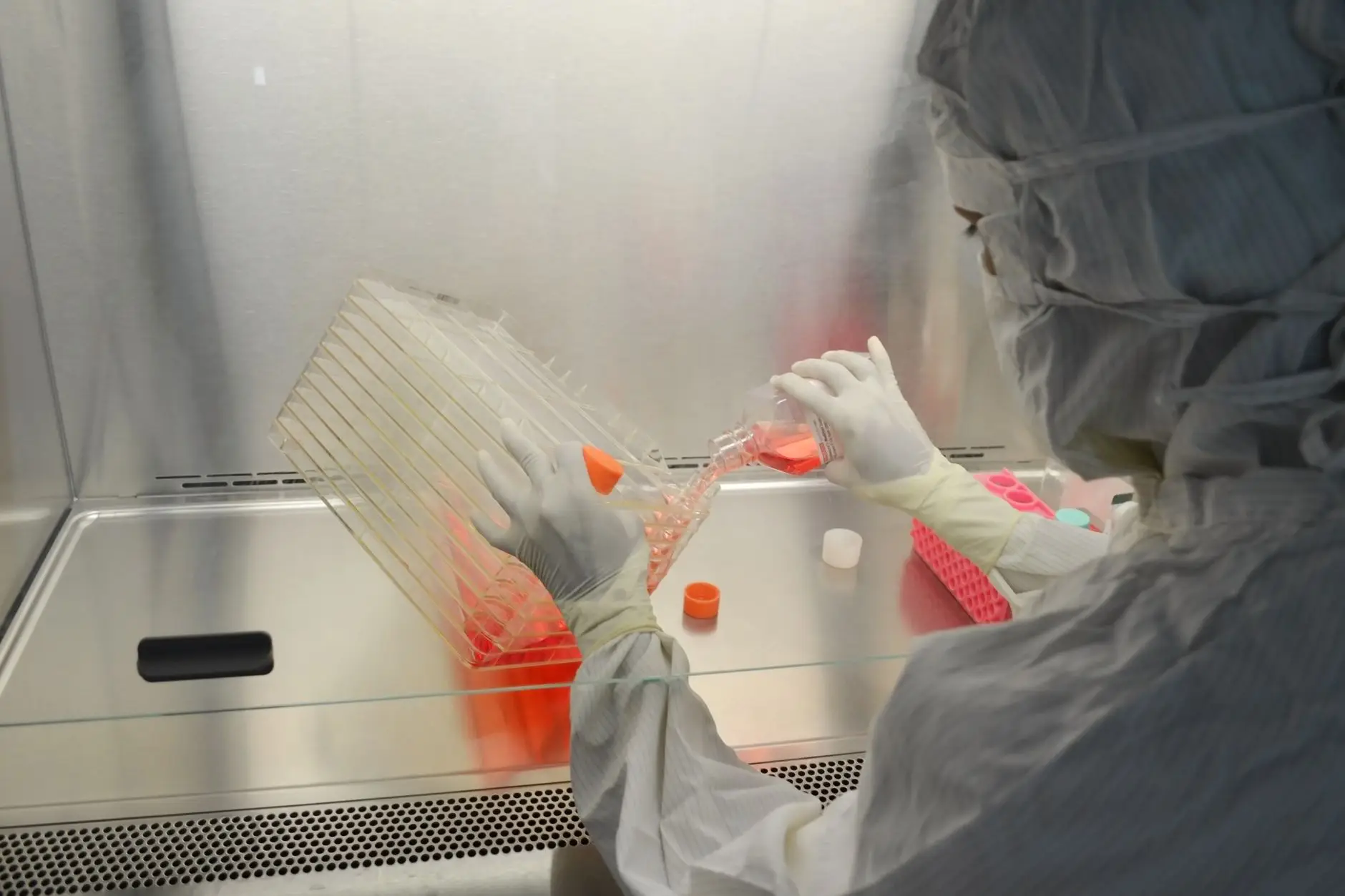
Biotechnology & Cell and Gene Therapy
Cell and gene therapy, ATMPs and biotech. Continuous monitoring of cryogenic storage, cleanrooms and process areas, with audit-ready data integrity.
Explore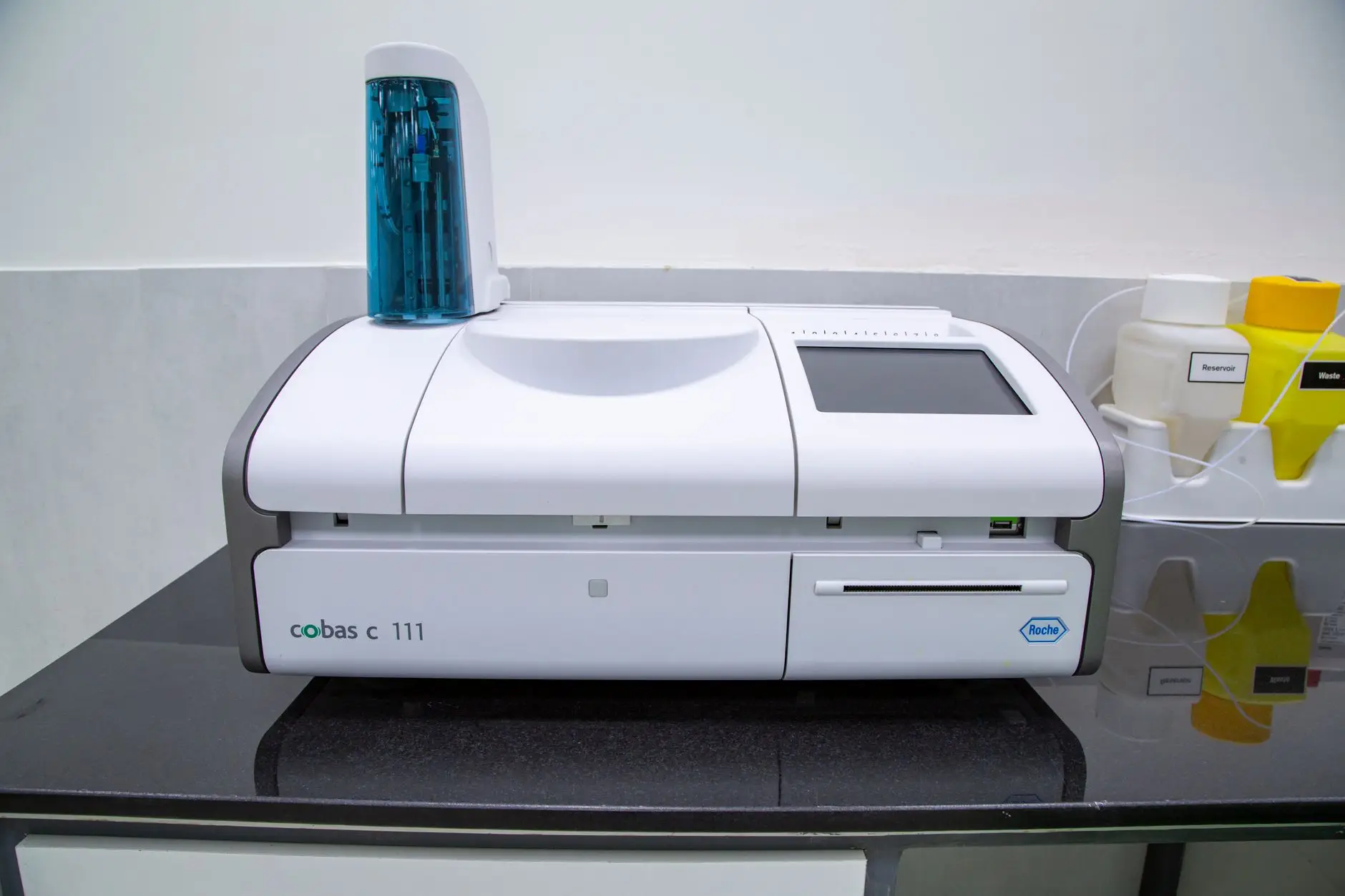
Clinical & Diagnostic Laboratories
NHS pathology, diagnostics and contract testing. Continuous monitoring of fridges, freezers and sample stores, with a record for UKAS and ISO 15189.
Explore
Universities & Research
University biobanks, research estates and core facilities. Continuous monitoring of ULT freezers and cryogenic storage, with alarms and a record for research governance.
Explore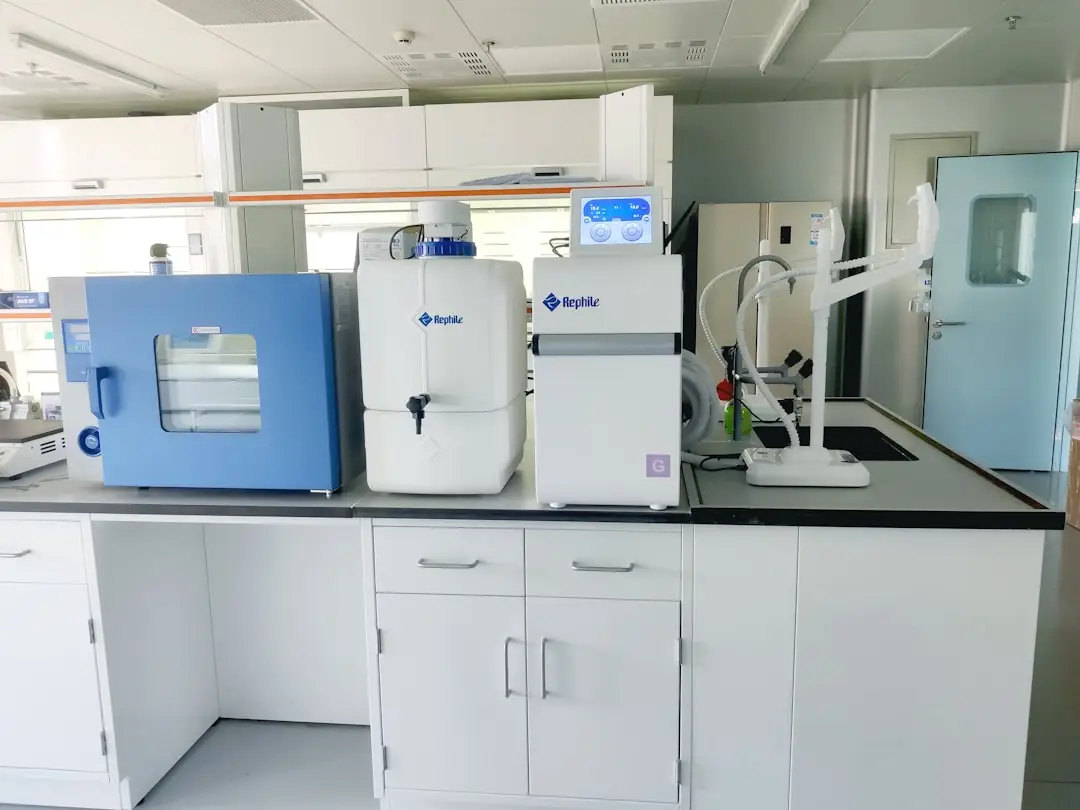
Equipment we monitor
ULT freezers, refrigerators, incubators, stability chambers, cold rooms, cryogenic storage, cleanrooms and GDP warehouses. One compact answer per equipment type.
Explore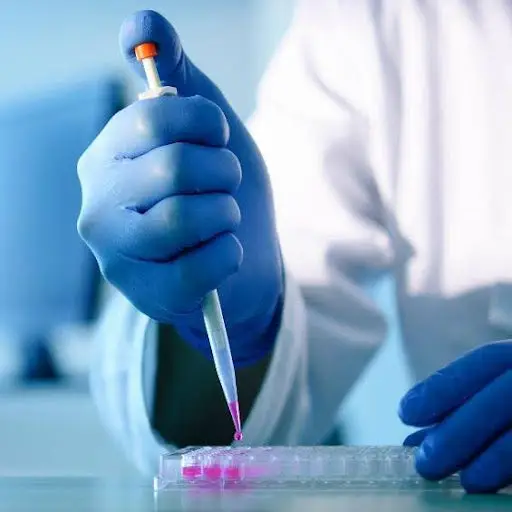
Temperature monitoring guide
What temperature monitoring is, what to look for in a system, wired versus wireless, UK compliance, and how Eltek monitors continuously with alarms and audit-ready records.
Explore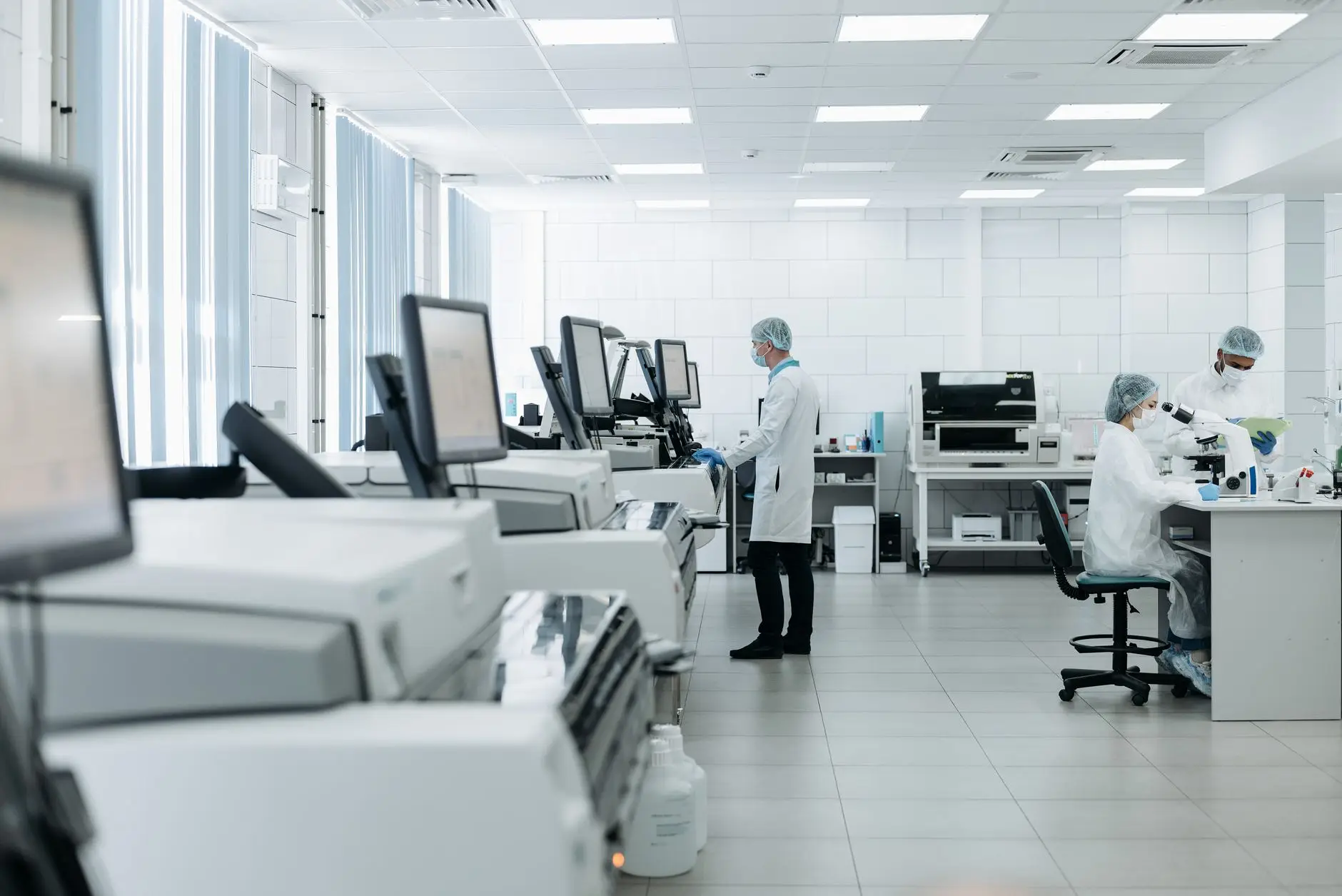
Humidity monitoring guide
What relative humidity monitoring is, why it matters, what to look for, wired versus wireless RH sensing, and how Eltek monitors humidity and temperature continuously with alarms and audit-ready records.
Explore
Temperature mapping guide
What a mapping study proves, how to run one, sensor placement principles, duration, UK compliance expectations, and the calibrated equipment your results depend on.
ExploreData logger guide
What a data logger is, the wired and wireless types, what to look for, why calibration matters, and how Eltek’s loggers feed one connected platform with alarms and audit-ready records.
ExploreFrequently asked questions
Why does an IVF laboratory need continuous environmental monitoring?
Because the material an IVF laboratory holds, embryos, eggs and stored samples, cannot be recreated, and the equipment that protects it can drift or fail at any hour. Continuous monitoring watches every incubator and cryogenic store as conditions change, rather than at the next manual round, and alarms the moment something moves out of range. That combination, an unbroken record plus an alarm that reaches someone out of hours, is what lets a clinic act before an irreplaceable sample is lost, and evidence afterwards exactly what conditions the material was held in.
How does Eltek monitor cryogenic storage in a fertility clinic?
Eltek monitors cryogenic storage continuously with wired probes and wireless GenII transmitters, feeding one connected system so every store is visible in real time rather than checked by hand. When a store drifts out of its expected range, SMS450 escalates the alarm by grouped SMS and email, including nights and weekends, so someone can respond while there is still time to move samples or intervene. The time-stamped record then evidences the conditions the stored material was held in over any period.
How is environmental monitoring regulated in a UK fertility clinic?
UK fertility treatment and the storage of gametes and embryos are regulated by the Human Fertilisation and Embryology Authority (HFEA), which licenses clinics and, through its Code of Practice, sets out the standards a licensed centre works to, including the safe and secure storage of gametes and embryos. A clinic has to be able to account for the conditions its stored material is held in. Continuous monitoring supports that by providing the record and the alarms; the clinic owns its procedures and its response, and Eltek supplies the traceable evidence that supports them rather than conferring compliance.
Will the alarm reach us outside working hours?
Yes. Fertility laboratories are rarely staffed around the clock, so an alarm that only sounds on site is not much use. SMS450 sends grouped SMS and email alerts that escalate to the people you nominate, at any hour, so a drifting incubator or cryogenic store is caught out of hours as readily as during the day. Escalation means that if the first person does not respond, the alert moves on to the next, so a critical problem does not sit unanswered.